OpenAI's latest AI models are coming to Google Cloud and Antigravity
Ars Technica Ryan Whitwam ● Covered by 2 sources
OpenAI’s GPT models are coming to Google Cloud and Antigravity. Google’s model menu gets bigger, and its coding tool stops being Gemini-only.
Based on reporting by Ars Technica, Ryan Whitwam — read the original for the full story.
Summary, retelling and take written by AI under human oversight; images are AI-generated illustrations. How we work · Report an error
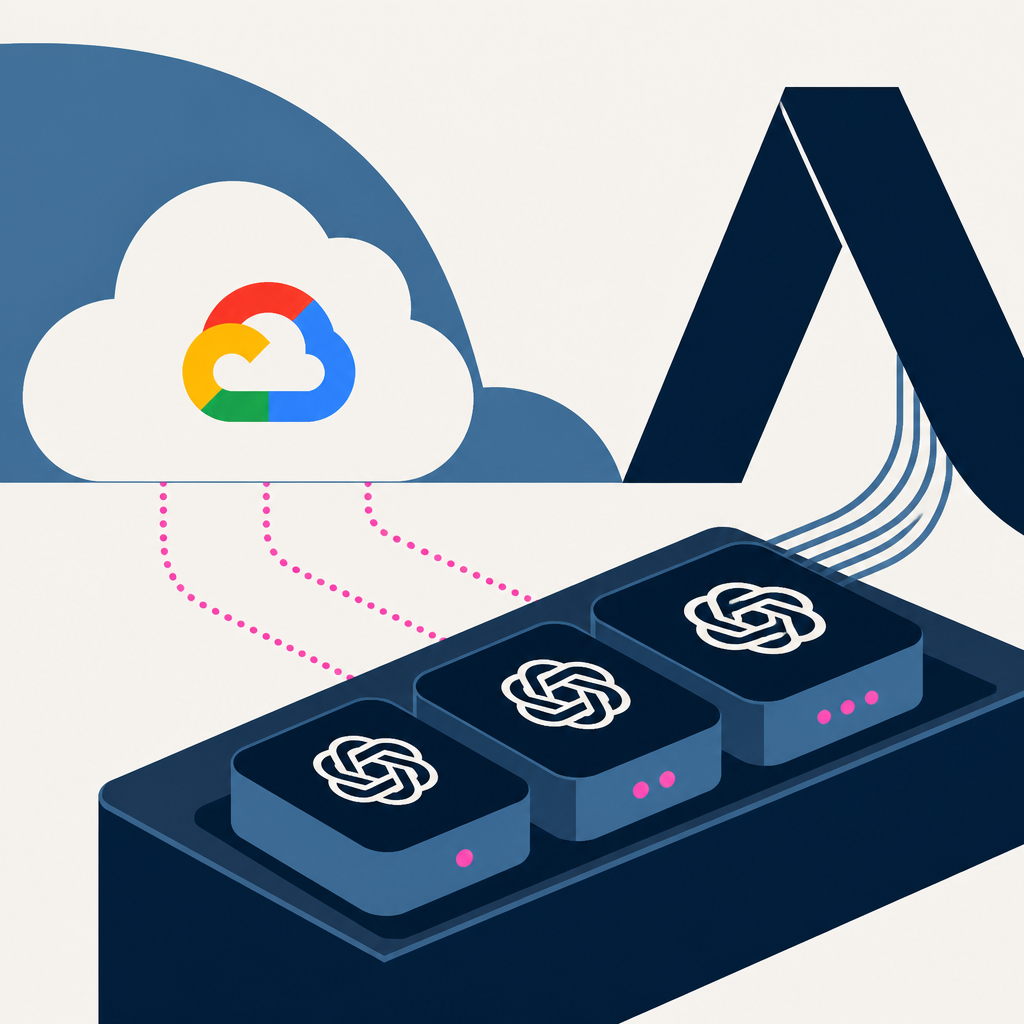
Google would rather keep everyone inside its own Gemini bubble, but that’s not how this one is going. OpenAI and Google have struck a deal that will put OpenAI’s frontier models into Google Cloud services, with GPT models also headed for Antigravity, Google’s agent-driven coding tool.
The models will show up in Google’s Model Garden in the coming weeks. That matters because the garden already has more than 200 options, including Google’s own Gemini line and open models such as Mistral, Llama, and Gemma. Anthropic’s Claude has also been there for a while, so Google is steadily turning its cloud into a place where rivals can rent the shelf space too.
Google says it will be the only large cloud provider that offers access to all three leading closed LLMs. OpenAI, for its part, says Microsoft is still its main cloud partner. So this is not a clean break or some dramatic realignment. It’s a practical expansion of distribution, with OpenAI showing up where Google customers already work.
The full current GPT 6 and 6.1 lineup — Astra, Sol, and Luna — is set to launch on Google Cloud. Google also says its system can shift workloads between models dynamically based on performance, latency, and efficiency. Astra will cost the most to run, which is a polite way of saying the fanciest option still comes with the biggest bill.
My take — AI-written commentary, not fact-checked reporting
This is what cloud competition looks like now: the platforms sell neutrality while quietly hoarding leverage. Google gets to say it hosts everyone; OpenAI gets another pipe into enterprise buyers. The only people left pretending these stacks are tidy are the ones paying the invoices.
Read more about this at: Ars Technica