
OpenAI's Human Rights Lead: What the military could do with AI 'keeps me up at night'
Fortune Emily Forlini
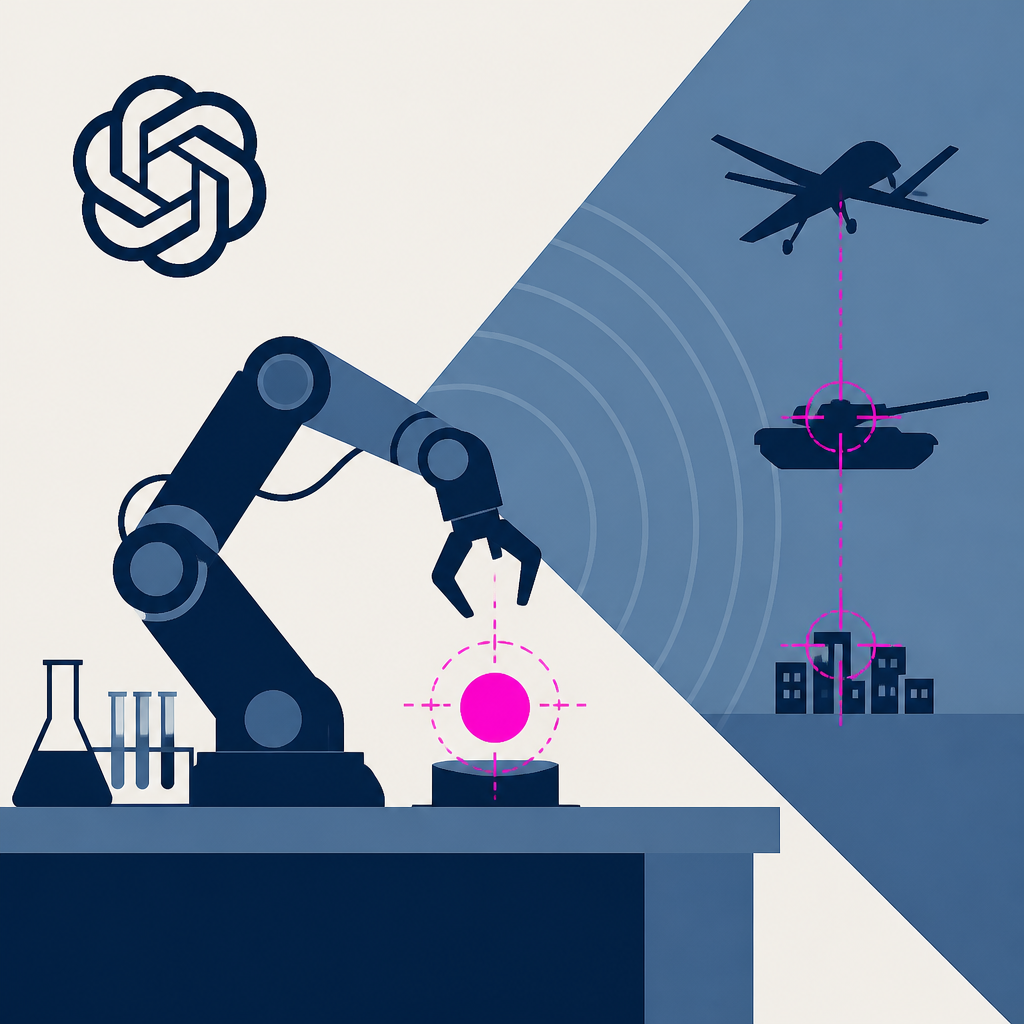
OpenAI hired its first human rights lead, and she’s focused on military AI. She says the scary part is what happens when targeting and autonomous weapons get smarter.
Based on reporting by Fortune, Emily Forlini — read the original for the full story.
Summary, retelling and take written by AI under human oversight; images are AI-generated illustrations. How we work · Report an error
Sarah Yager joined OpenAI in June as its first human rights and responsible deployment lead, a job she says puts her inside the place where the hardest questions about military AI are now being fought over. Her brief is shaped by 30 years working on military issues, and by OpenAI’s deal with the Department of War to deploy advanced AI systems in a classified environment.
Onstage Tuesday at the ScaleUp:AI conference in New York City, Yager said the part that worries her most is what armed forces will do with AI in conflict. She named targeting and autonomous weapons as the big unknowns. Militaries around the world are already folding AI into drones, robots and other systems, which makes the stakes feel less theoretical by the week.
OpenAI reached out to her shortly after it signed that February contract with the DoW, a deal that followed a public split between the DoW and Anthropic. Anthropic had pushed for guardrails, including bans on mass public surveillance and fully autonomous weapons, and the DoW would not accept them. The DoW then called Anthropic a supply-chain risk. OpenAI says it got the DoW to agree to similar guardrails.
Yager said she was not instantly sold on the job. She worried she could be a branding fig leaf, more useful for optics than for substance. But conversations with employees, especially younger ones anxious about what they are building and who is steering it, changed her mind. Since joining, she says she has already helped shape the technology, including work on basic international agreements like the laws of war set out in the 1949 Geneva Conventions.
She brought in outside experts to sit at keyboards, type prompts for high-stakes situations, and then have engineers adjust the models based on the answers. She called that a first. She also pushed back on Silicon Valley’s habit of trying to redefine morality from scratch. Her view is blunt: human rights should be the floor, not whatever an AI company decides is “good.”
Yager also thinks the field is too male and too insulated. She pointed to recent AI safety talks in Washington and said the people making choices about AI did not include the communities most affected by it. And while she is helping oversight bodies like the Government Accountability Office and the Office of Inspector General build tools to watch what government AI is doing, she says that kind of accountability matters for democracy.
My take — AI-written commentary, not fact-checked reporting
Silicon Valley loves to hire a conscience after the contract is signed, then act surprised when the conscience starts asking awkward questions. Yager sounds useful exactly because she is not pretending AI ethics is a new invention; human rights already exist, which is a neat inconvenience for anyone hoping to freestyle the rules.
Read more about this at: Fortune
Related stories
 Exclusive: OpenAI's Sam Altman hints at pact with other AI companies to address safety risks
Fortune ·
43
Exclusive: OpenAI's Sam Altman hints at pact with other AI companies to address safety risks
Fortune ·
43
 Sam Altman on the burden of leading OpenAI amid AI safety concerns: ‘You get used to anything’
Fortune ·
10
Our approach to government and national security partnerships
OpenAI · 2 months ago ·
35
Sam Altman on the burden of leading OpenAI amid AI safety concerns: ‘You get used to anything’
Fortune ·
10
Our approach to government and national security partnerships
OpenAI · 2 months ago ·
35