
Meta makes AI glasses slightly less creepy with limit on nonconsensual recording
Ars Technica Ashley Belanger ● Covered by 2 sources
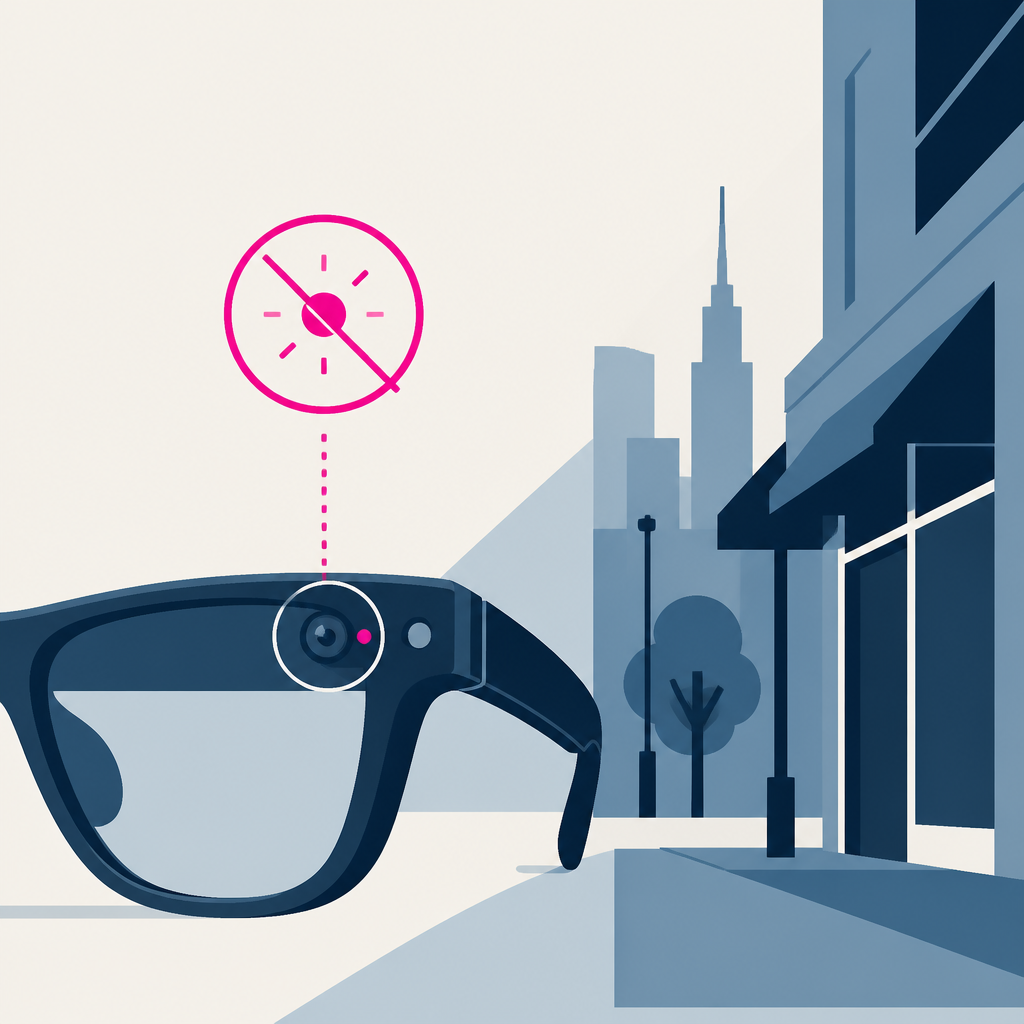
Meta is fixing a loophole in its AI glasses that let people hide the recording light. That should make secret filming harder, though the fact it needed fixing says plenty.
Based on reporting by Ars Technica, Ashley Belanger — read the original for the full story.
Summary, retelling and take written by AI under human oversight; images are AI-generated illustrations. How we work · Report an error
Meta is pushing out a small but telling fix to its AI glasses after complaints that people were using them to record without anyone noticing. The issue centered on the tiny LED that’s supposed to warn bystanders when the glasses are capturing video or photos.
The problem wasn’t that the light existed. It was that users found a way around it. Meta had already set the glasses to stop recording if someone tried to start video capture after covering the light with a sticker. But people figured out a neat little dodge: start recording first, then block the light.
On Friday, The Verge reported that Meta had closed that loophole. Alex Himel, Meta’s executive vice president of wearables, said in a post on Threads that an update would soon make the camera stop working if the light is covered during a recording.
That means the warning light is supposed to become an actual warning light again, instead of a suggestion. Himel said the idea is for the capture LED to reliably alert bystanders when photos or videos are being taken for someone’s gallery. The whole episode is a reminder that with wearable cameras, the creepy part is often not the tech itself, but how quickly people work around the guardrails.
My take — AI-written commentary, not fact-checked reporting
This is the usual wearables story: ship the gadget, then discover the social rules are harder than the software. Meta keeps acting like a blinking LED is a privacy policy, which is cute in the same way a paper lock is cute. If a product makes nonconsensual recording easy, the fix should be baked in from day one, not after the internet does the QA for free.
Read more about this at: Ars Technica
Related stories
 As demand for Meta AI glasses explodes, it’s harder to avoid creepy recordings
Ars Technica · 1 month ago ·
27
Meta is reportedly ready to launch less pervy smart glasses
The Verge · 1 month ago ·
46
As demand for Meta AI glasses explodes, it’s harder to avoid creepy recordings
Ars Technica · 1 month ago ·
27
Meta is reportedly ready to launch less pervy smart glasses
The Verge · 1 month ago ·
46
 People are going to extreme lengths to stop themselves from being filmed through Meta’s ‘pervert glasses’
Fortune ·
36
People are going to extreme lengths to stop themselves from being filmed through Meta’s ‘pervert glasses’
Fortune ·
36