
Mark Zuckerberg makes his case for American open-source AI over Chinese rivals
Fortune Beatrice Nolan ● Covered by 3 sources
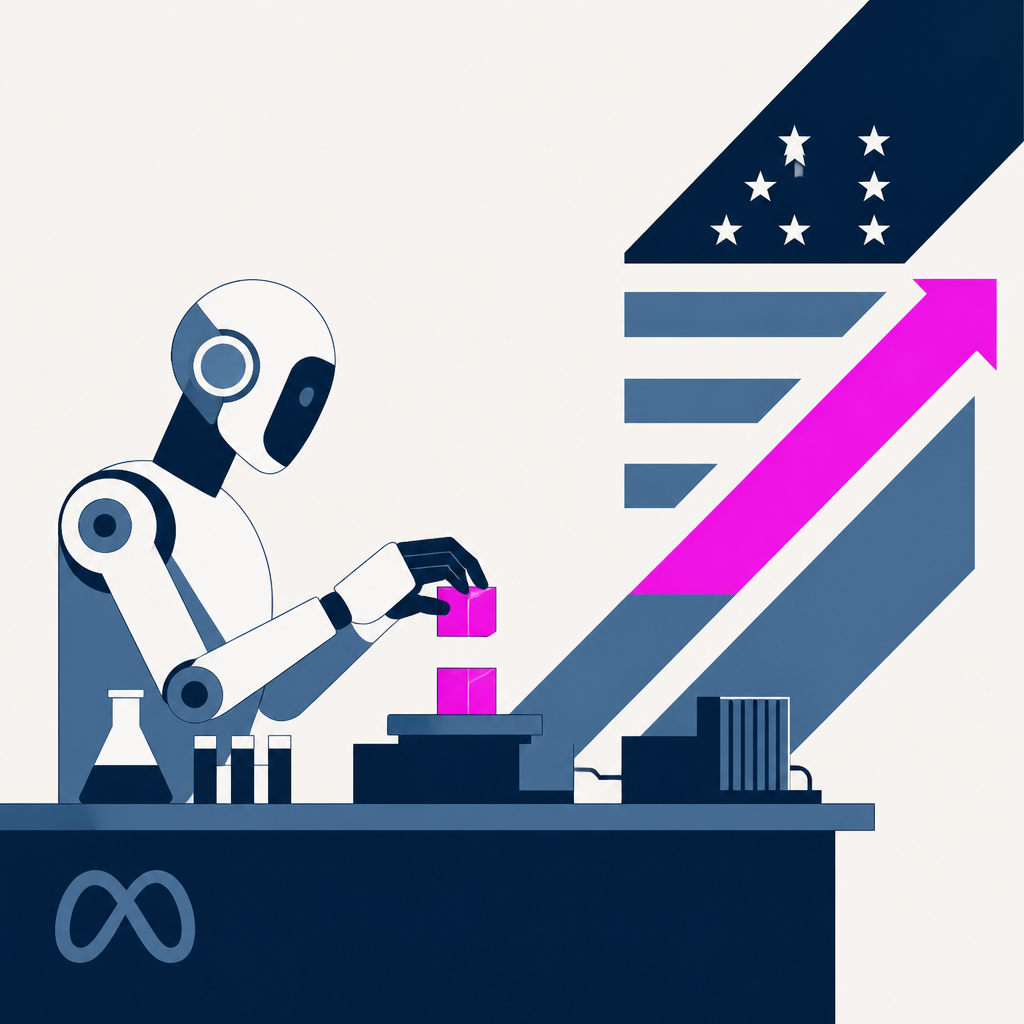
Meta launched a new open AI model family and Zuckerberg wrote a big pitch for U.S. open source. He’s trying to beat Chinese rivals by being more open than OpenAI and Anthropic.
Based on reporting by Fortune, Beatrice Nolan — read the original for the full story.
Summary, retelling and take written by AI under human oversight; images are AI-generated illustrations. How we work · Report an error
Meta’s latest AI push comes with both software and a sermon. On Monday, the company unveiled Muse Glimmer, a family of open-source models built to run on a laptop, and paired it with a 6,500-word essay from Mark Zuckerberg arguing that American AI should stay open rather than be locked up inside a few firms.
Zuckerberg’s target is easy to read. He says powerful AI shouldn’t be controlled by a small club of companies, a line that lands squarely at OpenAI and Anthropic, both of which keep their best systems behind closed doors. He also casts Meta’s open-source stance as a national project, saying U.S. developers need help competing with Chinese open-source models from DeepSeek and Moonshot.
Meta says the next step is to open the weights for Muse Spark 1.2, its most advanced AI model on the market. That means the trained parameters will be publicly available, so people can download, inspect, and modify the model instead of only using it through Meta products or an API. In Zuckerberg’s telling, that openness is not a philosophical flourish. It is the whole strategy.
The company has been here before. Meta made its name in open AI with the Llama family, first launched in February 2023, which let outside developers work with high-performing models while Meta gained influence across the ecosystem. But over the past year, that line has blurred as the company mixed open releases with proprietary ones, even as rivals kept selling controlled access to their frontier models.
Now Meta is trying to reset the story. It has poured money into Superintelligence Labs and brought in former Scale AI CEO Alexander Wang, while also trying to make the Muse family the base for a more capable Meta AI assistant across Facebook, Instagram, WhatsApp and its Ray-Ban Meta AI glasses. The company says the new Glimmer series was trained using distillation from Muse Spark, and Zuckerberg argues Washington should lower the barriers that make American open-source models harder to build and deploy.
My take — AI-written commentary, not fact-checked reporting
Meta’s new gospel sounds a lot like strategy with a patriotic label slapped on top. Open source is great when it’s real; it’s less noble when it shows up right when a company needs cover for catching up. The broader pattern is familiar: the industry calls for openness most loudly when closed rivals are winning the money race.
Read more about this at: Fortune
Related stories
 With new open models, Meta pitches another reboot of its struggling AI strategy
Ars Technica · 2 months ago ·
44
With new open models, Meta pitches another reboot of its struggling AI strategy
Ars Technica · 2 months ago ·
44