Making sense of the panic over Chinese AI
TechCrunch Anthony Ha ● Covered by 33 sources
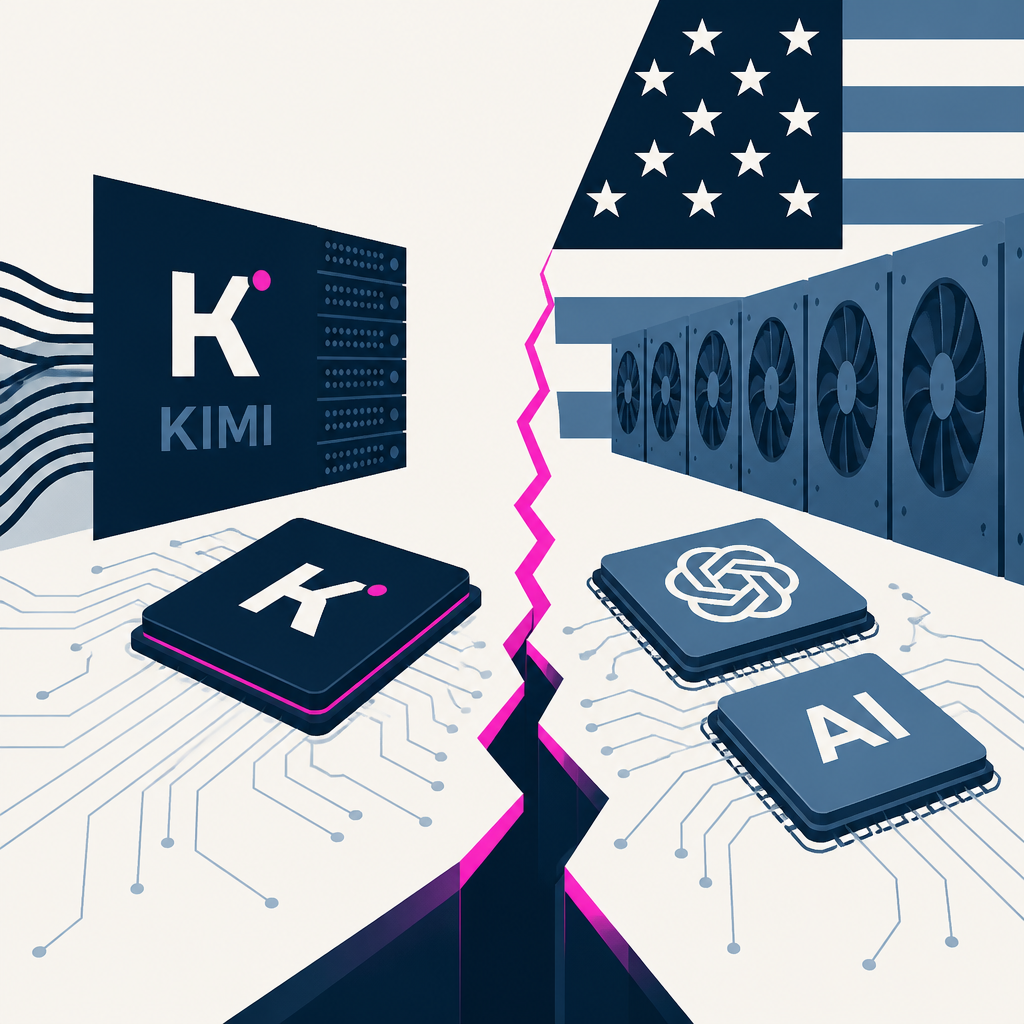
Moonshot AI's Kimi model triggered another US panic spiral about China winning the AI race. Turns out bans on Chinese models might mostly help a few US labs, not the country.
Based on reporting by TechCrunch, Anthony Ha — read the original for the full story.
Summary, retelling and take written by AI under human oversight; images are AI-generated illustrations. How we work · Report an error
Another week, another Chinese AI model, another round of Silicon Valley losing its collective mind. This time it was Moonshot AI's Kimi that set things off, and according to TechCrunch's Equity podcast crew — Kirsten Korosec, Sean O'Kane, and Anthony Ha — the reaction played out almost exactly like it did when DeepSeek showed up. A model lands, performs competitively on some benchmarks, costs less to build, and ships with open weights. Cue the panic.
The podcast hosts point out how quickly the hype curdled into absurdity. O'Kane cites people online marveling that Kimi replicated macOS's look in 30 minutes, as if a slick graphical mockup were somehow equivalent to building an actual operating system. It wasn't. But that didn't stop a weekend of heated arguments on X, with O'Kane joking that people should have just gone outside instead. A week later, he notes, nobody feels like the sky is falling anymore.
Behind the online noise, something more concrete has been happening in Washington: OpenAI and Anthropic have reportedly been lobbying regulators about the risks of open Chinese models. Korosec references a TechCrunch piece by Tim Fernholz that digs into why the reaction here runs so hot, landing on a few threads — worries about Chinese models carrying implicit bias, concerns over security and guardrails, and, underneath it all, a protectionist question about whether the US or China ends up winning the broader AI race.
Ha draws a comparison to the TikTok panic of a few years back, arguing that adding "China" to any tech conversation seems to instantly crank up the temperature, regardless of how measured the underlying concern actually is. He also flags that David Sacks, who served as the Trump administration's AI czar and now holds a different role there, used the moment to argue against data center opposition and excess regulation, a position Sacks already held before Kimi ever launched.
The sharpest point in the conversation comes from Korosec, who asks whether clamping down on Chinese open weight models actually helps America win, or whether it just funnels enterprise customers toward companies like OpenAI by removing their competition. That question gets extra weight from the fact that Dean Ball, OpenAI's head of strategic futures, wrote the post that kicked off much of this debate, explicitly suggesting the US should sow regulatory doubt to slow down open weight competitors — before later walking the argument back.
My take — AI-written commentary, not fact-checked reporting
Whenever a cheaper, competitive Chinese model shows up, the loudest alarm bells tend to ring from the people who'd benefit most if regulators acted on them. Calling for restrictions on open Chinese models isn't automatically wrong, but when the argument comes packaged with a frontier lab's own commercial interests, it's worth asking who actually wins if Washington listens. Protecting "American AI" and protecting a couple of American companies are not the same policy goal, even if they get dressed up to sound identical.
Read more about this at: TechCrunch