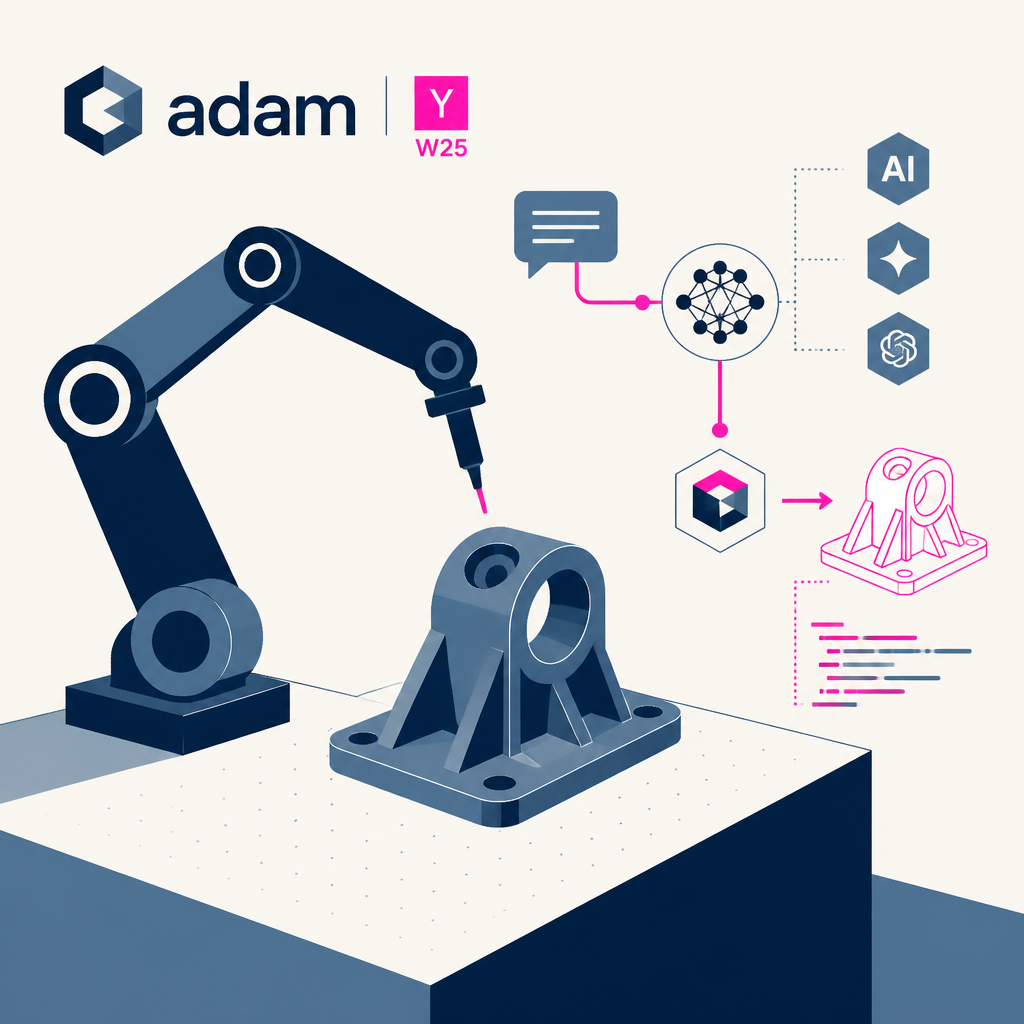
Kyrall turns specs into editable CAD assemblies from plain language
kyrall.com
Kyrall's new tool turns plain-English specs into actual editable CAD assemblies. No more manually rebuilding parts from old sizing sheets and requirement docs.
Based on reporting by kyrall.com — read the original for the full story.
Summary, retelling and take written by AI under human oversight; images are AI-generated illustrations. How we work · Report an error
CAD work has always had a translation problem. Someone writes a spec in plain English, hands it to an engineer, and that engineer spends hours turning words into geometry. Kyrall is betting it can shortcut that whole process by letting you describe what you need in natural language and getting back a working, editable CAD assembly instead of a static drawing or a rendered image.
What sets this apart from the usual generative-design demos is the input variety. Kyrall isn't just parsing a text prompt. It's built to ingest sizing tools, requirement documents, and even legacy designs, then reconstruct them as assemblies you can actually open and modify in a CAD environment. That matters because most engineering teams aren't starting from a blank page. They're starting from a decade of old files, spec sheets, and tribal knowledge locked in someone's requirements doc from 2016.
The editable part is the real claim here, and it's the harder problem to solve. Plenty of AI tools can spit out a 3D model that looks right. Far fewer can produce something with proper parametric structure, mates, and constraints intact, so an engineer can tweak a dimension or swap a component without starting over. If Kyrall genuinely delivers assemblies that hold up to real design iteration, not just a one-off visualization, that's a meaningfully different product category than the render-and-pray tools flooding the space.
There's an obvious audience for this: hardware startups and manufacturing teams without deep in-house CAD benches, who currently burn weeks translating specs into models before anyone can prototype anything. Whether Kyrall can handle the messiness of real-world legacy files, inconsistent naming, missing tolerances, half-documented assumptions, is the question that will decide if this is a genuine productivity unlock or another tool that works great on the demo file and struggles on your actual project archive.
My take — AI-written commentary, not fact-checked reporting
I'll believe the 'editable' claim when someone shows a Kyrall-generated assembly surviving three rounds of real design changes, not a polished demo. Every AI-CAD tool promises this, and the gap between looks-right and machinable-and-maintainable is where most of them quietly die.
Read more about this at: kyrall.com