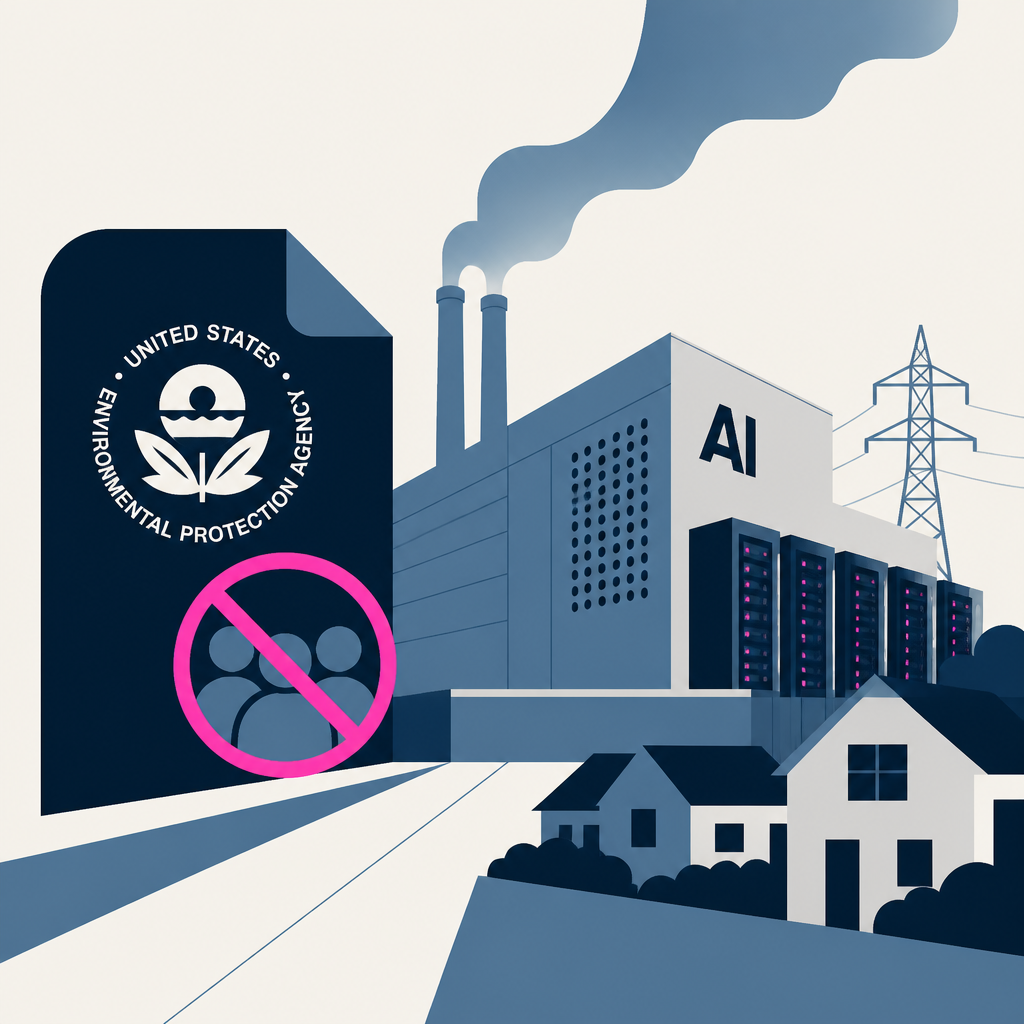
Judge rejects Trump’s wild claim EPA can dismiss data center pollution lawsuits
Ars Technica Ashley Belanger
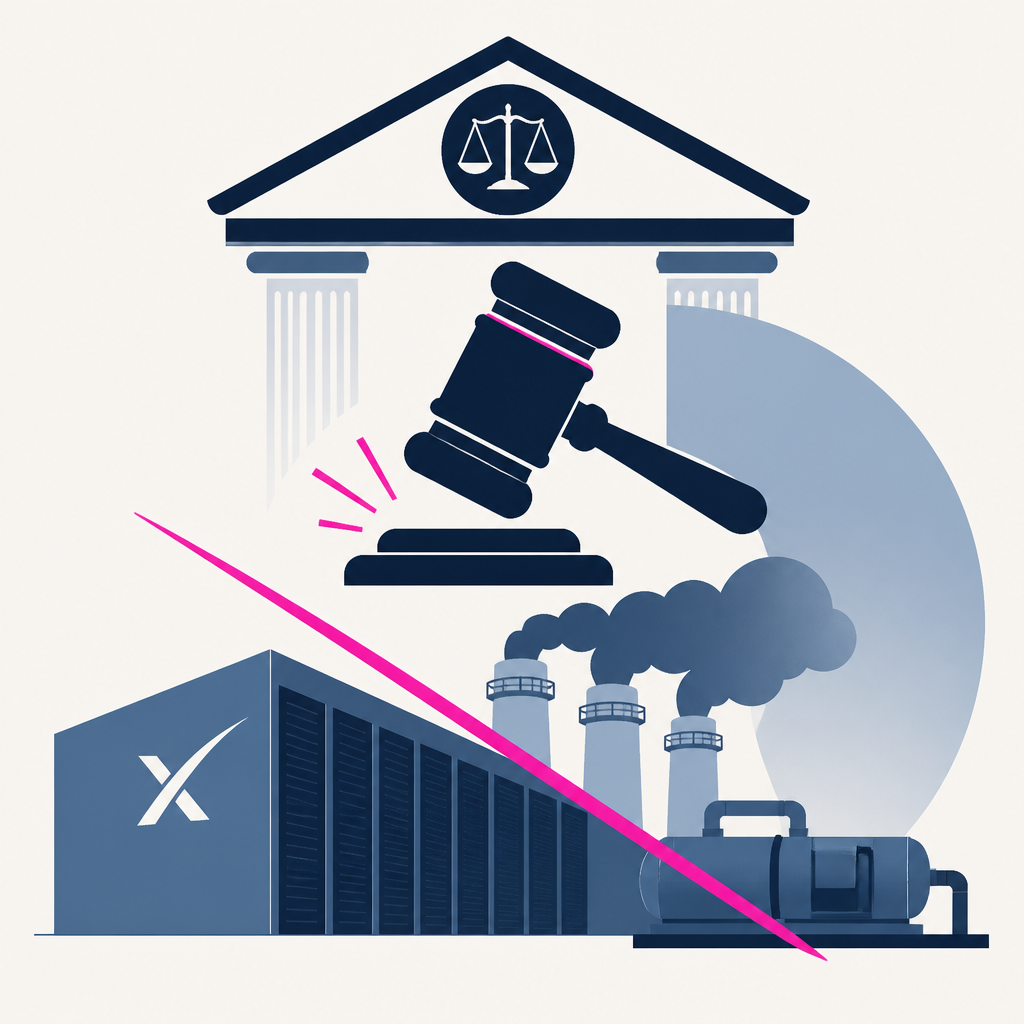
A judge said no to Trump’s bid to let EPA kill a pollution suit against Musk’s data center. The case stays alive over gas turbines and filthy air near Memphis neighborhoods.
Based on reporting by Ars Technica, Ashley Belanger — read the original for the full story.
Summary, retelling and take written by AI under human oversight; images are AI-generated illustrations. How we work · Report an error
A federal judge rejected Donald Trump’s attempt to give the EPA a blank check to shut down Clean Air Act lawsuits, leaving a case against Elon Musk’s data center venture alive. The fight centers on the Colossus facility in Memphis, Tennessee, where unpermitted gas turbines were discovered powering the site.
The NAACP sued soon after that discovery. It wants a court order forcing xAI — now called SpaceXAI after a merger — to use the best available pollution controls on the turbines. It also wants penalties of up to $124,426 per day for each violation.
The group says the turbines could sharply worsen pollution in nearby neighborhoods that already carry the burden of exposure and are predominantly Black. That’s the core of the case: not just whether the company broke the rules, but whether the air around those communities gets treated like an afterthought while the project pushes ahead.
Trump tried to step in and argue that the EPA can unilaterally dismiss Clean Air Act suits whenever the president decides enforcement should stop. He also framed the lawsuits as a drag on getting data centers up and running quickly in support of Trump’s AI Action Plan. The judge didn’t buy that sweeping claim, and the case remains in play.
My take — AI-written commentary, not fact-checked reporting
This is the usual Silicon Valley fairy tale with a cleaner logo: move fast, burn fuel, ask for forgiveness from the air later. The part that keeps getting missed is simple — “AI Action Plan” sounds grand until it meets a neighborhood downwind of the turbines. Then it looks a lot less like policy and a lot more like outsourced pollution.
Read more about this at: Ars Technica