Introducing ChatGPT Health
OpenAI
OpenAI just launched ChatGPT Health, a version of ChatGPT built to plug into your health data and apps. It's got extra privacy locks and doctors helped design it, so it's not just guessing at your symptoms.
Based on reporting by OpenAI — read the original for the full story.
Summary, retelling and take written by AI under human oversight; images are AI-generated illustrations. How we work · Report an error
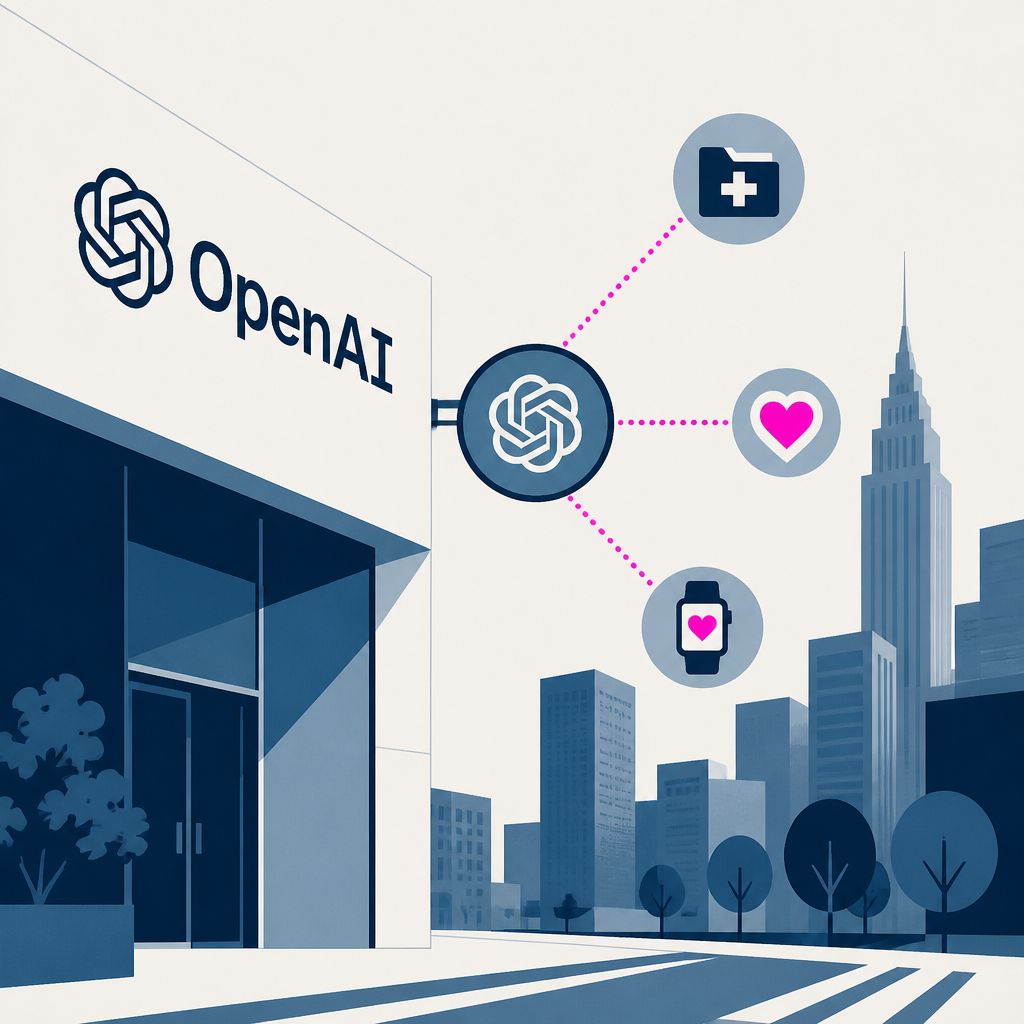
OpenAI has rolled out ChatGPT Health, a standalone experience inside ChatGPT that's meant to act as a secure bridge between users and their personal health information. Instead of asking a generic chatbot about a weird rash or a lab result and hoping for something coherent, the idea is you connect your actual health apps and records, and the assistant works with real context.
What sets this apart from just typing symptoms into regular ChatGPT is the design process behind it. OpenAI says physicians were involved in shaping how ChatGPT Health handles medical information, presumably to keep it from confidently spitting out advice that sounds smart but is dangerously wrong. That's the perennial problem with general-purpose language models dabbling in medicine: they're fluent, not necessarily accurate, and health is one area where fluency without accuracy can genuinely hurt someone.
Privacy is the other pillar OpenAI is leaning on hard. Health data is about as sensitive as personal information gets, and the company is positioning this product with protections specifically built around that sensitivity, separate from how it treats a casual chat about restaurant recommendations. Whether that's implemented through stricter data retention rules, different storage, or limited model training use isn't spelled out in detail, but the framing makes clear OpenAI knows this category demands a different bar than the rest of ChatGPT.
The bigger picture here is OpenAI's push to move ChatGPT from a general assistant into something closer to a personal health companion, joining a crowded field of startups and tech giants trying to do the same with AI. It's a notable bet, given how heavily regulated and trust-sensitive healthcare is, and it puts OpenAI in more direct territory with companies like Google and Apple, who've spent years building health features with regulatory scrutiny already baked in.
My take — AI-written commentary, not fact-checked reporting
I'll believe the privacy protections are real once independent auditors or regulators actually poke at them, not because a blog post says so. OpenAI wanting into healthcare makes total sense financially, but this is the sector where 'move fast' has genuinely killed people, and physician input in the design doesn't erase the model's habit of sounding certain when it's wrong.
Read more about this at: OpenAI