Introducing agentic video understanding with Gemini
Google ● Covered by 6 sources
Google added agentic video analysis to Gemini. It cuts token use and costs a lot, and can spot moments static video scans miss.
Based on reporting by Google — read the original for the full story.
Summary, retelling and take written by AI under human oversight; images are AI-generated illustrations. How we work · Report an error
Google DeepMind is turning on a new way for Gemini to read video, and it’s not just a small tweak. The company says agentic video understanding is now available across Gemini 3.7 Flash, 3.6 Flash, and 3.5 Flash-Lite, with access through the Gemini API in Google AI Studio and the Gemini Enterprise Agent Platform.
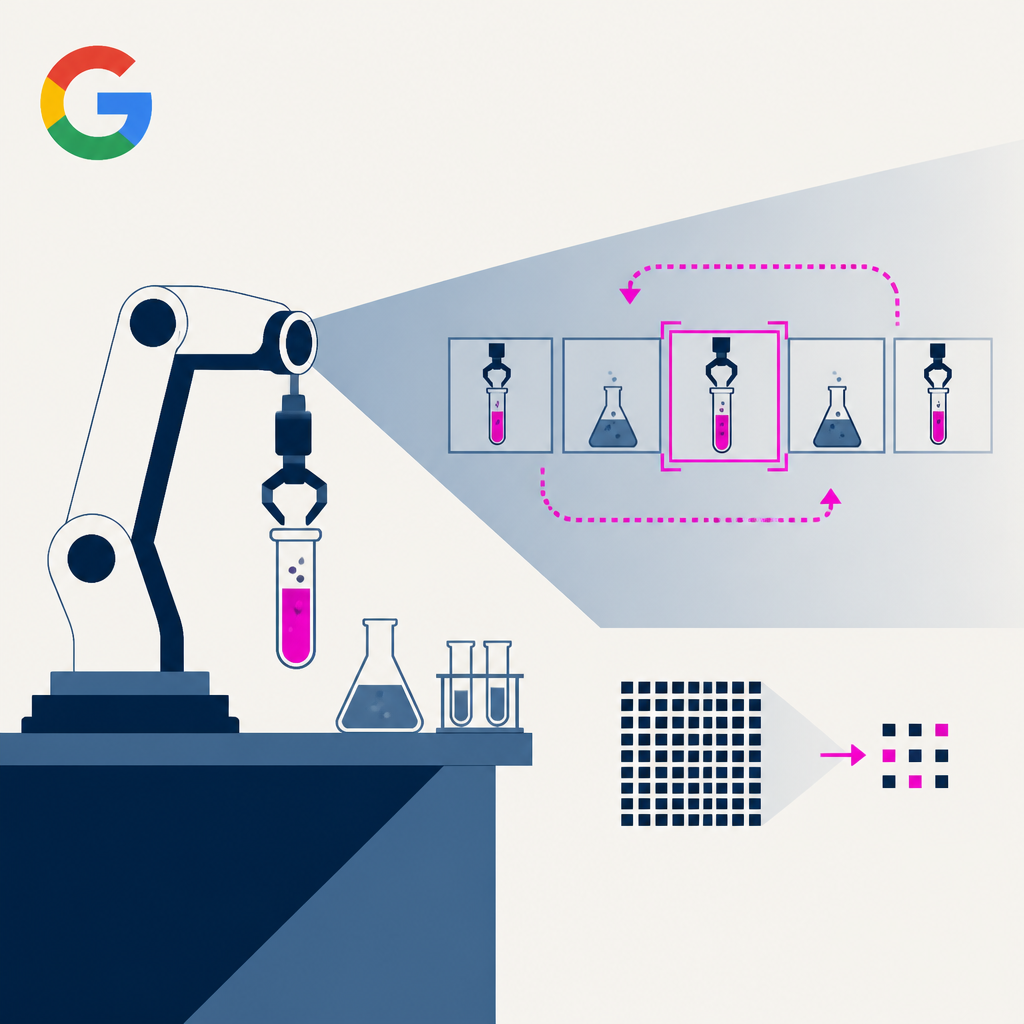
The pitch is simple: stop treating video like a stack of frames at a fixed rate and let the model decide what matters. Instead of grinding through footage at a set 1 FPS, the system can search across frames, audio, and transcripts, then pull in the exact part it needs. Google says that approach cuts token consumption by up to 88%, lowers costs by up to 66%, and improves quality by up to 7% on standard video analysis benchmarks.
That matters most on long videos, where brute-force processing gets expensive fast. Google points to use cases like 10-minute how-to guides, 90-minute lectures, and multi-hour recordings. The company says Gemini 3.7 Flash with agentic understanding gets the best quality and the best quality-to-cost mix among the models it tested, landing on what it calls the accuracy-to-cost pareto frontier.
The useful bit here is not just the savings. Google says the system can help with sub-second moment retrieval, long-form search, anomaly detection, and counting actions or objects over time. In practice, that means things like catching split-second cut points, searching a huge recording without burning through millions of tokens, or resampling a suspicious clip at a higher frame rate.
Google also says developers don’t have to wire all of this together by hand. The model can run an internal tool in an agentic loop to load the right part of a video file, which should cut down development work. Pricing stays on standard Gemini API token rates, with no extra feature fee, and the company says the same efficiency and quality gains will roll out to Gemini app users soon, then later to YouTube’s Ask YouTube feature on the watch page.
My take — AI-written commentary, not fact-checked reporting
This is the kind of AI feature that actually earns its keep: less token confetti, fewer dumb misses, more work done. The bigger signal is Google admitting that static frame sampling is a bit of a budget bonfire when videos get long. Closed models love to call this magic; it’s really just better plumbing, which is usually where the useful progress lives.
Read more about this at: Google