Inbolt raises €11M to bring real-time vision and intelligence to industrial robots
Tech.eu Tamara Djurickovic
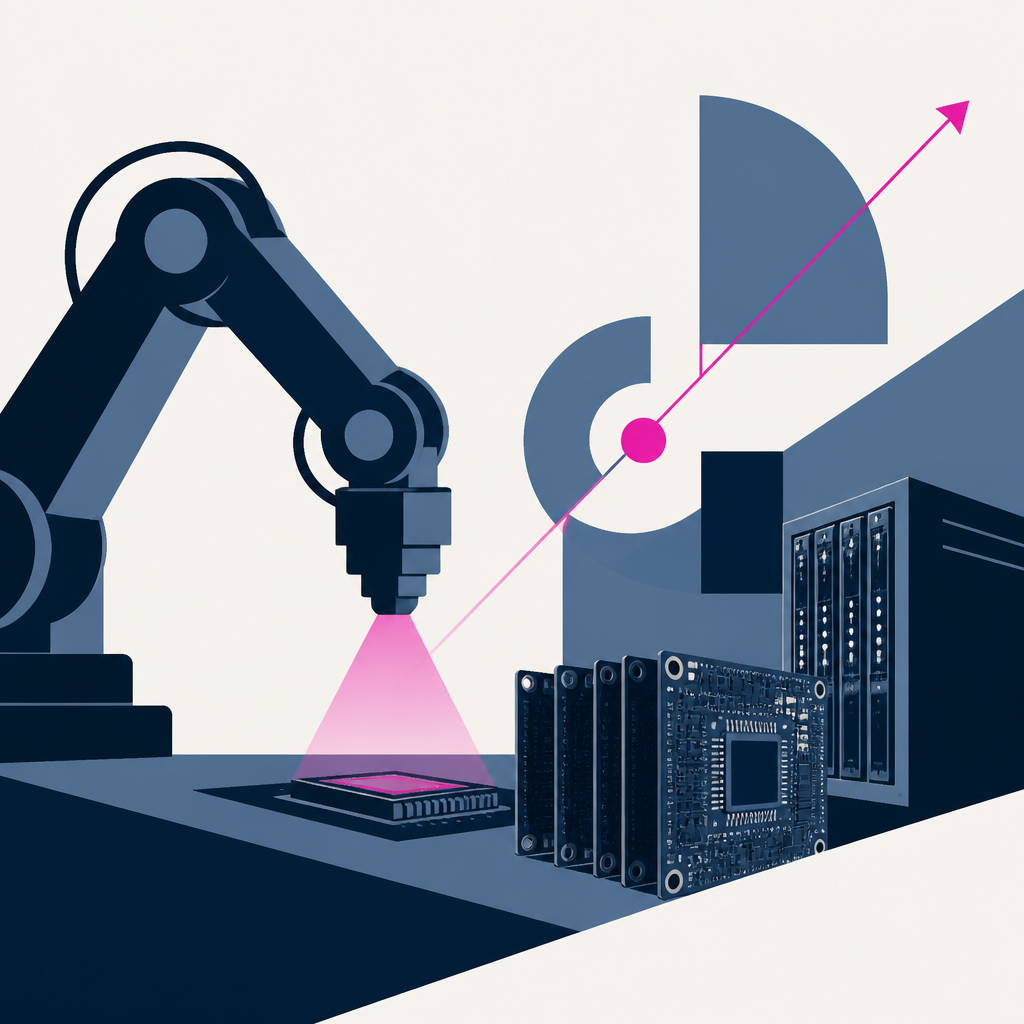
Inbolt raised €11M to give industrial robots real-time vision. It wants to stop factories from stalling when parts shift or tools wear out.
Based on reporting by Tech.eu, Tamara Djurickovic — read the original for the full story.
Summary, retelling and take written by AI under human oversight; images are AI-generated illustrations. How we work · Report an error
Paris-based Inbolt has raised €11 million to push its industrial robot software into more factories, and into two new bets: data centres and electronics manufacturing. The round was led by Shift4Good, with Bridges Climate Transition Partners joining alongside existing backers BNP Paribas Développement and Ora Global. That brings the company’s total funding to €30 million.
Inbolt was founded in 2019 by Rudy Cohen, Albane Dersy and Louis Dumas. Its pitch is simple enough: robots in factories still hit a wall when the world around them stops behaving exactly as planned. Misaligned parts, tooling wear and other small shifts can cause stalls, errors and defective output, which then turns into downtime. In manufacturing, downtime is where the money leaks out.
The company’s system combines 3D vision with a hardware-agnostic AI layer that lets robots detect changes and adjust control loops in real time. Because it works on both new and existing production lines, manufacturers can add it without ripping out installed equipment. Inbolt says the software runs natively on major robot platforms.
It is already deployed on more than 200 robots in over 100 factories across three continents. Among the customers named by the company are Bosch, Beko, Flex, Ford, Stellantis and Toyota. With this funding, Inbolt plans to grow in the US, where it opened a Detroit office in 2026, and across APAC as it moves beyond its current base into those newer sectors.
My take — AI-written commentary, not fact-checked reporting
Industrial automation loves to pretend the factory floor is neat and predictable. It isn’t, and that’s why retrofittable software matters more than another shiny robot arm. The real story here is not just funding; it’s the unglamorous idea that existing machines should get smarter instead of being thrown out like last year’s laptop.
Read more about this at: Tech.eu