
IMDb Sentiment Analysis with DistilBERT LoRA, TF-IDF Baselines, Calibration, Interpretability, Robustness Testing, and Semi-Supervised Learning
MarkTechPost Sana Hassan

MarkTechPost walks through IMDb sentiment analysis with DistilBERT LoRA and a TF-IDF baseline. It also checks calibration, truncation, and pseudo-labeling instead of stopping at accuracy.
Based on reporting by MarkTechPost, Sana Hassan — read the original for the full story.
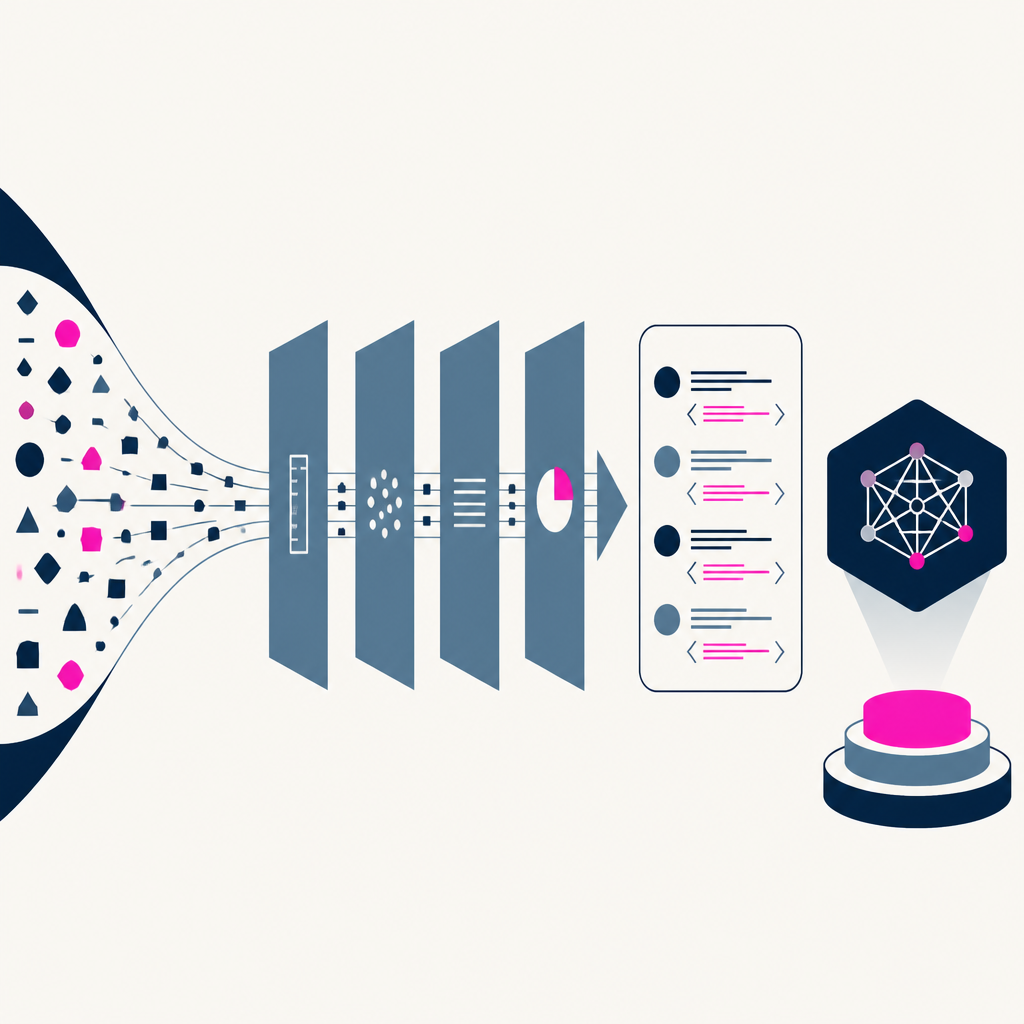
Summary, retelling and take written by AI under human oversight; images are AI-generated illustrations. How we work · Report an error
MarkTechPost’s tutorial takes a very complete swing at IMDb sentiment analysis. It starts with the Stanford NLP IMDb Large Movie Review Dataset, sets up a reproducible environment, and does the boring-but-important work first: checking class ordering, review-length skew, duplicate leakage, and preprocessing artifacts before any model gets to pretend it’s smart.
The baseline is not an afterthought. A TF-IDF plus Logistic Regression pipeline is trained on a shuffled subsample of 5,000 reviews, with 2,000 held out for evaluation. Then comes DistilBERT, fine-tuned with LoRA through PEFT, so the transformer stays relatively efficient while still adapting to the task. The setup uses a maximum length of 256, a batch size of 16, a learning rate of 3e-4, and two epochs in the standard run.
The evaluation goes well beyond a single score. The tutorial reports accuracy, macro-F1, ROC-AUC, confusion matrices, and ROC curves, then sweeps thresholds to see whether 0.5 is actually the best cutoff. It also checks Expected Calibration Error and plots a reliability diagram, which is the right move when a model starts speaking with confidence. Confidence is cheap; calibrated confidence is better.
And it keeps digging. The write-up looks at confident mistakes, breaks performance down by review length, and uses word-level occlusion saliency plus head-versus-tail truncation to show where long reviews get clipped into trouble. That matters because the dataset contains long tails, and the tutorial notes that a meaningful share of reviews run past the 256-token limit.
Finally, it uses the unlabeled IMDb split for confidence-based pseudo-labeling, compares that semi-supervised model with the baseline, and saves the merged transformer for reuse. The whole thing reads like a reminder that sentiment systems are not just leaderboard toys. They’re pipelines, and the weak link is often somewhere far away from the headline metric.
My take — AI-written commentary, not fact-checked reporting
This is the right kind of tutorial: a model demo that admits the mess before it celebrates the score. Too many sentiment writeups stop at accuracy and call it research; this one at least checks calibration, truncation, and leakage, which is where the real failure modes hide. The industry still loves a shiny transformer, but the TF-IDF baseline is the adult in the room, as usual.
Read more about this at: MarkTechPost
Related stories
 Create a Reasoning-Focused LLM: A Practical Guide to Streaming, Curating, and Fine-Tuning the SupraLabs Reasoning Corpus
MarkTechPost · 2 months ago ·
38
Create a Reasoning-Focused LLM: A Practical Guide to Streaming, Curating, and Fine-Tuning the SupraLabs Reasoning Corpus
MarkTechPost · 2 months ago ·
38