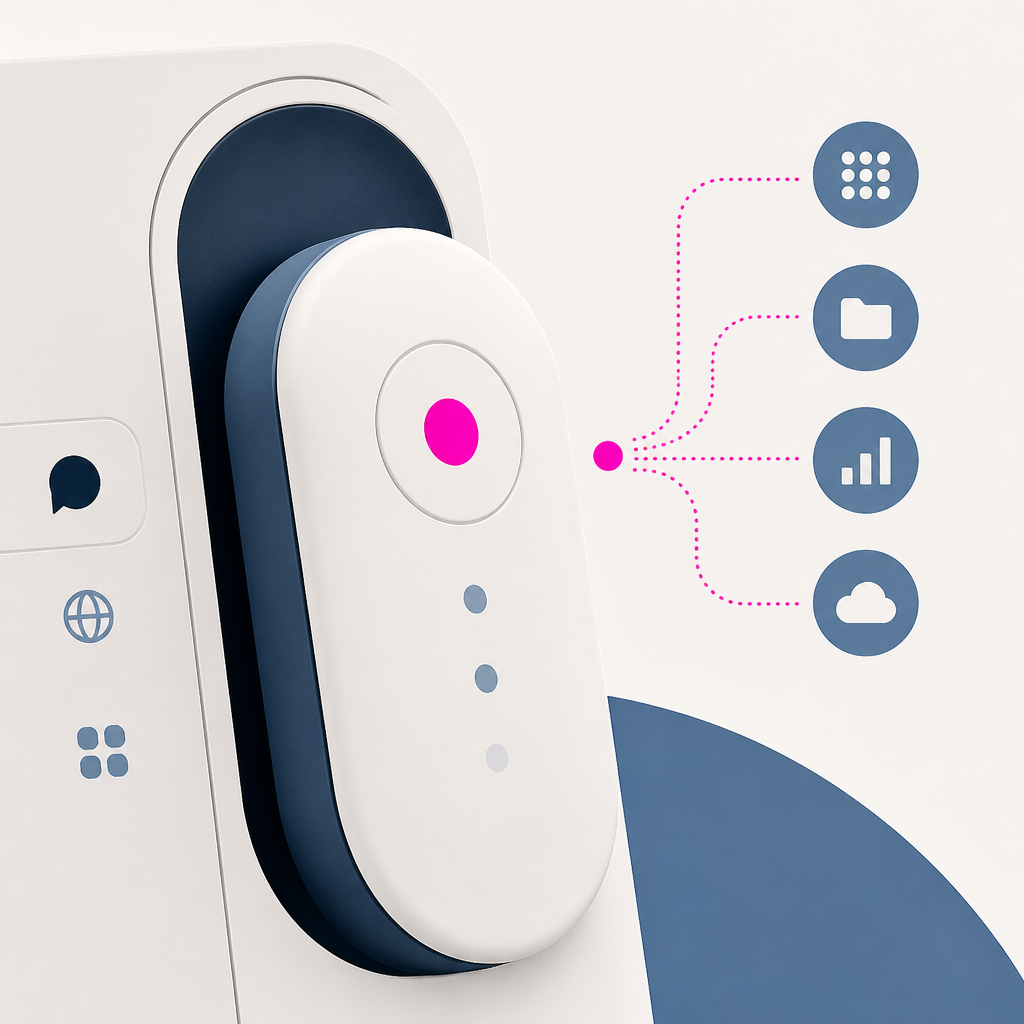
How OpenAI turned its coding tools into dots, an always-on personal assistant
TechCrunch Tim Fernholz
OpenAI turned its coding tech into dots, a personal AI assistant in ChatGPT. It watches your calendar and email in the background, but that convenience comes with more data access.
Based on reporting by TechCrunch, Tim Fernholz — read the original for the full story.
Summary, retelling and take written by AI under human oversight; images are AI-generated illustrations. How we work · Report an error
OpenAI wants dots to feel less like software and more like a presence. The company rolled out the assistant at its developer day in late September, then had Alexander Embiricos, who runs enterprise product, explain the thinking at TechCrunch Disrupt this month: people are already gravitating toward always-on assistants, and the trick is making the whole thing feel like one continuous conversation instead of a pile of separate prompts.
dots lives in the ChatGPT desktop and mobile apps, but only for Pro subscribers and up, with plans starting at $100 a month. Once you connect it to your calendar, email, computer and other tools, it can try to help keep work moving even when you are not actively asking it to do anything. Embiricos says much of this could already be done with OpenAI’s Codex coding app, which came out at the start of this year. The catch is that Codex takes more effort and more babysitting.
That framing matters to OpenAI. Embiricos said the company has been repackaging model capabilities into something easier to approach, and he pointed to the assistant’s name as part of that effort: it is meant to feel small, simple and eventually everywhere. He also joked that he only learned very late that Elon Musk owns dot.com, which is the sort of detail that should make any product team wince a little.
The promise is that a persistent agent can notice things before a person does. OpenAI’s own testing found dots could spot calendar conflicts and upcoming deadlines, though not always in time to be all that useful. Embiricos described one early case where it warned about a conflict only three minutes before the event. That is proactive, technically. It is also not exactly what anyone means by “helpful.”
The bigger issue is the tradeoff at the center of every AI assistant: the more it knows, the more useful it can be. Embiricos confirmed that dots has a feature called proactive research, where it periodically looks at what it knows about a user, what conversations it has had and what tools it can access, then suggests ways it could be more helpful. OpenAI says the assistant uses the same privacy controls as ChatGPT, including the option to turn off model training and control access to resources on a computer, but the controls are not especially fine-grained and the app can be pushy. It will not even accept read-only access to cloud drives.
OpenAI also sounds aware that the whole agent dream runs into people, businesses and infrastructure pretty quickly. Embiricos said he personally never intends to meet someone else’s agent, and that OpenAI is in deep conversations with payment processors before letting assistants spend money. That is the real story here: the company is trying to sell an always-on helper while quietly negotiating how much trust users are willing to hand over.
My take — AI-written commentary, not fact-checked reporting
The industry keeps pretending the breakthrough is intelligence, when the real product is permission. OpenAI’s pitch only works if people hand over calendars, inboxes and eventually money, and that is where the sales deck gets very quiet. Everyone wants an agent until it starts acting like one.
Read more about this at: TechCrunch