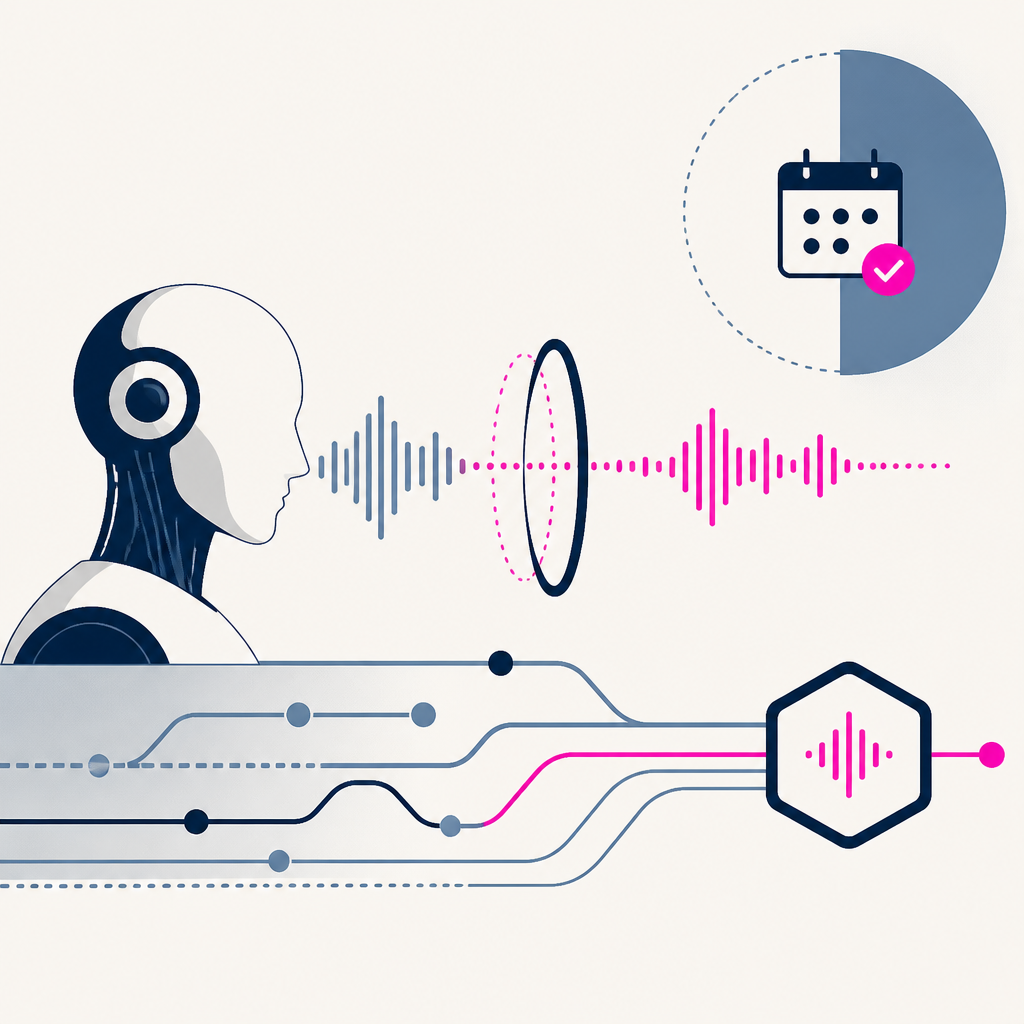
How OpenAI delivers low-latency voice AI at scale
OpenAI
OpenAI rebuilt the plumbing behind its voice AI so conversations feel instant, not laggy. Turns out real-time chat with a bot is a brutal engineering problem, not just a model problem.
Based on reporting by OpenAI — read the original for the full story.
Summary, retelling and take written by AI under human oversight; images are AI-generated illustrations. How we work · Report an error
OpenAI just pulled back the curtain on something less flashy than a new model but arguably just as hard: the networking stack that lets its voice AI talk to you without those awkward pauses. The company rebuilt its WebRTC infrastructure specifically to handle real-time voice at global scale, and the details reveal how much invisible engineering sits underneath a smooth conversation with ChatGPT's voice mode.
Latency is the enemy here. Text chat can tolerate a second or two of thinking time and nobody notices. Voice can't. Humans expect turn-taking that mimics real conversation, which means detecting when someone stops talking, generating a response, and streaming audio back, all within a window measured in milliseconds. OpenAI's post walks through how they re-architected their WebRTC pipeline to shave that latency down while still serving the whole world, not just users sitting next to a US data center.
What's notable is the framing: this isn't a model upgrade, it's plumbing. Better silicon and bigger context windows get headlines, but none of that matters if the audio stutters or the system can't tell when you've finished a sentence. Getting turn-taking right, at scale, across continents, is the unglamorous work that makes voice AI feel less like talking to a machine and more like talking to a person who's actually listening.
This matters beyond OpenAI's own products. Voice interfaces are becoming the default way people expect to interact with AI, from customer service bots to in-car assistants, and the infrastructure bar for making that feel natural is rising fast. Whoever solves low-latency, globally distributed voice first has a real edge, because users notice lag in voice far more viscerally than they notice a slightly worse answer in text.
My take — AI-written commentary, not fact-checked reporting
I run TLDRocket because I think the infrastructure stories get buried under model-release hype, and this is a good example of why that's a mistake. Nobody's going to write a viral thread about WebRTC tuning, but this kind of unglamorous engineering is exactly what separates a voice demo from a voice product people actually trust. Watch for open-source alternatives to catch up on the model side while still lagging badly here, because this is the kind of infra advantage that's genuinely hard to copy.
Read more about this at: OpenAI