How Endava is redesigning software delivery around AI agents
OpenAI
Endava is rebuilding how it ships software, leaning on ChatGPT Enterprise and Codex to run AI agents across its dev teams. It's a real test case for whether AI can actually rewire an enterprise's workflow, not just speed up typing.
Based on reporting by OpenAI — read the original for the full story.
Summary, retelling and take written by AI under human oversight; images are AI-generated illustrations. How we work · Report an error
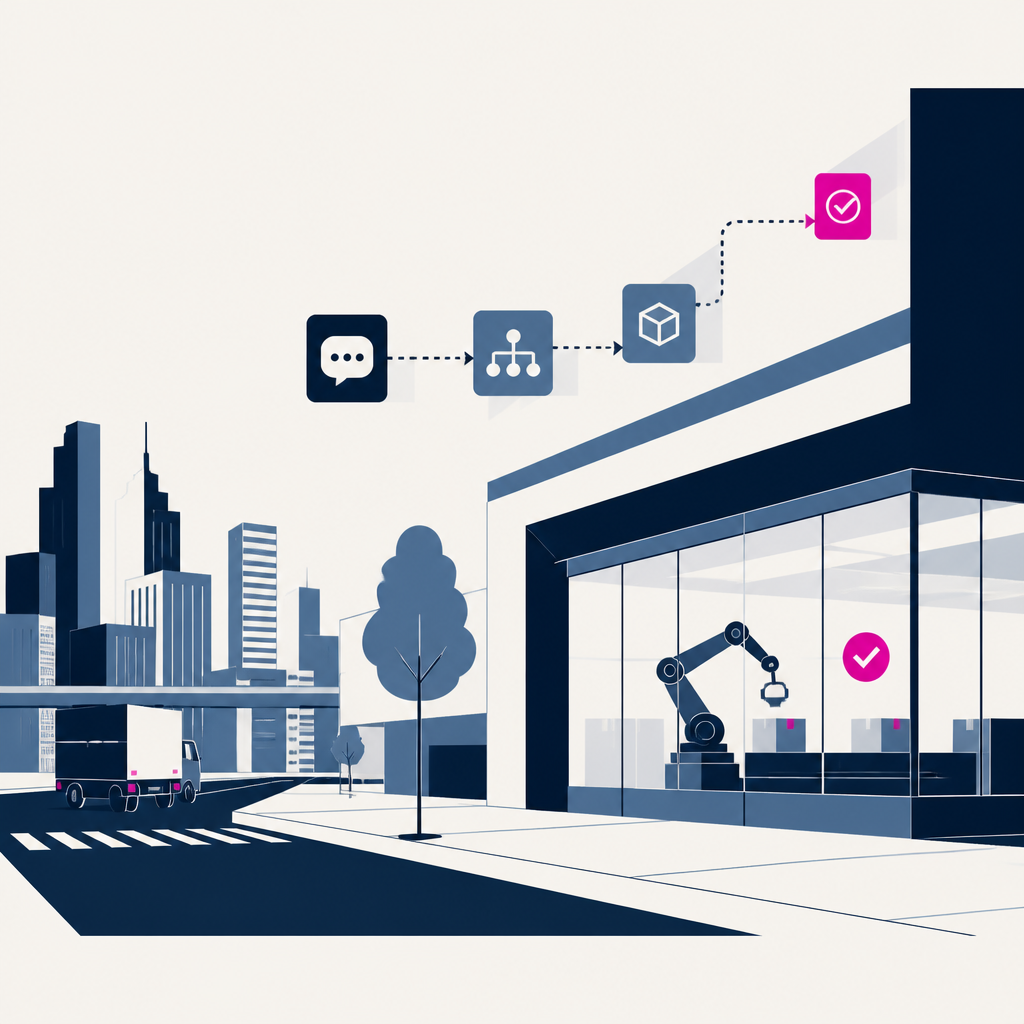
Endava, a software engineering firm that builds custom systems for banks, insurers, and other big clients, is betting its future on AI agents rather than just AI-assisted coding. The company has wired ChatGPT Enterprise and OpenAI's Codex into its delivery pipeline, using them to handle chunks of work that used to eat up engineer hours: writing boilerplate code, drafting documentation, triaging tickets, even scaffolding entire project structures before a human ever touches them.
What makes this interesting isn't the tools themselves — plenty of shops use Codex now — it's the scale of the cultural shift Endava is attempting. This is a services company with thousands of engineers spread across dozens of client accounts, and it's trying to make AI-native workflows the default, not a side experiment run by a few enthusiastic teams. That means retraining project managers, not just developers, and rethinking how work gets scoped and estimated when a chunk of it can now be delegated to an agent that runs semi-autonomously.
The payoff Endava is chasing is speed on repetitive, well-defined tasks — the stuff that clogs sprints without requiring much judgment. Early internal use, according to the company, has cut time spent on things like code migrations and internal tooling, freeing engineers to spend more hours on architecture decisions and client-specific problem solving. That's the pitch every company doing this makes, but Endava's position as a vendor to large regulated industries gives it a harder test: clients in banking and insurance don't hand out trust easily, and any AI-driven process still has to pass their audits and compliance checks.
There's also a quieter bet buried in this: that agentic workflows change what it means to manage a software project at all. If an agent can pick up a ticket, write the code, and open a pull request without a human kicking off each step, then the job of a delivery manager starts to look more like supervising a small AI workforce than assigning tasks to people. Endava seems to be leaning into that reality rather than resisting it, which says something about where enterprise services firms think the next few years are headed.
My take — AI-written commentary, not fact-checked reporting
I'm generally skeptical of vendor case studies that read like advertisements, and this one is exactly that — OpenAI showcasing a customer to sell Codex and ChatGPT Enterprise seats. But the underlying signal is real: services firms live or die on billable efficiency, and if agents genuinely cut delivery time on grunt work, competitors will be forced to follow or lose contracts. Worth watching less for Endava's specifics and more as an early marker of how fast agentic tooling spreads through an industry that has zero patience for hype it can't bill for.
Read more about this at: OpenAI