
Hand Wave
Product Hunt Aadi
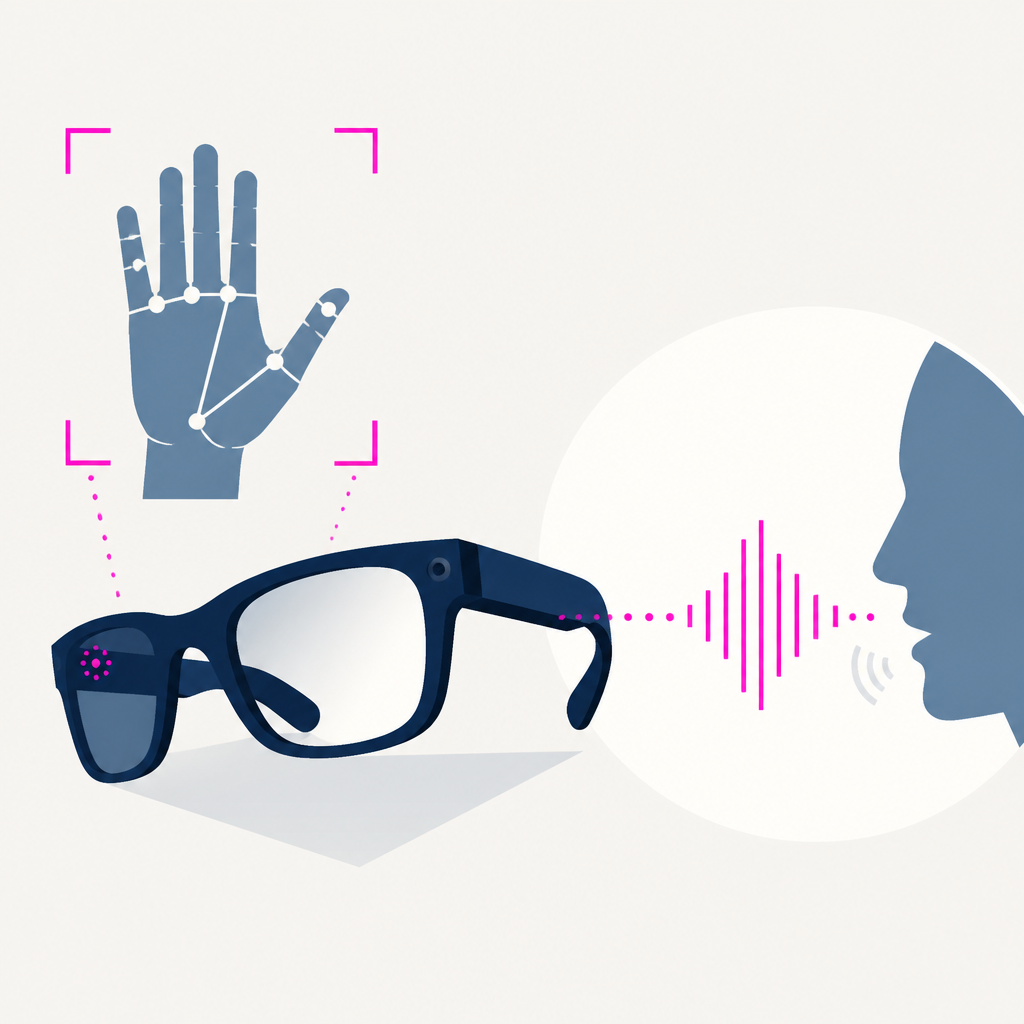
A new gadget called Hand Wave uses smart glasses to turn sign language into spoken words in real time. It's aimed at closing the gap between deaf signers and hearing people who don't know ASL.
Based on reporting by Product Hunt, Aadi — read the original for the full story.
Summary, retelling and take written by AI under human oversight; images are AI-generated illustrations. How we work · Report an error
Hand Wave showed up on Product Hunt this week with a simple pitch: put on a pair of smart glasses, sign normally, and the person in front of you hears your words out loud. No app fumbling, no typing on a phone screen, no waiting for someone to translate. The glasses do the reading and the talking.
The idea isn't new in spirit — text-to-speech tools and sign language recognition software have existed for years, often clunky and slow. What Hand Wave is betting on is wearable convenience. Smart glasses have quietly gotten good enough to run computer vision on-device, tracking hand shapes and motion the way Meta's Ray-Bans track faces or objects. Strap that same kind of camera and processing power onto a frame, point the model at sign language instead of general scene recognition, and you get a device meant to sit unnoticed on someone's face during an ordinary conversation.
The listing on Product Hunt is short on technical detail — no word yet on which sign language variants it supports, how it handles regional dialects of ASL or BSL, or what kind of latency users can expect between a gesture and the spoken output. Those gaps matter enormously for something claiming real-time translation, since sign languages carry grammar and nuance that a system trained narrowly on hand shapes can easily flatten into wrong or awkward phrasing.
Still, the concept lands at an interesting moment. Wearable AI is having its moment thanks to cheaper sensors and on-device inference, and accessibility tech has historically been an early proving ground for exactly this kind of hardware. If Hand Wave's execution matches its pitch, it's the sort of tool that could turn a five-minute grocery store interaction from awkward gesturing into an actual conversation.
My take — AI-written commentary, not fact-checked reporting
Accessibility gadgets get pitched with grand promises constantly, and most quietly disappear a year later once the funding dries up or the accuracy turns out to be nowhere near demo-day polish. Sign language translation is genuinely hard — it's not subtitles for hands, it involves facial expression, spatial grammar, and regional variation that a camera-based model can easily botch. Worth watching, but nobody should retire their human interpreters just yet.
Read more about this at: Product Hunt