
German biotech AquaNab secures funding to tackle sea lice with nanoantibodies
Tech.eu Tamara Djurickovic
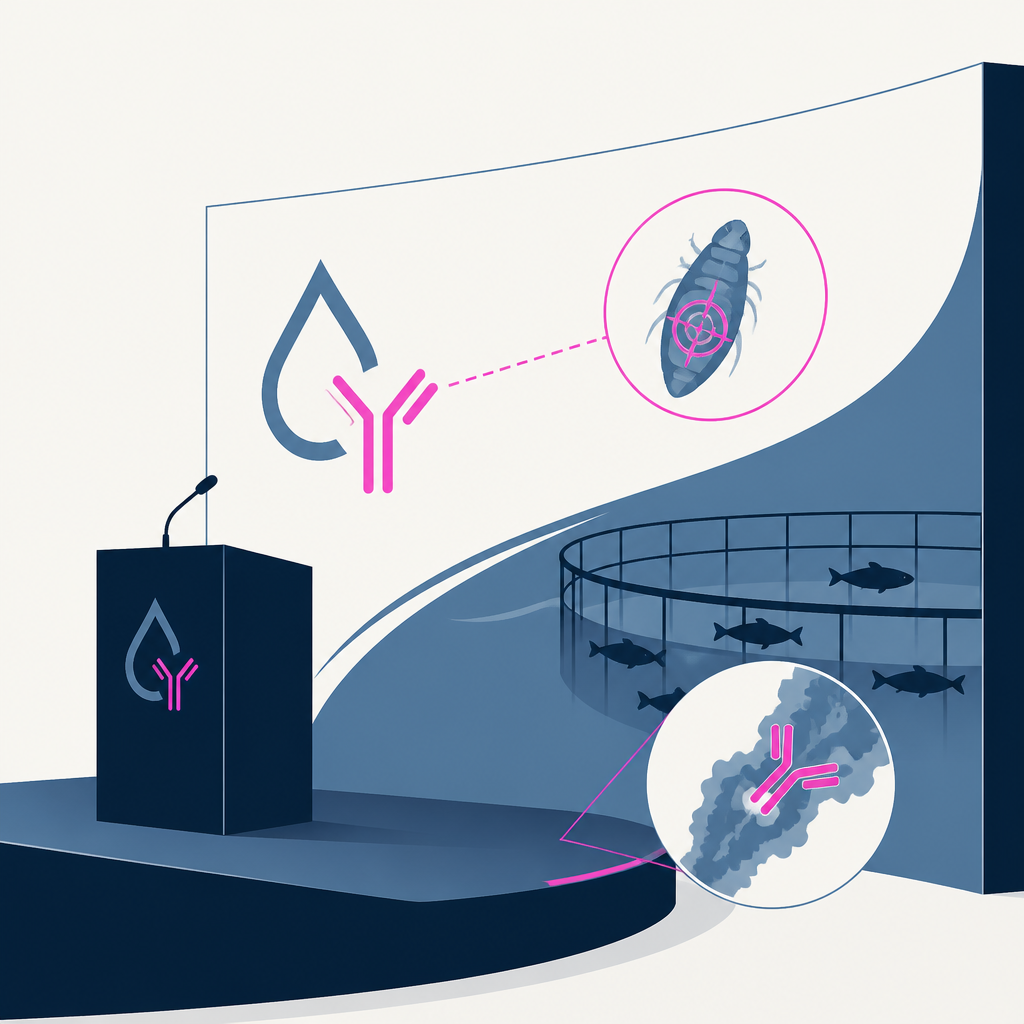
A Hamburg biotech got backing to test nanoantibodies against sea lice in salmon. If it works, fish farms could dodge harsh treatments and some big losses.
Based on reporting by Tech.eu, Tamara Djurickovic — read the original for the full story.
Summary, retelling and take written by AI under human oversight; images are AI-generated illustrations. How we work · Report an error
AquaNab, a Hamburg startup, has picked up investment from Nordic Foodtech VC to push its nanoantibody platform for aquaculture. For the Finnish firm, it’s the first deal it has made outside the Nordic region.
The company was founded by Dr Ruth Tamara Montero, Dr Alejandro Rojas Fernandez and Gunnar Johildarson. Its first target is sea lice, a parasite that keeps hammering salmon farming and is estimated to cost the global aquaculture industry about $4 billion a year through treatment costs, production losses and fish mortality.
That pain point has created room for alternatives. Chemical and mechanical delousing methods can raise concerns about fish welfare and the environment, so AquaNab is betting on a different route: precision nanoantibodies called AquaNabs that are given to fish through feed.
AquaNab says its research has shown the alpaca-derived nanoantibodies can pass through the fish’s intestinal barrier and reach the bloodstream. That would make the approach less invasive than many current treatments, at least in theory, and it gives the company a cleaner story than the usual aquaculture arms race of chemicals versus parasites.
The first product is being built for Atlantic salmon, but the broader platform is meant to be adapted to bacterial, viral and parasitic diseases in other aquaculture species. Nordic Foodtech VC’s money will help the company move toward proof of concept, deepen work with salmon producers, feed manufacturers and animal health companies, and head toward commercialising its first products.
My take — AI-written commentary, not fact-checked reporting
Aquaculture has been living with the same brutal choice for too long: treat the fish hard, or lose them to the parasite. A feed-based therapy sounds a lot more civilized than the usual industrial scrambling with chemicals and machinery. If biotech wants to earn its keep, this is the kind of unglamorous problem it should be solving.
Read more about this at: Tech.eu
Related stories
 Aflabox raises €1.35M seed to bring food safety testing into the field
Tech.eu · 1 month ago ·
45
Fish Audio raises $50M seed to build AI voice models for creators and enterprises
TechCrunch · 1 month ago ·
32
Aflabox raises €1.35M seed to bring food safety testing into the field
Tech.eu · 1 month ago ·
45
Fish Audio raises $50M seed to build AI voice models for creators and enterprises
TechCrunch · 1 month ago ·
32
 Sightera Biosciences closes €3M pre-seed to expand its patient-derived AI drug discovery platform
Tech.eu · 2 months ago ·
7
Sightera Biosciences closes €3M pre-seed to expand its patient-derived AI drug discovery platform
Tech.eu · 2 months ago ·
7