Generative modeling with sparse transformers
OpenAI
OpenAI built a new model called Sparse Transformer that predicts what comes next in text, images or sound. It can handle sequences 30 times longer than before, which used to choke regular transformers.
Based on reporting by OpenAI — read the original for the full story.
Summary, retelling and take written by AI under human oversight; images are AI-generated illustrations. How we work · Report an error
OpenAI just pushed the limits of how much context a neural network can actually chew through. Their new architecture, called the Sparse Transformer, is built to predict the next item in a sequence — a word, a pixel, a sound wave sample — and it does this with a tweak to attention that lets it process sequences 30 times longer than what standard transformers could manage.
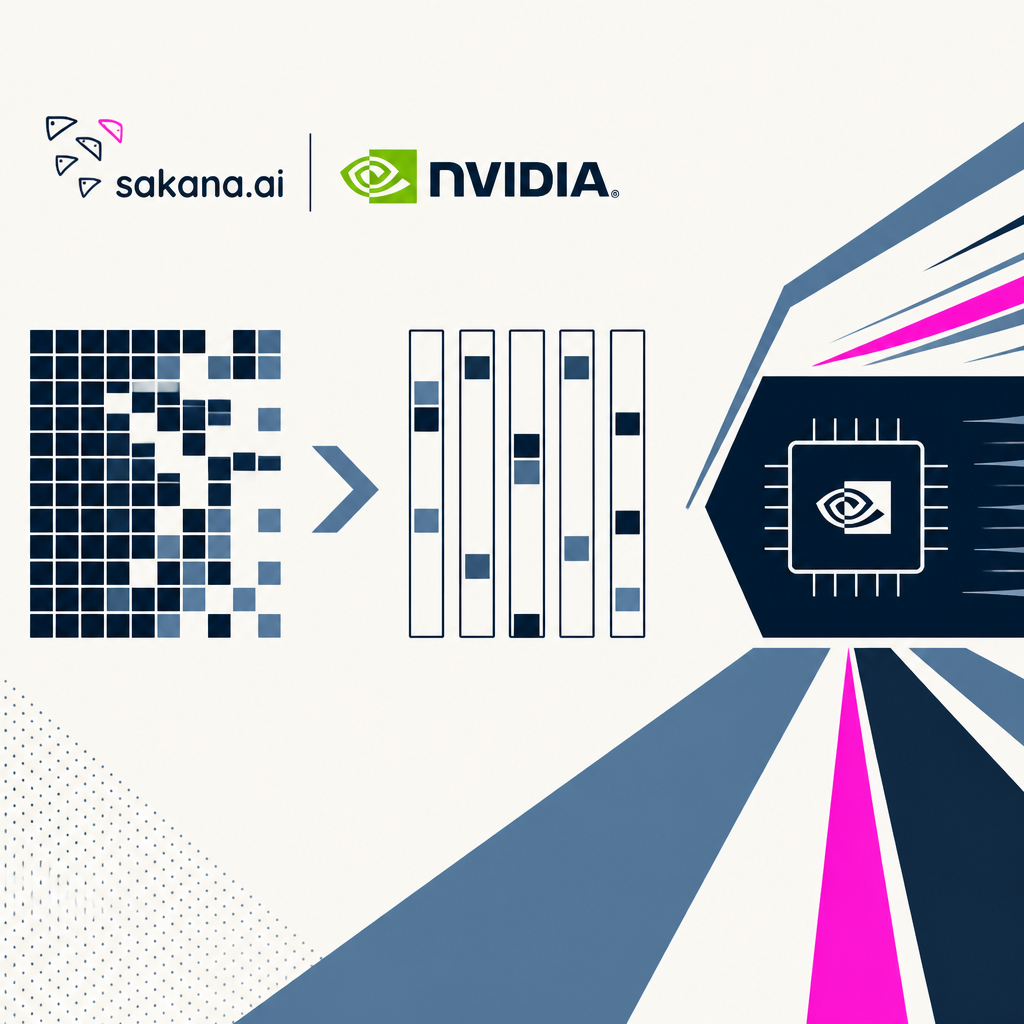
The bottleneck with regular transformers has always been attention itself. Every token has to compare itself against every other token, so cost grows quadratically as sequences get longer. Feed it a few thousand tokens and things get slow and memory-hungry fast. OpenAI's fix is to make attention sparse — instead of every position looking at every other position, each one only looks at a carefully chosen subset. Fewer comparisons, way less compute, and crucially, the pattern still captures long-range dependencies instead of just local ones.
What's notable is that this isn't a text-only trick. The same architecture handles images and raw audio waveforms, which is a much harder ask because those sequences are enormous compared to sentences. A single image, flattened into pixels, can run into the tens of thousands of steps; audio clips even more. Getting a model to hold coherent patterns over that scale, rather than trailing off into noise or repetition, is the real achievement here.
This matters because so much of what limits generative models isn't cleverness, it's context. A model that forgets what happened 500 steps ago can't write a consistent story, keep a melody's structure, or render a coherent image beyond a small patch. By stretching workable context 30x, OpenAI is essentially buying these models more memory without paying the usual quadratic tax for it. That's the kind of unglamorous infrastructure work that ends up mattering more than any single splashy demo.
My take — AI-written commentary, not fact-checked reporting
This is one of those unsexy infrastructure papers that quietly reshapes everything downstream — GPT-2, GPT-3, and basically every long-context model since owes something to sparse attention tricks like this. I'd rather see ten papers like this than another chatbot demo; efficiency gains are what actually let the field scale, hype cycles just ride on top of them.
Read more about this at: OpenAI