Accelerating Text-to-Video Generation with Calibrated Sparse Attention
Apple
Apple researchers found a trick to make AI video generators run faster without retraining them. Most of the attention math in these models is basically wasted—skip it and get up to 58% speedup for free.
Based on reporting by Apple — read the original for the full story.
Summary, retelling and take written by AI under human oversight; images are AI-generated illustrations. How we work · Report an error
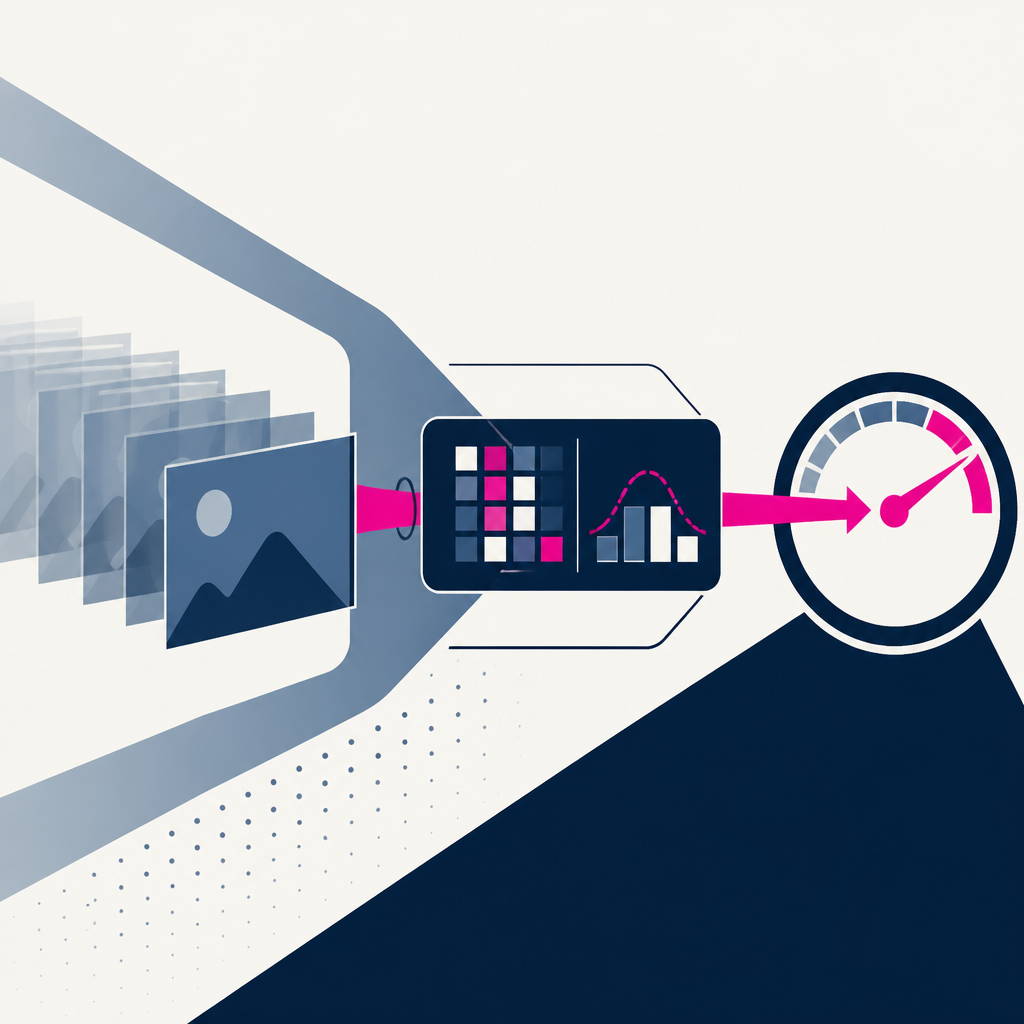
Video generation models built on diffusion and transformers are notoriously slow, and the main culprit is something called spatiotemporal attention — the mechanism that lets every token in a video 'talk' to every other token across space and time. That's a lot of connections, and a team at Apple, working with researchers from Tel Aviv University, noticed something useful: most of those connections don't actually matter. Across a wide range of inputs, huge chunks of the attention scores come out near zero, and the pattern of which connections matter tends to repeat in predictable ways, especially when you group tokens into local blocks.
That observation is the basis for CalibAtt, a training-free method the team built to exploit this redundancy. Instead of retraining a model to be sparse, CalibAtt runs an offline calibration pass first, figuring out which block-level attention patterns are consistently stable across different layers, heads, and even diffusion timesteps. Those stable patterns get compiled into optimized attention operations ahead of time. Then, when the model actually generates a video, it only computes the connections that are genuinely input-dependent and skips the rest, using hardware-friendly shortcuts rather than brute-force computation.
The results are notable mostly because they didn't require touching the underlying models at all. Tested on Wan 2.1 14B, Mochi 1, and several few-step distilled variants across multiple resolutions, CalibAtt delivered up to 1.58x faster end-to-end generation. That's a real-world speedup, not a theoretical one, and it beat other training-free acceleration methods on the market while keeping video quality and text-to-video alignment basically intact.
What makes this interesting is the calibration step itself. Rather than assuming sparsity patterns are universal, CalibAtt tests and locks in which patterns actually hold steady per layer, per head, and per timestep — a more careful, almost surgical approach compared to generic pruning tricks. It's the kind of engineering that doesn't get headlines but quietly makes deployed video models cheaper and faster to run, which matters a lot once you're serving these things at scale rather than just showing them off in a demo.
My take — AI-written commentary, not fact-checked reporting
This is the unglamorous but genuinely useful side of AI research — not a bigger model, just a smarter way to stop wasting compute on attention scores nobody needed anyway. I'd rather see ten papers like this than another benchmark-chasing model release, because efficiency gains like a 1.58x speedup compound fast once products actually ship at scale. Apple keeps doing quiet infrastructure work instead of chasing headlines, and honestly, that's the right instinct.
Read more about this at: Apple