Evolution strategies as a scalable alternative to reinforcement learning
OpenAI
OpenAI found that evolution strategies, a decades-old optimization trick, can match modern reinforcement learning on Atari and robot-sim benchmarks. It's simpler to run at scale and dodges some of RL's biggest headaches, like painfully slow training.
Based on reporting by OpenAI — read the original for the full story.
Summary, retelling and take written by AI under human oversight; images are AI-generated illustrations. How we work · Report an error
Reinforcement learning has been the darling of AI research for the better part of a decade, powering everything from game-playing bots to robotic control systems. But RL comes with real costs: it's notoriously fussy to tune, sensitive to reward shaping, and hard to parallelize efficiently across thousands of machines. OpenAI's researchers went looking for something older and, in some ways, dumber that could sidestep those problems.
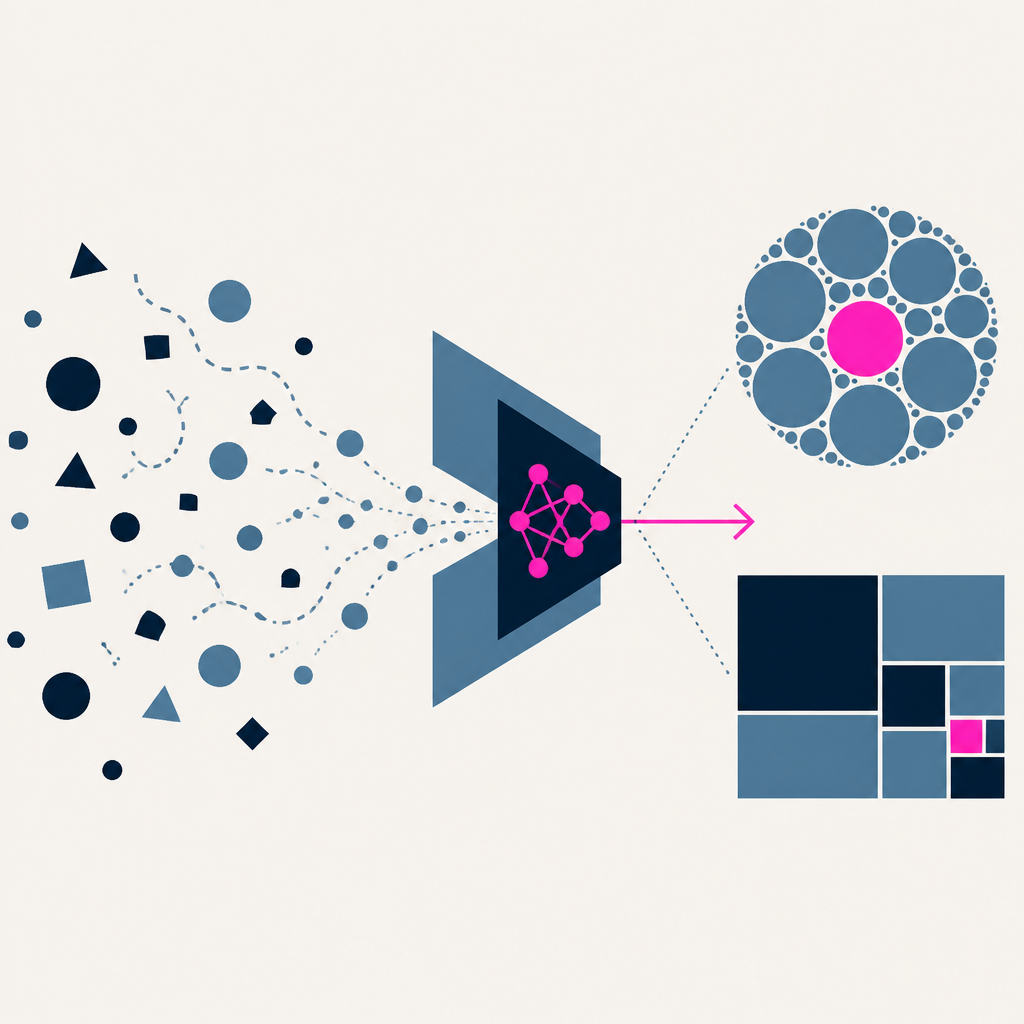
What they landed on is evolution strategies, a technique that traces back decades before deep learning became fashionable. Instead of computing gradients through backpropagation the way standard RL algorithms do, ES works by perturbing a neural network's parameters with random noise, running many slightly different versions of the policy, and nudging the parameters toward whichever variations performed best. No backward pass, no need to differentiate through the environment or the reward function at all.
The surprising part is that this crude-sounding approach held its own against established RL methods on the benchmarks everyone actually cares about, including Atari games and MuJoCo continuous-control tasks. It wasn't strictly better in every case, but it was competitive, which is notable given how much simpler the method is under the hood.
Where ES really shines is scalability. Because each worker only needs to share a single scalar reward value rather than full gradient information, the communication overhead across a distributed cluster is tiny. That means you can throw far more machines at the problem without the usual synchronization bottlenecks that plague gradient-based RL, and OpenAI's tests showed the approach scaling smoothly to hundreds of parallel workers.
ES also skips some of RL's more annoying failure modes, like the need for careful discounting of rewards over time or dealing with action distributions that don't play nicely with backpropagation. For researchers tired of babysitting fragile RL training runs, that alone might be reason enough to keep this old idea around.
My take — AI-written commentary, not fact-checked reporting
I like seeing old-school optimization methods get dusted off and thrown at modern compute clusters, because it's a reminder that the field's progress isn't purely about clever new gradient tricks, it's often just about who can parallelize the dumbest idea the hardest. ES won't replace RL for sample-hungry robotics work anytime soon, but as a scalability hack for teams with serious compute, it deserves way more attention than it gets.
Read more about this at: OpenAI