Evolution Strategies
Lil'Log
Evolution Strategies skip gradients entirely, tweaking neural nets by trial, error, and natural-selection-style math instead. It's the black-box approach that quietly powers some deep RL breakthroughs.
Based on reporting by Lil'Log — read the original for the full story.
Summary, retelling and take written by AI under human oversight; images are AI-generated illustrations. How we work · Report an error
Gradient descent has such a stranglehold on deep learning that it's easy to forget there are other ways to steer a model toward a better answer. Lilian Weng's rundown of Evolution Strategies is a useful reminder. These algorithms don't need to know anything about the shape of the function they're optimizing — no gradients, no Hessians, just repeated evaluation of inputs and a Darwinian process for picking the winners.
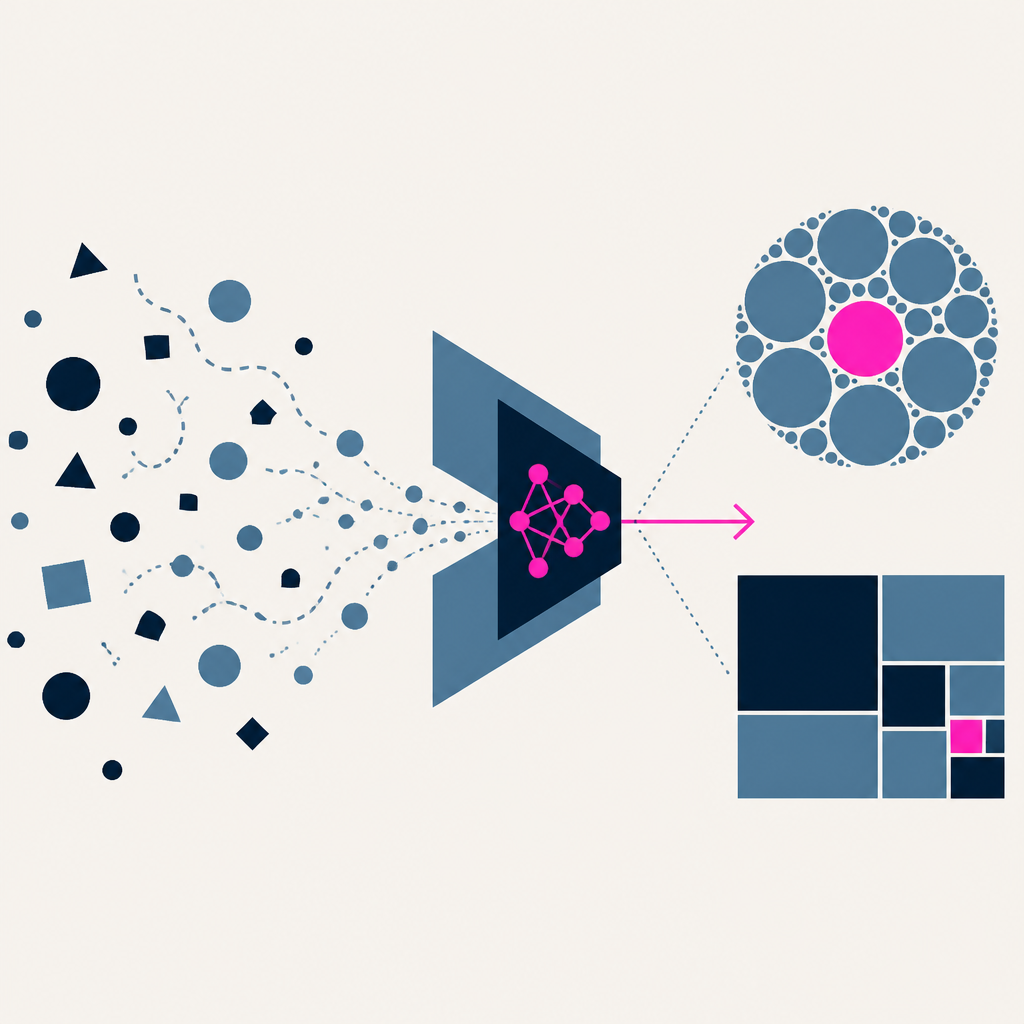
The basic version is almost embarrassingly simple. You model your candidate solutions as draws from a Gaussian distribution, generate a batch of them, score each one against your target function, keep the best performers, and use their average position and spread to define the next generation's distribution. Do that enough times and the population drifts toward whatever region of parameter space actually works. No backpropagation required, which matters a lot when your objective is not differentiable or your function is a genuine black box.
The problem with that vanilla approach is that the step size — how aggressively the search explores — is stubbornly tied to what it was in the previous generation. That's where CMA-ES, the Covariance Matrix Adaptation Evolution Strategy, earns its reputation as the workhorse of the field. Instead of tracking just a mean and a single standard deviation, it maintains a full covariance matrix that captures how different dimensions of the search space move together. It also keeps a running
My take — AI-written commentary, not fact-checked reporting
I'll say the unfashionable thing: gradient-free methods like CMA-ES deserve way more attention than the field gives them, precisely because they don't care whether your objective is smooth, differentiable, or even remotely well-behaved. Deep learning's gradient obsession is a product of what's convenient for GPUs, not necessarily what's best for every problem, and Europe's smaller labs chasing efficient, compute-light methods should be paying closer attention to this stuff instead of chasing scale for its own sake.
Read more about this at: Lil'Log