
DeepMind’s hurricane breakthrough has surprised weather scientists
Ars Technica Victoria Turk, wired.com ● Covered by 2 sources
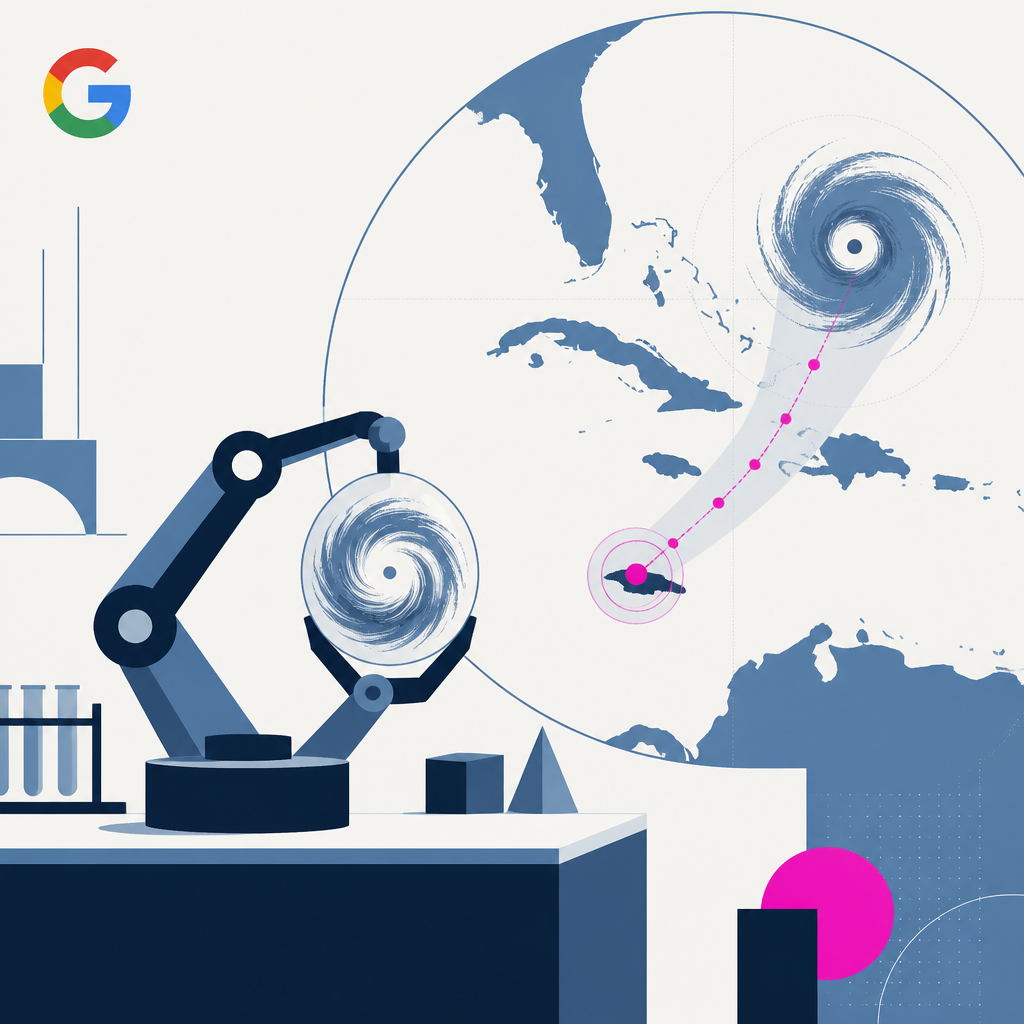
DeepMind's WeatherNext AI predicted Hurricane Melissa would hit Jamaica as a Category 5 storm, five days out, with 80% confidence. That's a full extra day of warning versus older models, which can mean real time to evacuate.
Based on reporting by Ars Technica, Victoria Turk, wired.com — read the original for the full story.
Summary, retelling and take written by AI under human oversight; images are AI-generated illustrations. How we work · Report an error
Storms don't wait for consensus. When a system formed over the Caribbean in October 2025, the usual weather models split on what would happen next: some had it fizzling out over Haiti, others saw it strengthening. WeatherNext, the forecasting model built by Google's DeepMind and Google Research, didn't hedge. Five days before landfall, it flagged an 80 percent chance the storm would slam into Jamaica as a full Category 5 hurricane.
That storm turned out to be Hurricane Melissa, and it was every bit as bad as feared, tearing through Jamaica with flooding and landslides that devastated communities. But the AI's early call gave forecasters something they don't usually get this far out: confidence. That confidence translated into earlier warnings on the ground, which meant people in Melissa's path had more time to prepare before the worst of it arrived.
A paper published Thursday in Nature lays out just how significant that lead time really is. According to the researchers, WeatherNext doesn't just match existing cyclone models — it beats them by roughly a day, on average. A three-day forecast from WeatherNext is now about as reliable as a two-day forecast from older systems. That might sound like a small technical footnote, but for anyone deciding whether to board up windows or evacuate a coastline, an extra 24 hours of accurate warning is the difference between scrambling and actually being ready.
What makes this notable isn't just the raw accuracy gain. It's that the model held up during an actual, high-stakes, real-world event rather than a retrospective benchmark test. Hurricane forecasting has always been a game of narrowing uncertainty as fast as possible, and Melissa was a case where the storm's eventual severity genuinely could have gone either way in the models. WeatherNext didn't just get lucky — it got there earlier than the alternatives, and that timing is precisely what emergency planners need most.
My take — AI-written commentary, not fact-checked reporting
An extra day of accurate hurricane warning isn't some abstract AI benchmark win — it's the gap between people packing a bag and people getting caught off guard. Weather forecasting is exactly the kind of unglamorous, high-stakes problem AI should be chasing instead of chatbots arguing about poetry, and DeepMind proving it out on an actual deadly storm, not a synthetic test, is the part worth paying attention to. More of this, less hype.
Read more about this at: Ars Technica