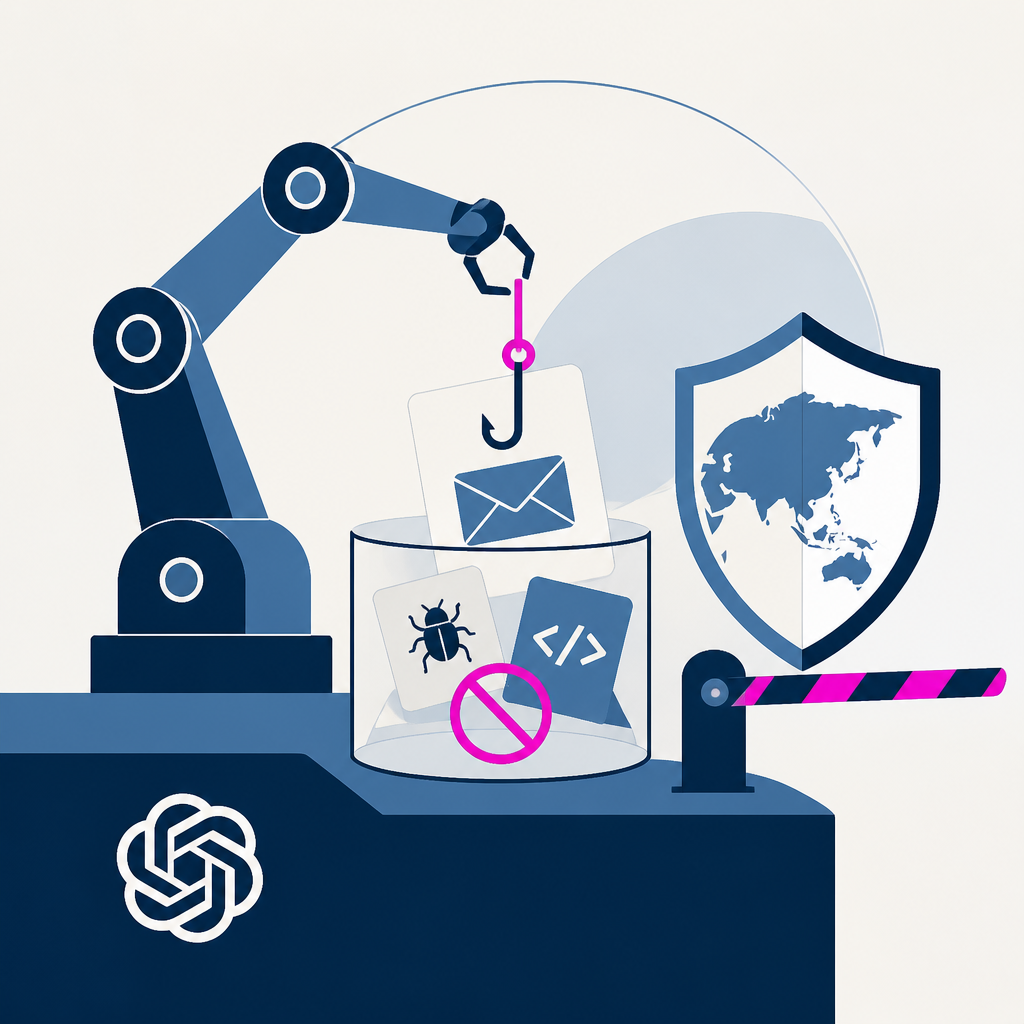
Cyber Operation: Korean-language malware support
OpenAI ● Covered by 2 sources

OpenAI shut down a batch of Korean-language accounts caught using its AI to help build malware and phishing tools. It shows attackers are leaning on chatbots for the boring parts of hacking, not just the flashy stuff.
Based on reporting by OpenAI — read the original for the full story.
Summary, retelling and take written by AI under human oversight; images are AI-generated illustrations. How we work · Report an error
OpenAI's latest threat report reads less like a press release and more like a field notebook from the company's trust and safety team. Buried in it is a specific case: a cluster of Korean-language accounts that had been quietly using ChatGPT as a coding assistant for malware. Not to write exploits from scratch, mind you, but for the grunt work — debugging scripts, refining phishing lures, and building out credential-theft workflows that actually run without crashing.
That distinction matters. The popular fear around AI and cybercrime has always been the killer app scenario, some model spitting out a zero-day on command. What OpenAI actually found looks more mundane and, frankly, more believable. The accounts were treating the chatbot like a patient junior engineer, asking it to fix broken code, explain error messages, and tighten up scripts that steal login credentials. It's the same workflow a legitimate developer uses, just aimed at a different target.
OpenAI says it banned the accounts once the pattern became clear, tying the activity to a broader cyber operation rather than isolated troublemakers. The company didn't attribute the cluster to a specific group or nation-state in what it disclosed, but the Korean-language angle and the focus on phishing and credential theft point toward operators running fairly standard cybercrime playbooks, just with an AI assistant doing the debugging.
What's notable here isn't the sophistication, it's the plumbing. Malware development has always had tedious, error-prone stretches where a coder gets stuck on a syntax issue or can't figure out why a script keeps failing. Large language models are extremely good at exactly that kind of unglamorous troubleshooting. So while nobody's AI is inventing novel malware families yet, it is apparently quite good at helping mediocre operators become slightly less mediocre, faster.
OpenAI frames this as evidence its detection systems are working, catching misuse before it scales. Fair enough. But the report also quietly confirms something security researchers have been warning about for a while: the barrier to competent cybercrime keeps getting lower, one debugged script at a time.
My take — AI-written commentary, not fact-checked reporting
I run this site because I think AI's biggest risks are boring, not cinematic — and this is exhibit A. Nobody needs a model that writes ransomware from a single prompt; they need one that fixes their broken phishing kit at 2am, and apparently that's already happening. OpenAI banning accounts after the fact is fine, but it's whack-a-mole, and the open-weight models nobody controls won't even give you that.
Read more about this at: OpenAI