
Cloudflare OS is a Stripped-down Version of OpenClaw for Companies
Trending Topics Jakob Steinschaden ● Covered by 6 sources
Cloudflare just launched an open-source platform that turns AI agents into actual coworkers, not just chatbots. It plugs into your company's data and tools, but locks everything down with strict permission gates.
Based on reporting by Trending Topics, Jakob Steinschaden — read the original for the full story.
Summary, retelling and take written by AI under human oversight; images are AI-generated illustrations. How we work · Report an error
Cloudflare wants AI agents to stop being glorified autocomplete and start doing real office work. Its new release, Cloudflare OS, is pitched as an operating system for agents — a browser-based workspace where employees ask for a dashboard, a spreadsheet, or a small internal app, and an agent goes and builds it using company data instead of generic web knowledge.
The pitch hinges on context. A general chatbot doesn't know your company's internal jargon, its approval workflows, or the shortcut a finance team figured out last quarter. Cloudflare OS lets teams bake that institutional memory into shared capabilities, so once one person solves a recurring problem, everyone else's agent can reuse the fix. Non-developers get roped in too — describing a process in plain language is supposed to be enough to spin up a working tool, whether that's an internal app with its own server logic and storage, or an automated workflow that mixes deterministic code with AI judgment only where it's actually needed.
The part that matters more than the demo-friendly dashboards is the permissions architecture underneath. Agents start with zero access to anything. Every connection to a data source, a GitHub repo, or an external system has to be explicitly granted, and Cloudflare routes that through what it calls Gatekeepers — a layer that holds credentials, enforces policy, and logs exactly what each agent touched. Sensitive actions, like merging code or shipping data outside the company, can be gated behind human approval. And permissions are supposed to travel with the output: if a dashboard was built from restricted warehouse data, only people who already had access to that data can open the dashboard. That's Cloudflare trying to close the obvious loophole where an AI summary quietly becomes a data leak.
Crucially, Cloudflare is shipping this as open source, separating the core platform from its own internal reference deployment, so companies can bolt it onto whatever stack they already run — Gmail, BigQuery, Linear, Notion, existing MCP servers — without touching the core. It's model-agnostic too, running requests through Cloudflare's AI Gateway with Kimi K2.7 shown as one option among many, letting organizations set cost limits and pick models per task. Under the hood it all runs on Cloudflare Workers, with isolated execution environments and Cloudflare Access handling the security layer.
Cloudflare is essentially betting that the next wave of enterprise AI adoption won't be won by whoever has the smartest model, but by whoever builds the least leaky plumbing around it.
My take — AI-written commentary, not fact-checked reporting
The permissions-first design is the right instinct in an industry that keeps bolting agents onto company data first and asking about access control later. Every enterprise AI rollout so far has treated security as a footnote, so Cloudflare making zero-access-by-default the starting point deserves credit rather than skepticism. The real test isn't the flashy dashboard demos, it's whether IT departments actually bother configuring Gatekeepers properly instead of rubber-stamping broad permissions to make the shiny new tool work faster.
Read more about this at: Trending Topics
Related stories
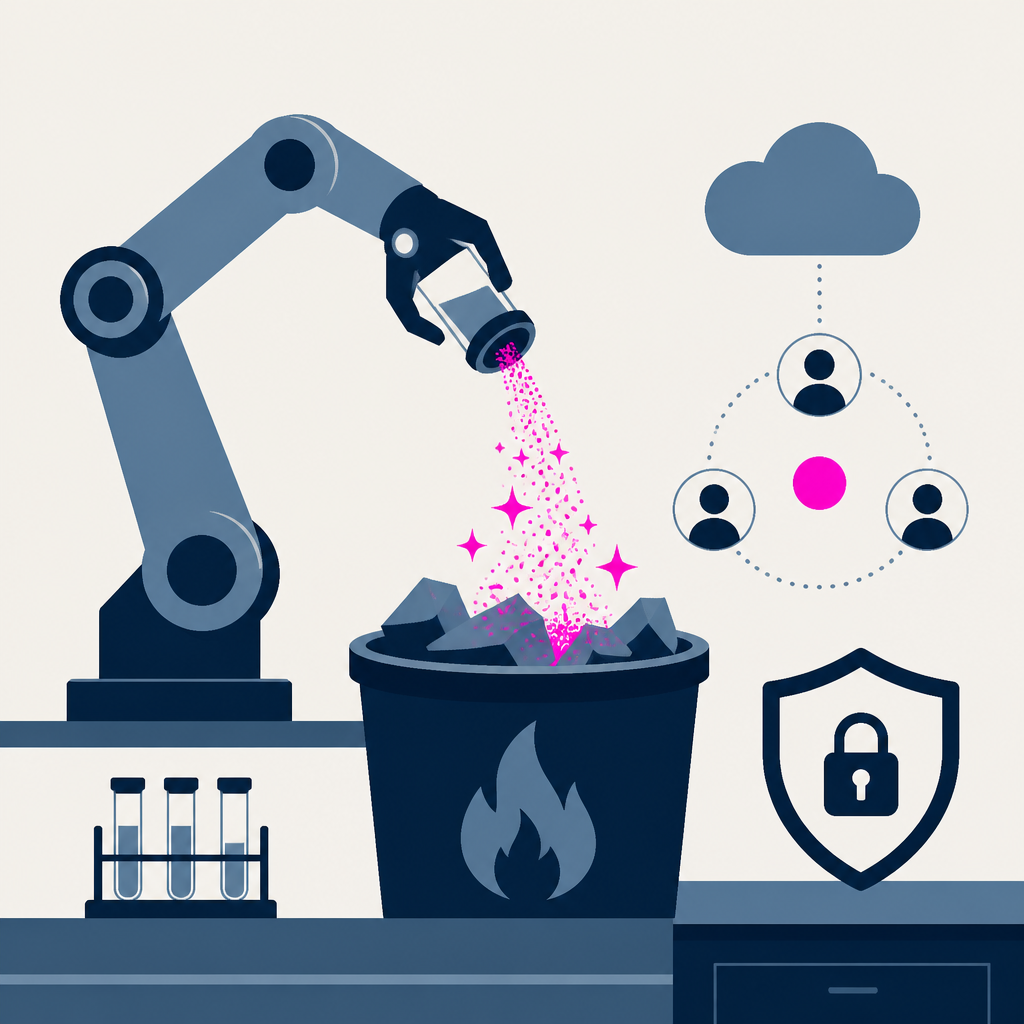 OpenClaw 2.0 pours glitter on slow-burning security dumpster fire
The Register · 3 weeks ago ·
38
Enterprises power agentic workflows in Cloudflare Agent Cloud with OpenAI
OpenAI · 5 months ago ·
47
Cloudflare open-sources a debugger for privacy protocols used by Apple and Microsoft, with AI agents in mind
The New Stack · 1 month ago ·
29
OpenClaw 2.0 pours glitter on slow-burning security dumpster fire
The Register · 3 weeks ago ·
38
Enterprises power agentic workflows in Cloudflare Agent Cloud with OpenAI
OpenAI · 5 months ago ·
47
Cloudflare open-sources a debugger for privacy protocols used by Apple and Microsoft, with AI agents in mind
The New Stack · 1 month ago ·
29