
Circles powers telco personalization with OpenAI technology
OpenAI
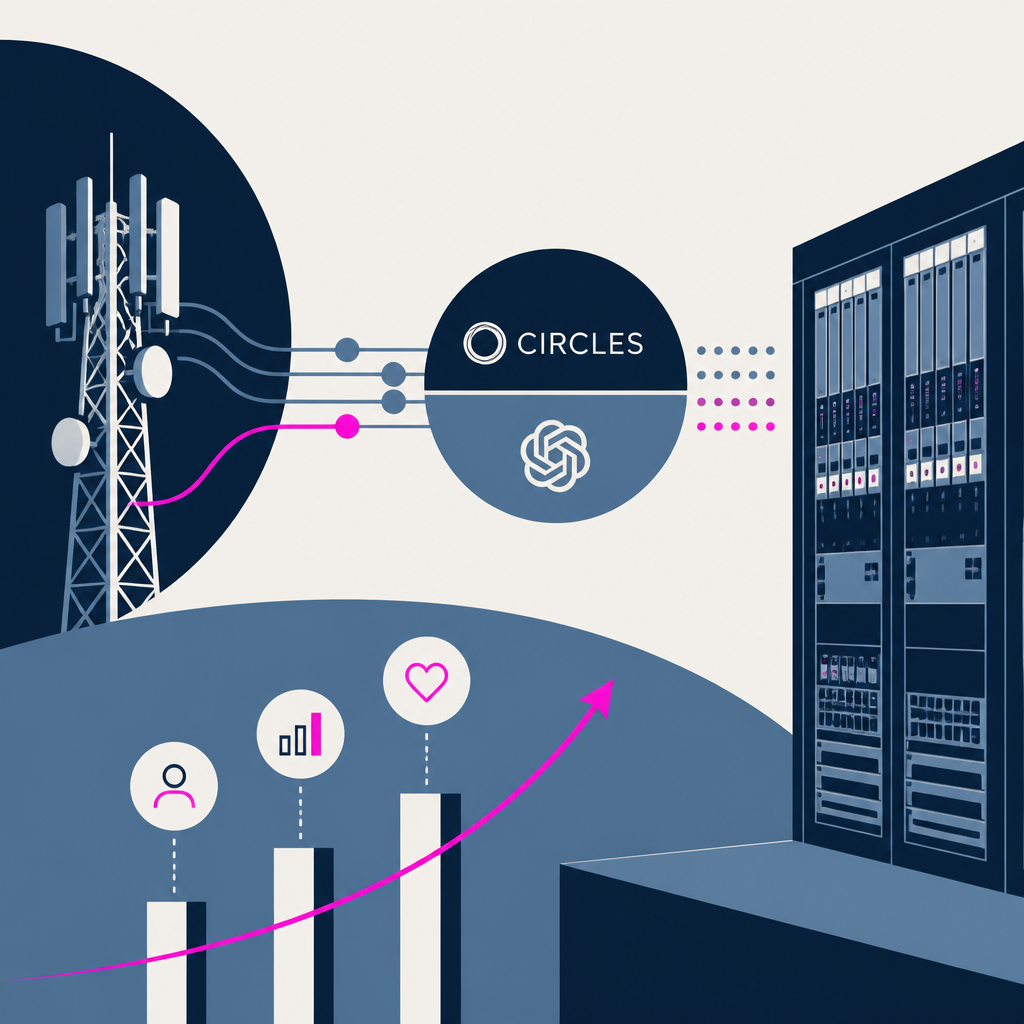
Circles is using OpenAI's API and Codex to run its telco business, not just chatbots on top of it.
Based on reporting by OpenAI — read the original for the full story.
Summary, retelling and take written by AI under human oversight; images are AI-generated illustrations. How we work · Report an error
Telcos love to talk about AI personalization, but most of it ends up being a recommendation widget bolted onto an app nobody opens. Circles, the digital telco outfit that builds mobile experiences for carriers, is claiming something more structural: a 22% bump in average revenue per user and a 9% drop in churn after weaving OpenAI's API and Codex into how it actually builds and runs its products.
The churn number is the one that matters most in this business. Telecom is a subscription grind where switching costs have collapsed thanks to eSIMs and portability rules, so a single-digit reduction in customer defection translates into real, compounding money over a subscriber base. Circles says the gains come from AI-native personalization, meaning the models are shaping offers, pricing, and service flows in something closer to real time, rather than a quarterly campaign dreamed up by a marketing team.
The Codex piece is arguably the more interesting bet, even if it got less attention in OpenAI's framing. Circles is using it to speed up engineering itself, which is a different claim than "we personalized some app screens." If a telco can meaningfully shrink development cycles with an AI coding assistant, that's a labor and speed story as much as a customer-experience one, and it's the kind of internal efficiency gain that rarely shows up in flashy demos but shows up clearly on a P&L.
What's missing from OpenAI's write-up, predictably, is any independent verification of these numbers or a timeframe for how they were measured. Vendors publishing customer success stories always have a thumb on the scale, and Circles has every incentive to make its own tech stack look transformative. Still, telecom is a sector that has been slow and skeptical about AI beyond call-center bots, so a name-brand operator putting real numbers next to
My take — AI-written commentary, not fact-checked reporting
I'd bet the Codex-driven engineering speedup is the more durable win here, since coding assistants have a much clearer, repeatable ROI than personalization algorithms that can plateau or get gamed by users. Case studies like this are marketing, sure, but they're also a signal that AI vendors are shifting their pitch from consumer novelty to boring, profitable enterprise plumbing, which is honestly where the real money always ends up.
Read more about this at: OpenAI