'Careless use of AI is the real threat - not the ghost stories'
BBC News
Opinion — commentary, not a factual news event.
Signal’s Meredith Whittaker says AI doom talk is overblown. Her real worry is careless systems making bad calls, even in war.
Based on reporting by BBC News — read the original for the full story.
Summary, retelling and take written by AI under human oversight; images are AI-generated illustrations. How we work · Report an error
Meredith Whittaker has little interest in the apocalypse talk now attached to AI. The Signal Foundation boss says the idea that machines will suddenly turn on people is not grounded in science. The danger, she argues, is much less cinematic and much more immediate: people trusting these systems when they should not.
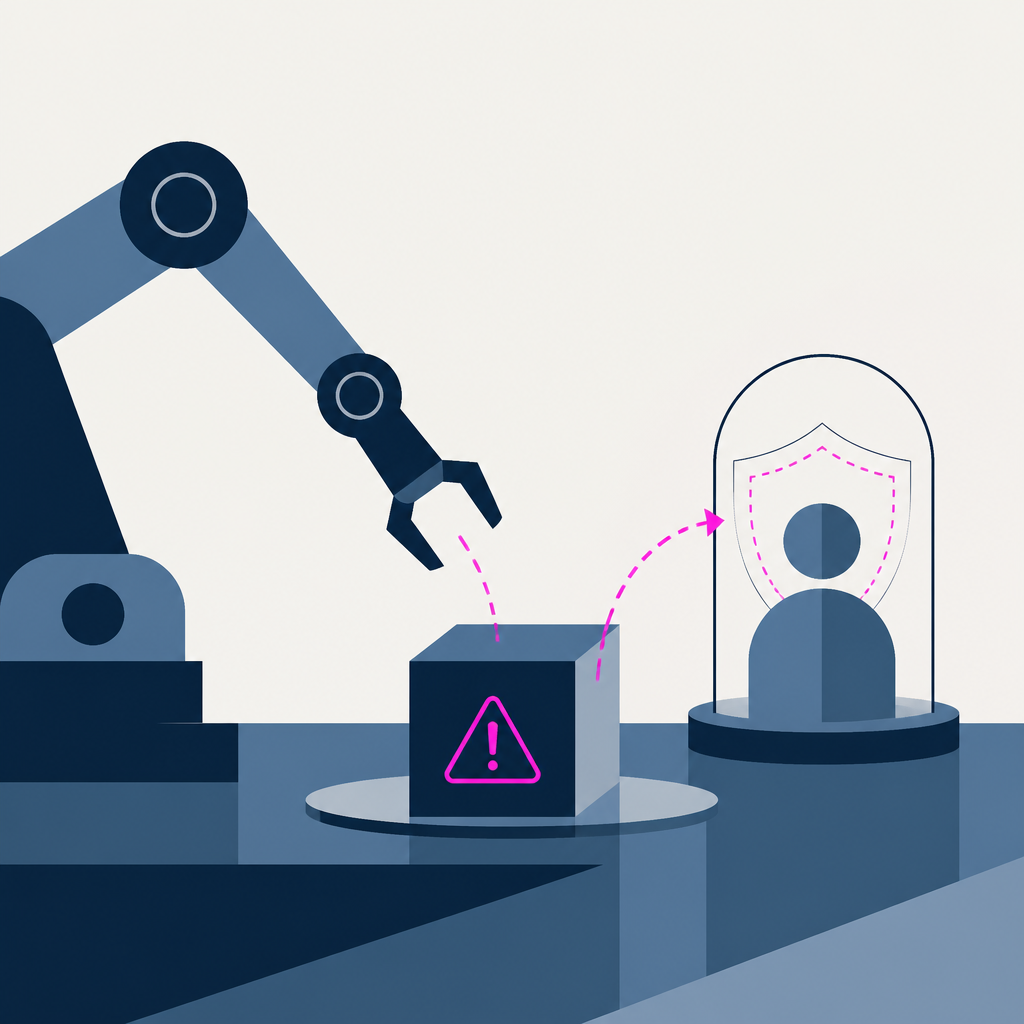
Her example is blunt. She points to a CNN-reported case where a chatbot used by US intelligence invented claims about a Chinese vessel carrying nuclear material, and the US reportedly started preparing a military response. That is not super-intelligence, she says. It is a machine producing bad information at exactly the wrong moment.
Whittaker’s reputation was built years before the current AI frenzy. She joined Google in 2006 as a temp with no computer science degree, then became one of the loudest internal critics of Project Maven, Google’s secret contract with the US Department of Defense. She argued that using AI for drone targeting would speed up the path from machine flagging a target to a human deciding to fire. After a walkout involving some 20,000 staff, Google dropped the contract.
Now she sees the same logic playing out elsewhere. She connects the Maven fight to the US missile strike on a school in Iran this year, which she says relied on the system and on outdated intelligence. Palantir says there is no evidence its software was at fault and that it was not responsible for the underlying intelligence. The US military has not yet published its findings.
On privacy, Whittaker is just as hard-edged. Signal, which she runs, has an estimated 40-70 million users, far fewer than WhatsApp, but it is known for hiding who is sending a message from its own servers. She says Signal would leave any country, including the UK, if forced to weaken encryption. Governments say they need more access to protect women and children; Whittaker calls that a push for communication controls. She sounds ready for the fight.
My take — AI-written commentary, not fact-checked reporting
This is the part the AI boosters keep sidestepping: the dangerous thing is not a machine uprising, it’s humans using flattering software as if it were a fact machine. The modern habit is to slap “safety” on surveillance and “innovation” on sloppy decision-making, then act surprised when it goes wrong. Whittaker at least says the quiet part out loud: if privacy and basic rights only work for saints, they don’t work at all.
Read more about this at: BBC News