
Building a Policy-Governed Multi-Agent Financial Research Workflow with Omnigent
MarkTechPost Sana Hassan
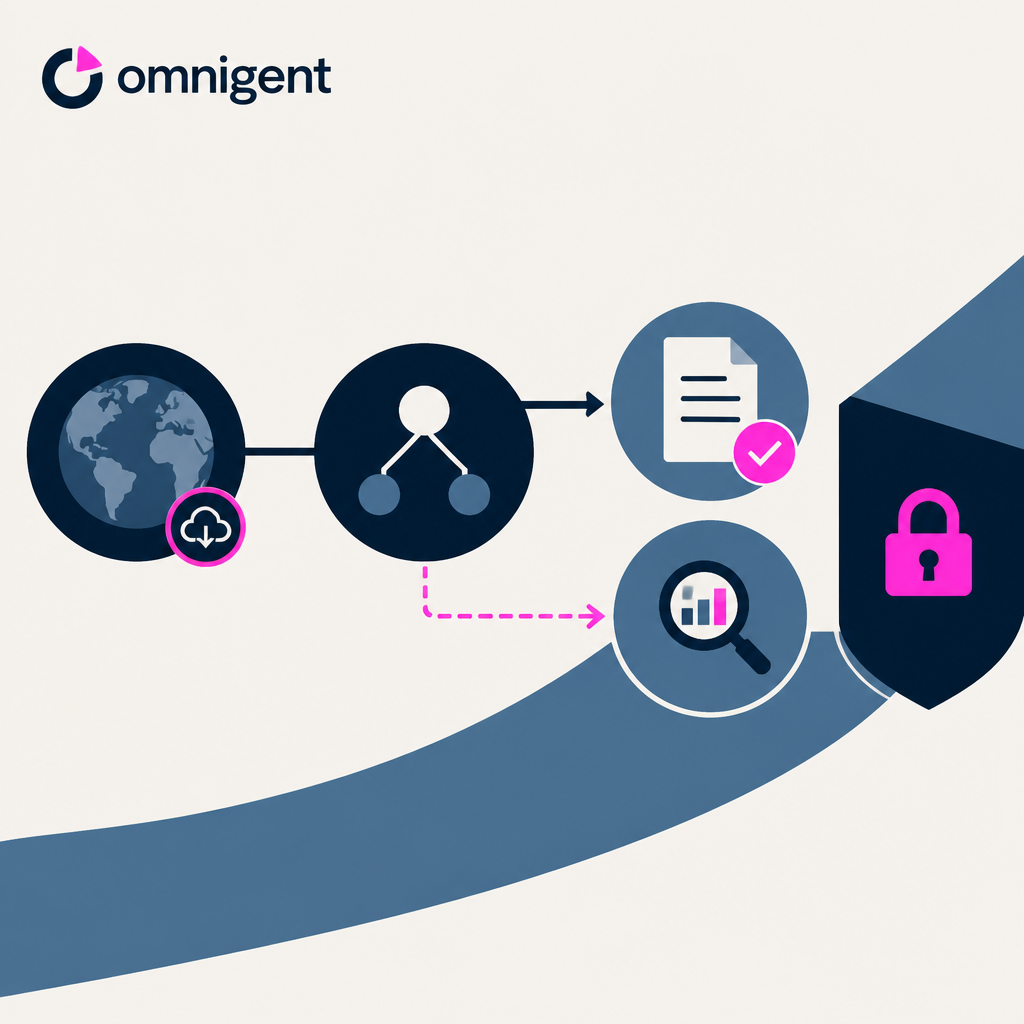
Someone built a mini financial-research AI team using Omnigent, all running in Colab with hard spending limits. The interesting part isn't the exchange rate lookup, it's that the whole thing enforces its own budget and call limits.
Based on reporting by MarkTechPost, Sana Hassan — read the original for the full story.
Summary, retelling and take written by AI under human oversight; images are AI-generated illustrations. How we work · Report an error
There's a particular flavor of AI tutorial that shows up constantly right now: wire a few agents together, have them fetch some data, call it a workflow. Most of these are toys. This one, built on a framework called Omnigent and walked through in a recent MarkTechPost piece, is slightly more interesting because of what it bolts on around the edges rather than the task itself.
The setup is straightforward on paper. A "financial research lead" agent gets asked for the current USD-to-EUR rate and a two-sentence client-ready summary. It calls a Python function hitting the Frankfurter API for live rates, drafts a summary, then hands that draft off to a second agent whose entire job is auditing the writing — checking word count, flagging jargon, suggesting one concrete fix. All of this runs through the Claude Agent SDK as the execution engine, with the whole agent hierarchy, its tools, and its prompts defined in a single YAML file rather than scattered across scripts.
The part actually worth paying attention to is the governance layer, which is easy to skim past. The YAML config attaches two policies directly to the session: a hard cap of 20 tool calls, and a dollar ceiling of $1.00 for the entire run. No agent, however chatty or looped, can blow past those numbers. That's a small thing, but it's the kind of small thing that's been mostly absent from agent frameworks that let you build impressive demos and then quietly rack up API bills when something goes sideways in a loop.
There's also a practical engineering note buried in the setup: the whole thing runs inside a uv-managed Python 3.12 virtual environment, specifically to dodge Colab's broken ensurepip behavior. No Node.js, no tmux, no interactive terminal — just a subprocess call with `--no-session` and a timeout, piping output back into the notebook. It's unglamorous, but it's the difference between a tutorial that works reliably and one that breaks the moment someone tries to reproduce it on a fresh machine.
What you end up with isn't a groundbreaking financial tool — nobody needs an AI pipeline to look up an exchange rate that a single API call already provides. It's a template: agent, sub-agent, tool access, delegation, and spend limits, all declared in one readable file that you could swap models or tasks into later without rewriting the plumbing.
My take — AI-written commentary, not fact-checked reporting
I'll say it plainly: the exchange-rate lookup is filler, the cost-and-call cap is the actual product here, and it's overdue. Half the agent frameworks flooding tutorials right now let you spin up delegation chains with zero guardrails, and then everyone acts surprised when a demo agent loops itself into a four-figure API bill. Baking budget limits directly into the config, not as an afterthought bolted on in production, is the boring, unsexy pattern that actually deserves to become standard practice.
Read more about this at: MarkTechPost
Related stories
 Designing Skill-Driven Financial Analysis Agents with Claude, Python, MCP Connectors, and Automated Deliverables
MarkTechPost · 1 month ago ·
47
Market surveillance agent with LangGraph and Strands on AgentCore
AWS · 1 month ago ·
52
Pay with confidence: How Solv Labs built verifiable, auditable agent payments on Amazon Bedrock AgentCore payments
Amazon Web Services · 1 month ago ·
48
Designing Skill-Driven Financial Analysis Agents with Claude, Python, MCP Connectors, and Automated Deliverables
MarkTechPost · 1 month ago ·
47
Market surveillance agent with LangGraph and Strands on AgentCore
AWS · 1 month ago ·
52
Pay with confidence: How Solv Labs built verifiable, auditable agent payments on Amazon Bedrock AgentCore payments
Amazon Web Services · 1 month ago ·
48