Britain Taps Ukraine’s Combat Data to Train Military AI
Trending Topics Jakob Steinschaden
Britain got access to Ukraine’s battlefield AI data for the first time. It could help train military systems on real combat footage, not lab-made guesses.
Based on reporting by Trending Topics, Jakob Steinschaden — read the original for the full story.
Summary, retelling and take written by AI under human oversight; images are AI-generated illustrations. How we work · Report an error
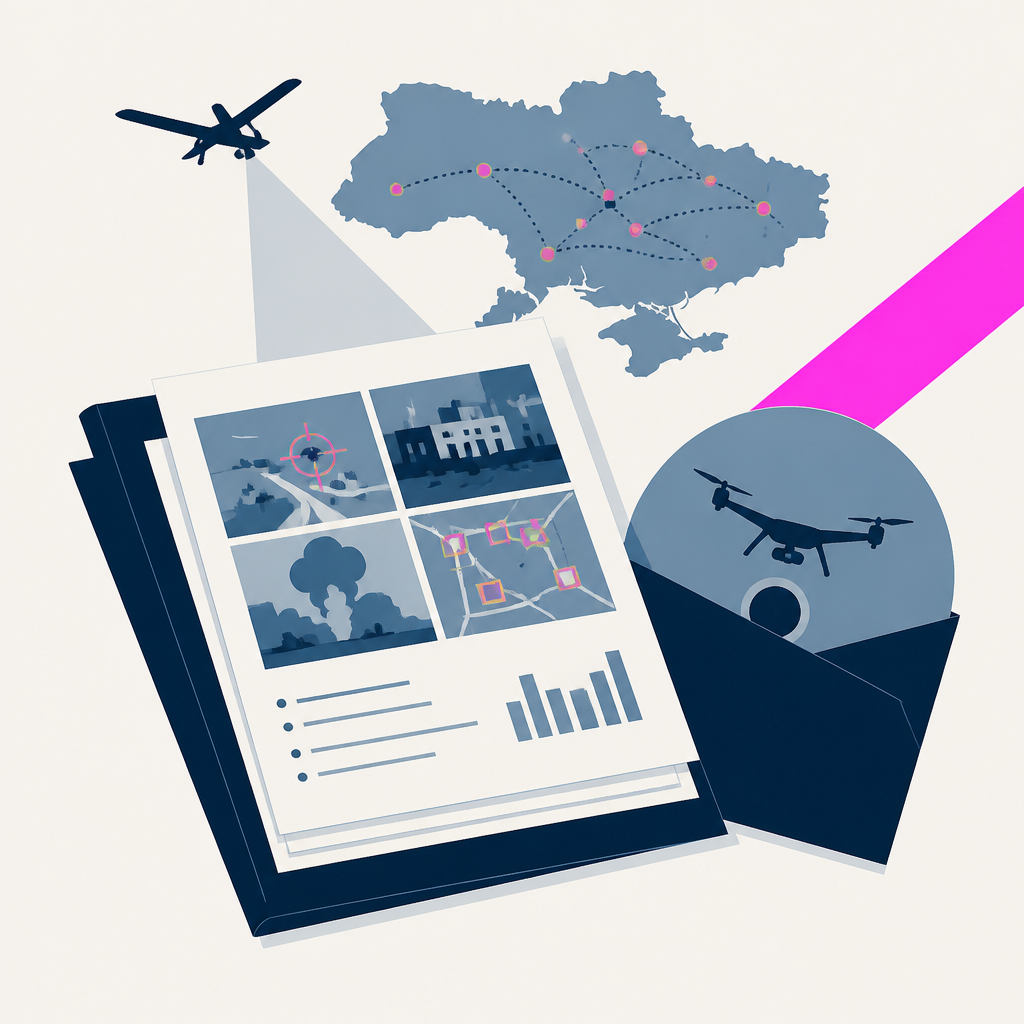
Britain and Ukraine have signed a joint declaration of intent in Kyiv to work together on military artificial intelligence, with a twist that matters: British research institutions and tech companies will now get access to Avengers Labs, the Ukrainian data platform built on combat footage. It’s the first time a country outside Ukraine has been allowed to use that data.
The declaration was signed by British Prime Minister Andy Burnham and President Volodymyr Zelenskyy. Burnham made the trip on his first foreign visit in office, and the timing landed on the 35th anniversary of Ukrainian independence. The paper itself is careful. It says it reflects political intent and creates no legally binding obligations.
The raw material is Ukraine’s Universal Military Dataset, a huge collection drawn from millions of observations gathered by thousands of cameras and sensors along the front. Most of it is drone video and acoustic sensor recordings. People label the footage by hand so machine learning systems can learn to spot and classify things like tanks, drones and artillery pieces. Ukraine’s defence ministry says Avengers Labs now processes more than 100,000 drone video streams a month and detects roughly 70 percent of the enemy targets that show up in the imagery. Earlier versions were reported to identify about 12,000 pieces of enemy equipment a week.
Until now, the dataset had been open only to domestic companies, which gave Ukrainian drone makers an edge over foreign rivals. Those outsiders often train on synthetic data, which tends to perform worse in combat conditions. Misha Nestor, chief product officer at Swarmer, told the Financial Times that high-quality, labelled battlefield data is one of the biggest bottlenecks in building reliable AI for autonomous systems. Ukraine, he said, has something extremely hard to copy anywhere else.
Britain is said to be especially interested in the acoustic sensor data that tracks incoming Russian drones. Properly trained, those systems can be more precise than radar and could help defend military sites and critical infrastructure. The declaration sets out three areas of cooperation: joint model development and secure data and compute pathways, industrial work tied to agreed operational problems, and academic research on autonomy, AI assurance, cyber security and synthetic data. The two sides plan to start with pilot projects, with more arrangements expected in the coming months. Sovereignty over each side’s data, intellectual property protection, export controls and NATO interoperability are all listed as guardrails, and results may also be shared with other trusted allies by mutual agreement.
The deal follows Burnham’s move to let the European missile joint venture MBDA release classified information on British components so assembly lines can be set up in Ukraine. Kremlin spokesman Dmitry Peskov said Moscow received that step “extremely negatively,” and Russia has recently threatened unspecified consequences for Britain. Burnham said support for Ukraine would continue anyway, and brushed off the idea that Britain was being dragged into the war.
The bigger picture is clear enough. Europe’s defence tech crowd is betting harder on AI-assisted target recognition and more autonomous systems, while the war in Ukraine keeps supplying the messy real-world data those systems crave. That is not a small strategic edge; it is the whole argument.
My take — AI-written commentary, not fact-checked reporting
This is the sort of deal Brussels and London should be making more often: practical, specific, and anchored in real wartime data instead of glossy “innovation” theatre. The uncomfortable part is obvious too — the West keeps discovering that the best military AI comes from a war zone, which is a grim business model if ever there was one.
Read more about this at: Trending Topics