Data from drones in Ukraine is fueling a new Wild West marketplace
MIT Technology Review Cory Alpert
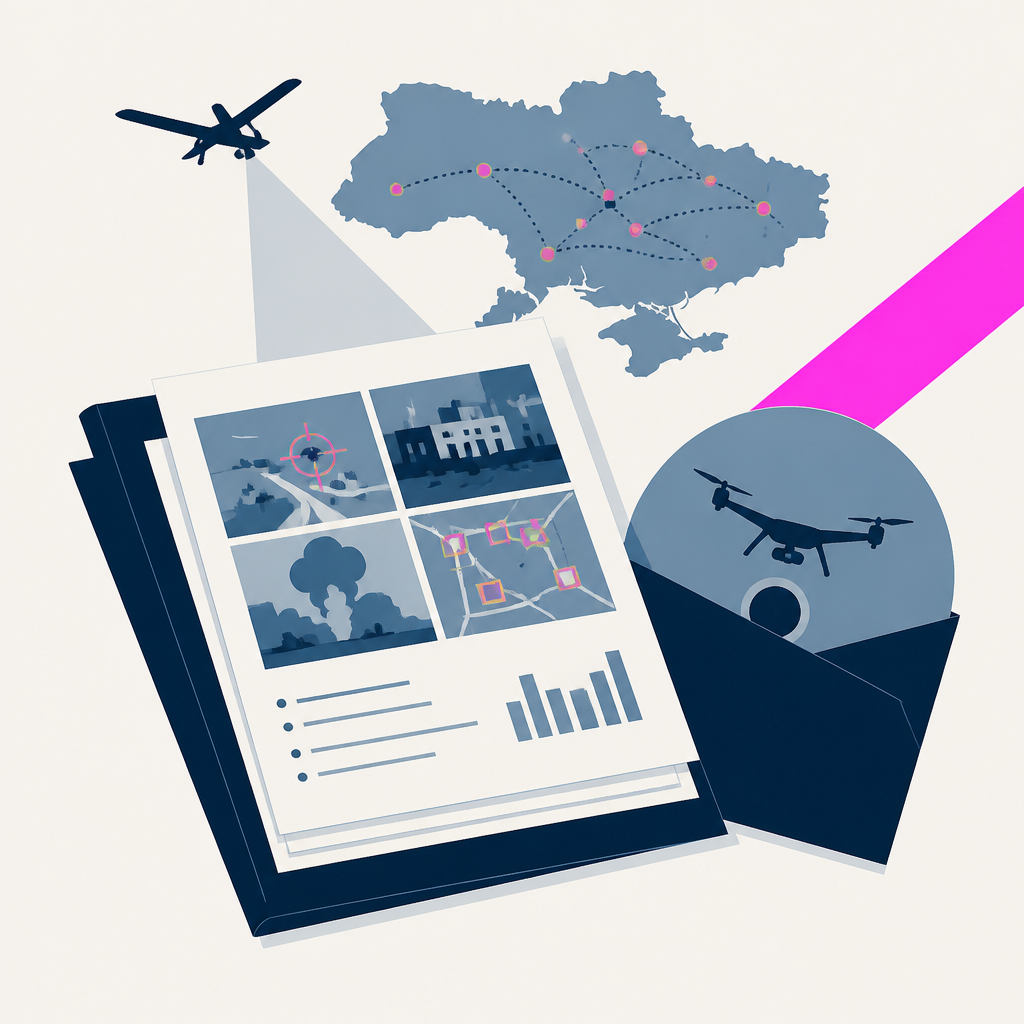
Ukraine is selling drone-flight data to defense and tech firms. That makes the war a training ground for AI that could end up in civilian products.
Based on reporting by MIT Technology Review, Cory Alpert — read the original for the full story.
Summary, retelling and take written by AI under human oversight; images are AI-generated illustrations. How we work · Report an error
Ukraine is turning battlefield drone footage into something much more valuable than scrap metal: training data. In January, its Ministry of Defense said it would open millions of data points from tens of thousands of drone flights to military contractors and commercial companies. More than 100 companies, plus the UK government, have already gotten access.
That matters because drones don’t just record what happened. They record what happened when visibility vanished, signals were jammed, and operators had to improvise under pressure. Those are exactly the weird edge cases AI developers struggle to collect in labs. War produces them by the truckload.
This is not a totally new trick. American drones over Syria and Yemen fed early semiautonomous military hardware in the late 2010s. But Ukraine is broadening the model. The data is no longer staying inside classified defense channels. It is moving into a wider market, where companies can process it, package it, and use it to train systems for military and civilian work alike.
One example already on the table is Enabled Intelligence, an American company that says it has made more than half a million hours of Ukrainian drone footage available for model training. The promise is obvious. A drone that has learned from signal-jammed skies and chaotic combat may also be better at delivery, remote sensing, or farm mapping in places where connectivity is weak and people don’t behave predictably.
But that same openness creates a mess nobody has really sorted out. Battlefield data is hard to trace once it is folded into a model, and the people captured in it never agreed to become training material for products sold years later. Ukraine is trying to build some controls through its Avengers Labs program and the new UK-Ukraine AI agreement, but the bigger rules are still missing. The industry is racing ahead with a very simple idea: combat can be converted into commercial advantage.
My take — AI-written commentary, not fact-checked reporting
This is the part where the AI crowd suddenly discovers ethics after the invoice gets paid. Battlefield data shouldn’t be treated like a cute little startup moat; it’s wartime experience, with civilians and soldiers baked into it. If governments won’t track where it goes, companies certainly won’t volunteer. That’s not innovation — that’s a license to launder violence into product features.
Read more about this at: MIT Technology Review