Apple's M6, M7, and M8 Chips Show How AI Is Reshaping the Company
Bloomberg
Apple's canceled self-driving car project didn't die — its AI chips did. That tech is now steering M6, M7, and M8 silicon for Macs and servers.
Based on reporting by Bloomberg — read the original for the full story.
Summary, retelling and take written by AI under human oversight; images are AI-generated illustrations. How we work · Report an error
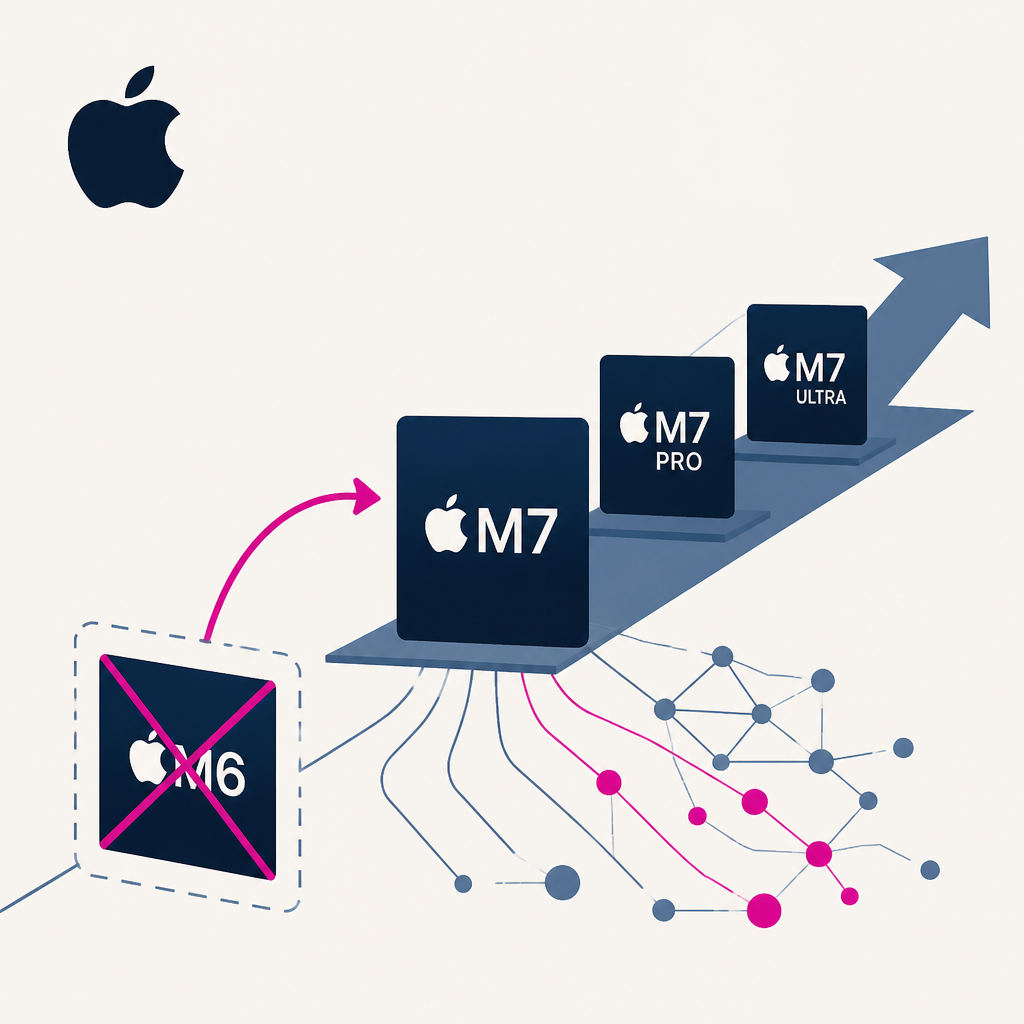
Turns out the most useful thing to come out of Apple's decade-long, multi-billion-dollar car experiment wasn't a car at all. It was chips. Specifically, the AI accelerator hardware Apple engineers built to handle the sensor fusion and real-time decision-making a self-driving vehicle would have needed. When the car project finally got shelved for good, that silicon work didn't go in a drawer. It got repurposed, and now it's showing up in the roadmap for Apple's M6, M7, and M8 chips.
That's a notable shift for a company that has spent years talking about AI mostly in terms of on-device features like Face ID or photo processing, while staying quiet about the kind of heavyweight AI infrastructure that Nvidia, Google, and Amazon have been racing to build. Apple appears to be aiming these next-gen chips at two different jobs at once: keeping Macs competitive for AI-heavy workloads that consumers and developers now expect, and building out AI server hardware for Apple's own data centers, presumably to support things like a more capable Siri and whatever comes after Apple Intelligence.
What's changing isn't just the silicon, it's the calendar. AI is reportedly now a factor in when Apple ships these chips, not just what they can do. That's a departure from Apple's usual approach of locking in a design and a release window years ahead based on manufacturing schedules and product cycles. If AI capability is now a variable that can push a shipping date, Apple is admitting that this technology moves faster than its normal planning process can comfortably absorb.
There's a certain irony in a failed $10 billion car project ending up as the backbone of Apple's AI hardware strategy. Apple rarely talks about Project Titan publicly, and even now the connection is more inferred than confirmed. But the pattern fits a company that has a long history of burying expensive dead ends and quietly mining them for parts, the same way failed products have fed into future iPhones and Watches before.
My take — AI-written commentary, not fact-checked reporting
I'll believe Apple's AI server ambitions when I see them in a keynote instead of a leak, but the car-to-chip pipeline is a great reminder that in this industry nothing expensive is ever truly wasted, it just gets reassigned. Apple staying quiet about AI infrastructure while quietly building it is very on-brand, and also a little concerning given how far behind Siri already looks next to everyone else's assistants.
Read more about this at: Bloomberg