
An Inventor of Apple’s FaceID Wants to Analyze Your Brain’s Health With AI
WIRED Isabella Ward
An Apple FaceID co-inventor built an AI that reads brain signals to spot mental health issues. His startup Hemispheric just raised $52M after scanning 100,000 people's brains.
Based on reporting by WIRED, Isabella Ward — read the original for the full story.
Summary, retelling and take written by AI under human oversight; images are AI-generated illustrations. How we work · Report an error
Gidi Littwin spent years helping Apple teach machines to recognize faces and track hands, feeding deep-learning models mountains of human data along the way. Now he's applying that same playbook to something far messier: the electrical noise inside your skull. After leaving Apple in 2020, Littwin was recruited by Hagai Lalazar, who'd already spoken to roughly 75 potential cofounders before finding him on LinkedIn. Together they built Hemispheric, a startup that just closed $52 million in funding to keep training an AI model on brain activity.
The scale of the data collection echoes Littwin's Apple days. He and Lalazar gathered a quarter of a million hours of brain recordings from 100,000 paid volunteers spread across Asia, Tel Aviv, and Boston. Subjects played what looked like simple games on tablets while wearing EEG headsets, each activity designed to light up a different region of the brain. That trove became the training set for what Littwin calls a frontier model, one that infers brain function from raw electrical signals the same way large language models infer meaning from text.
The team says it tested the model against subsets of volunteers already diagnosed with PTSD, schizophrenia, and depression, and that it produced accurate reads on their brain health. A separate clinical study is now underway to see whether the same approach can catch signs of Alzheimer's, potentially before symptoms become obvious. The first product out the door will focus on PTSD, with an FDA submission planned for early next year and a hoped-for public rollout sometime in 2027.
The pitch to clinicians is straightforward: strap on a lightweight EEG headset, spend about 15 minutes interacting with an app, and let the AI decode the signals to help with diagnosis, treatment selection, and tracking progress over time. Lalazar describes the long-term vision as something closer to a blood test than a psychiatric evaluation — cheap, fast, and distributed widely enough to sit in ordinary clinics and psychologists' offices rather than specialized labs.
Hemispheric isn't operating in a vacuum. AI-driven diagnostic tools are already speeding up lung cancer detection in parts of Europe, and heavyweights like OpenAI and Anthropic are pushing further into health care, which only sharpens the competition among startups chasing the same territory. Hemispheric's funding, which includes backing from early Uber investor Howard Morgan, is earmarked for partnerships with governments and pharmaceutical companies, more US hires, and regulatory work. The company also wants to collect brain data from millions more people and is building its own scanners, arguing that standard EEG hardware was never designed with deep learning in mind.
My take — AI-written commentary, not fact-checked reporting
Turning brain scans into something as routine as a blood test sounds great until you remember how much of this rests on a private company's proprietary dataset and a model nobody outside Hemispheric can inspect. Mental health diagnosis has been messy and subjective for a reason — brains are weird and individual — and an AI trained on 100,000 people doesn't automatically solve that, it just moves the guesswork somewhere less visible. The FDA submission next year will be the real test of whether this is a genuine tool for clinicians or another health-tech story that sounds tidier in a press release than in a doctor's office. Worth watching, not worth believing yet.
Read more about this at: WIRED
Related stories
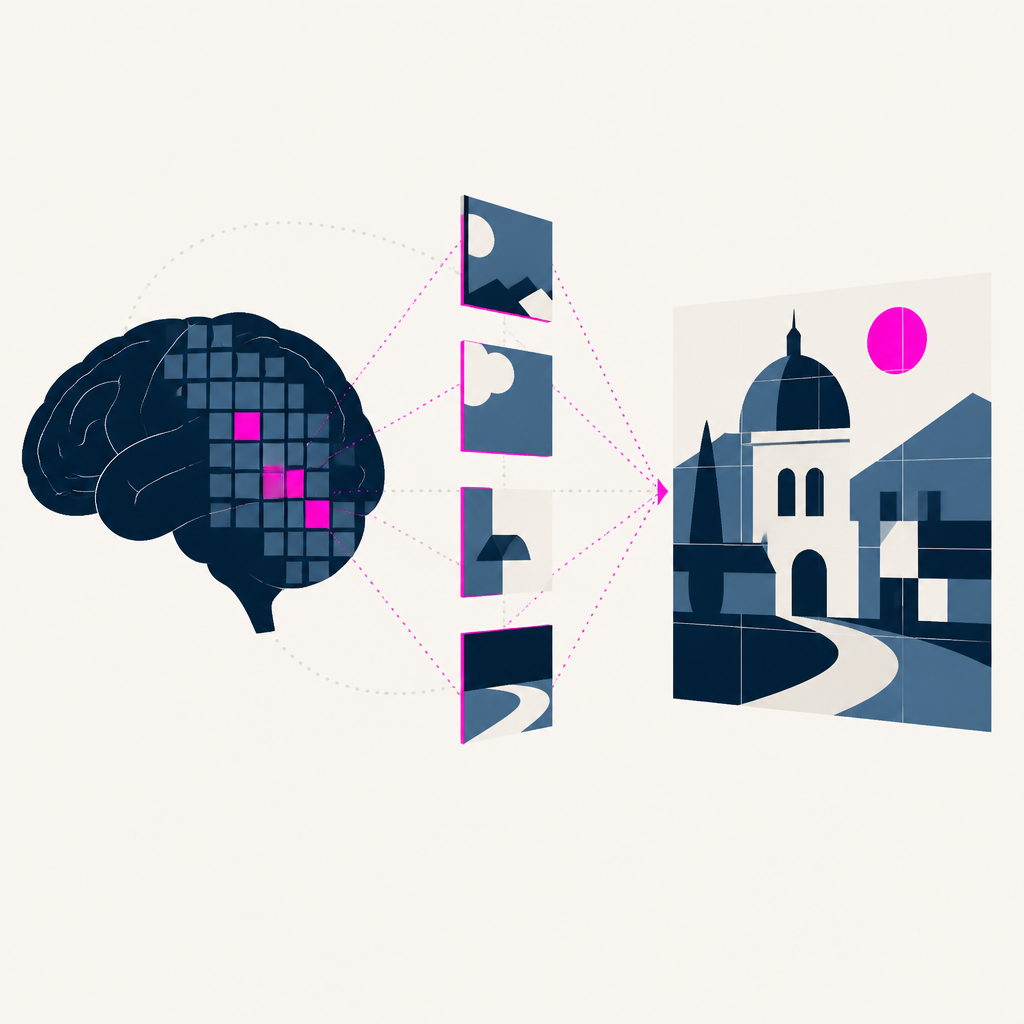 Weizmann researchers used AI to reconstruct images from brain scans
proceedings.iclr.cc · 2 weeks ago ·
36
Weizmann researchers used AI to reconstruct images from brain scans
proceedings.iclr.cc · 2 weeks ago ·
36