Sabi Raises $50 Million for a Cap Meant to Read Your Thoughts
Trending Topics Jakob Steinschaden
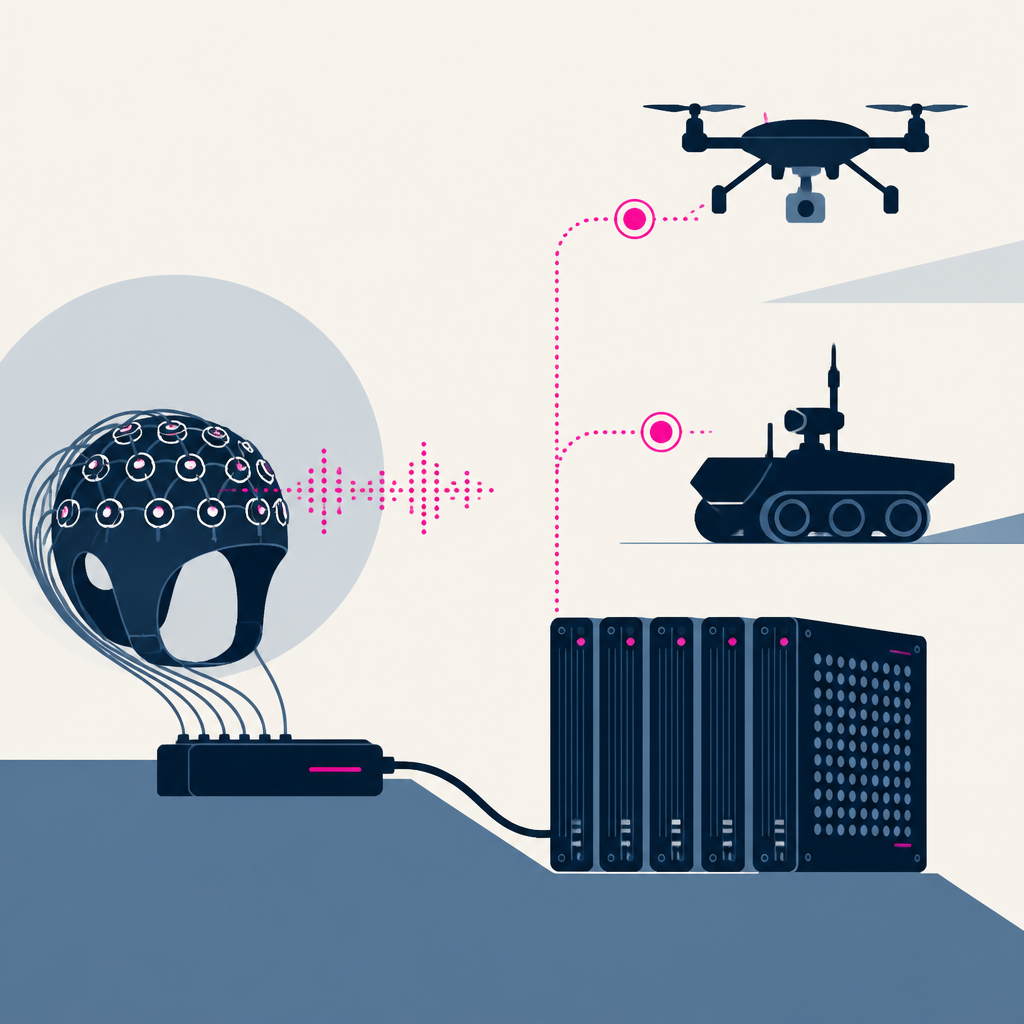
Sabi raised $50 million to build a cap that turns brain signals into text and A.I. commands. It says it can read through hair, but it still has no public accuracy numbers.
Based on reporting by Trending Topics, Jakob Steinschaden — read the original for the full story.
Summary, retelling and take written by AI under human oversight; images are AI-generated illustrations. How we work · Report an error
Typing is old news if you believe Sabi, a Silicon Valley start-up now trying to make thinking the new interface. The company has raised a $50 million seed round led by Khosla Ventures, with Accel, Initialized Capital, DST Global, Collaborative Fund, Ascend and Kevin Weil, OpenAI’s former chief product officer, also in the mix.
The product is a baseball cap built around EEG, the brain-signal sensing method usually associated with gel, tight headgear and lab setups. Sabi says its sensors can work without contact, through hair, across a gap of up to five millimeters. Each sensor is tiny, between one and five millimeters, and Forbes says as many as 100,000 of them could fit into one cap. The company has also made its own EEG chip and says internal tests put it at more than 50 times the power efficiency of a widely used Texas Instruments component.
The cap is supposed to do three jobs: turn imagined words into text, send trained mental commands to A.I. assistants, and predict which keys a user is about to press. Under the hood, Sabi is training what it calls a Brain Foundation Model on more than 100,000 hours of EEG recordings from people imagining words or doing mental tasks. The company says that is the largest disclosed dataset of its kind. Rahul Chhabra, Sabi’s chief executive and co-founder, says the goal is a faster interface that doesn’t need surgery or a laboratory.
There’s a real team behind the pitch. Chhabra started the company with Atmadeep Banerjee, its chief technology officer, who co-authored MindEye, a study that reconstructed images people had viewed from non-invasive brain scans. The staff includes people from Kernel, Apple, Microsoft, Meta and Nike. Sabi says it will show a first prototype at CES in Las Vegas in January and is preparing devices for people already on its waitlist, though it has not said what the cap will cost.
The company also says brain data will be encrypted at the sensor and processed while still encrypted, so servers never see raw signals. That sounds prudent, because the accuracy bar here is brutal. In a Meta study with 35 participants, decoding typed characters from EEG averaged a 67 percent error rate, and even MEG — which needs a room-size scanner — only got down to 32 percent. Sabi has not published independent accuracy results yet, which is the part that matters most.
My take — AI-written commentary, not fact-checked reporting
This is exactly the kind of moonshot that gets funded before it gets trusted. Brain-computer interfaces keep selling the dream of effortless control, but the hard part is not the cap; it’s proving the thing can read anything better than guesswork. In AI hardware, optimism is cheap and error bars are expensive.
Read more about this at: Trending Topics