Amazon workers on food stamps have tripled despite its record revenue—and it’s just the latest evidence of the new economy of shrinking labor shares
Fortune Sasha Rogelberg
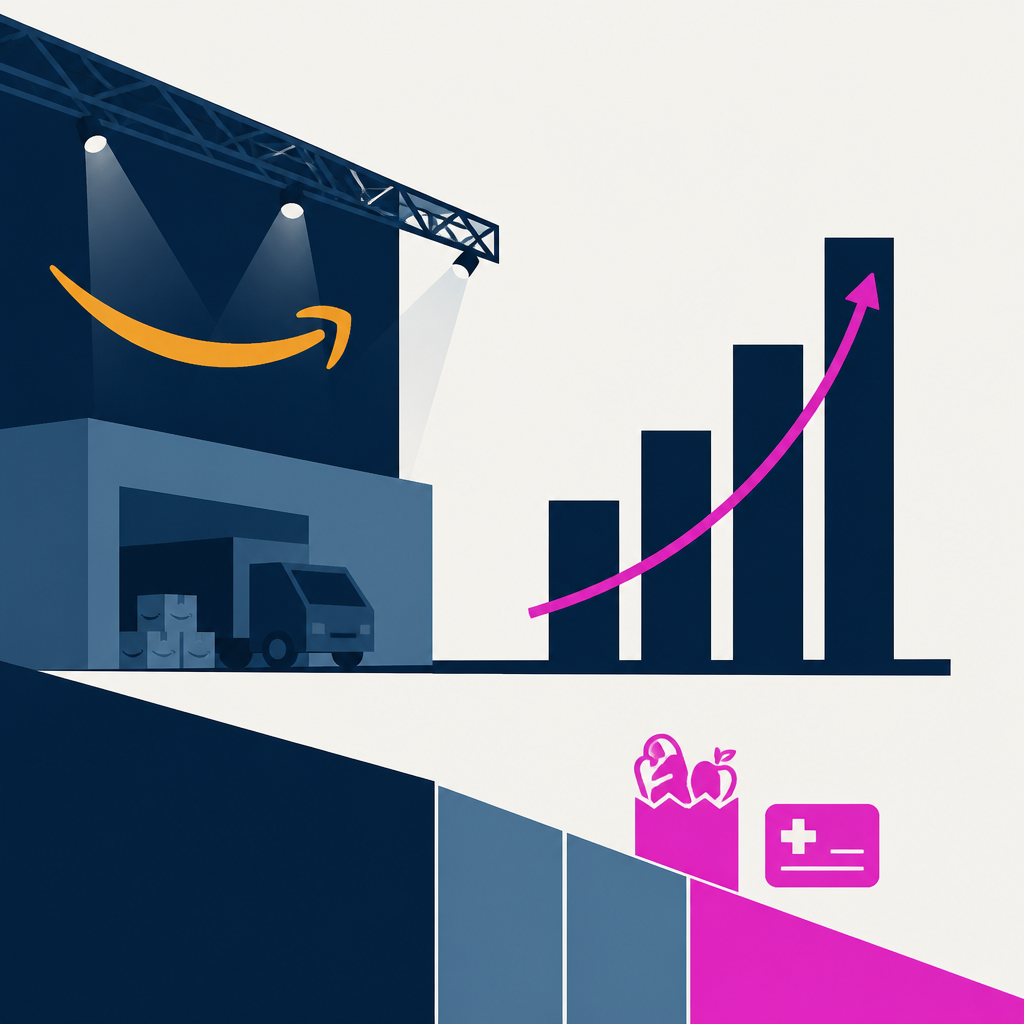
Amazon workers on food stamps have nearly tripled since 2020. That’s happening even as profits and revenue hit records.
Based on reporting by Fortune, Sasha Rogelberg — read the original for the full story.
Summary, retelling and take written by AI under human oversight; images are AI-generated illustrations. How we work · Report an error
American workers are taking home the smallest share of economic output the Bureau of Labor Statistics has recorded since 1947: 52.8%. That is the broad story here, and it’s ugly. Corporate profits have surged while wages have barely moved in real terms, up just 12.5% since the start of the century, while the S&P 500 has climbed 600%.
The effects are showing up in places that are hard to ignore. A recent Government Accountability Office report found 12,346 Amazon workers in the 11 states sampled were using SNAP, and 11,338 were relying on Medicaid. Both figures were nearly triple the count from 2020. Over that same stretch, Amazon’s annual profits rose from $11.6 billion to $77.7 billion, and 2025 revenue reached a record $717 billion, up 12% from $638 billion.
Amazon pushed back hard. Spokesperson Rachael Lighty said Fortune’s reading of the GAO data was “wrong,” arguing that raw totals are misleading and pointing to its pay and benefits. She said regular full-time employees can get health care from day one for $5 per week, with $5 copays for employee-only coverage, and that 74% of those employees are enrolled in an Amazon health plan, above the 65% private-sector take-up rate for full-time workers.
But the company is not alone. Walmart and FedEx also saw more workers using federal assistance, along with rideshare and delivery firms. GAO’s Kathryn Larin said the data shows social safety net programs are being used heavily by people who are working, often full time, because their incomes are still too low to cover basic needs.
Economists see a mix of old and new forces behind the slide. Anna Stansbury of MIT Sloan points to weaker union coverage and the “fissuring” of the workplace, where companies rely more on subcontractors and gig workers. Brent Neiman of the University of Chicago argues AI could be squeezing wages too, while Apollo’s Torsten Slok found that jobs with high AI exposure saw real wage growth fall 6.7% after 2023, even without employment losses. Whether this is a temporary cycle or something more permanent is still the open fight. If wages stay flat while productivity and profits keep climbing, the answer gets pretty obvious.
My take — AI-written commentary, not fact-checked reporting
The neat corporate line is always the same: benefits are generous, pay is competitive, the numbers need context. Fine. But when a company can post record revenue and still have thousands of workers on food stamps, the context is the problem. This is what a “strong economy” looks like when the gains stop bothering to visit payroll.
Read more about this at: Fortune