
Alibaba Qwen Releases Qwen-Image-2.1-Turbo, an 8-Step 7B Image Model
MarkTechPost Asif Razzaq
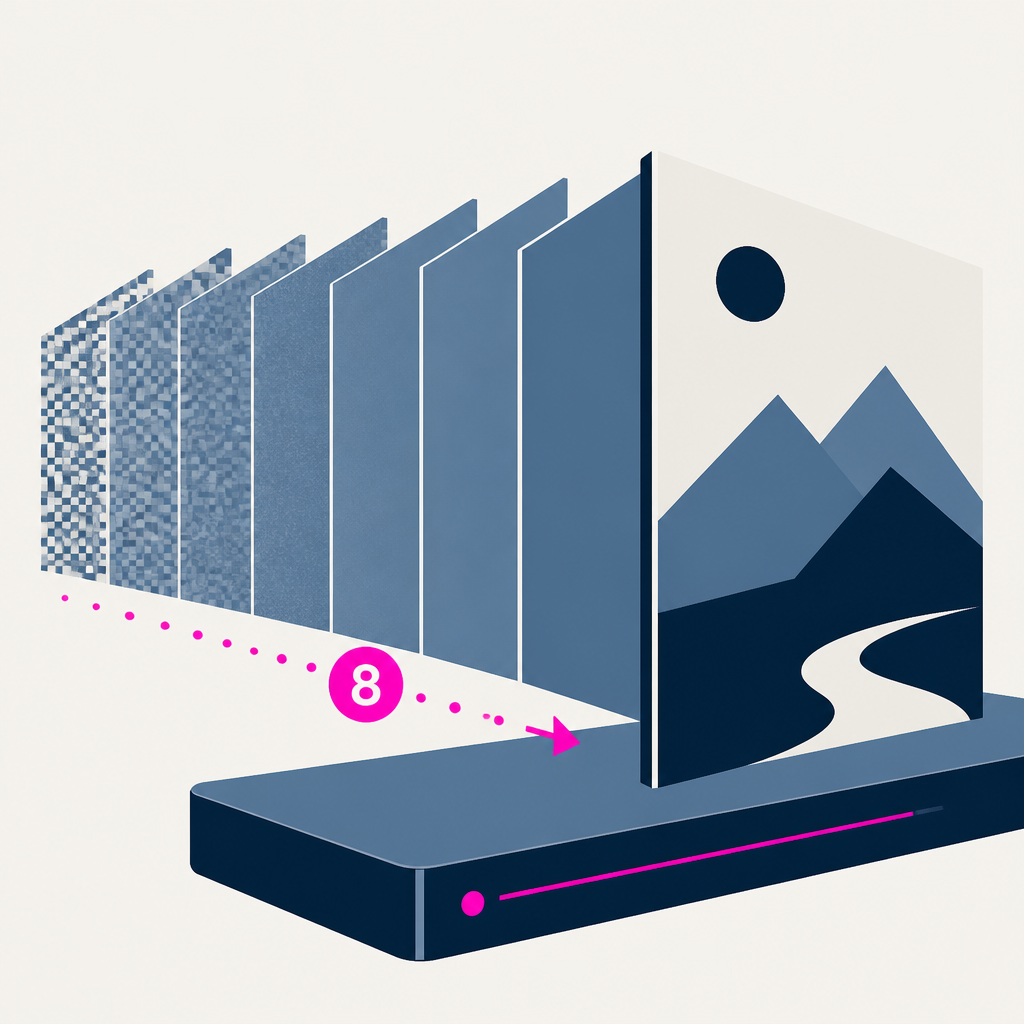
Alibaba’s Qwen team cut image generation from 40 steps to 8 with a new Turbo checkpoint. It keeps the same 2K editing features, but the weights are research-only.
Based on reporting by MarkTechPost, Asif Razzaq — read the original for the full story.
Summary, retelling and take written by AI under human oversight; images are AI-generated illustrations. How we work · Report an error
Alibaba’s Qwen team has put out Qwen-Image-2.1-Turbo, an accelerated version of its open-weight Qwen-Image-2.1 image model. The big change is simple: image generation and editing now run in 8 denoising steps instead of the base model’s 40-step default. Same 7B visual generator, much less waiting.
The model sits inside the QwenImage21Pipeline in Diffusers and ships with its own 8-step sampling schedule already saved in the checkpoint. It uses CFG=1 by default, and prefix KV caching lets the model reuse text and reference-image context across steps. That matters more here than usual, because with only 8 steps the cached prefix covers most of the conditioning work.
Under the hood, Qwen-Image-2.1-Turbo uses a single-stream DiT with 32 layers and 7B parameters, plus a Qwen3-VL 8B text encoder. The setup also includes a 64-channel RGBA autoencoder with 16x spatial compression, which gives it native transparency. Qwen says the same 2K output and editing feature set carry over from Qwen-Image-2.1.
The showcase spans portraits, human poses, transparent images, typography and posters, and UI layouts. On the editing side, the model handles single-image transformation, multi-reference composition and even 4-image interior composition. The base model also supports up to 10 reference images and local edits through circles, painted annotations or masks.
For people who want to run it, the published setup calls for Diffusers from source and transformers>=5.17.0, plus a Diffusers PR that adds pipeline-configured sampling sigmas. Alibaba Cloud Model Studio is also hosting Turbo and Pro. Turbo is priced at CNY 0.1 per image with a 120 RPM limit; Pro costs CNY 0.25 per image with 20 RPM. The catch is the license: it’s research-only, so commercial self-hosting needs separate permission.
My take — AI-written commentary, not fact-checked reporting
This is the kind of release that makes the AI image race look more honest: fewer steps, same feature set, and a price cut that actually means something. But the research license keeps the shiny part on a short leash, which is very on-brand for the current era of “open” models that are open right up until money shows up.
Read more about this at: MarkTechPost
Related stories
 Alibaba Qwen Releases Qwen-Image-2.1: A 7B Open-Weight Model for Image Generation and Editing
MarkTechPost · 2 weeks ago ·
18
Alibaba Qwen Releases Qwen3.8-Max: A 2.4 Trillion Parameter MoE Model and the Most Capable One in the Qwen Family to Date
MarkTechPost · 2 months ago ·
53
Qwen-Image: Crafting with Native Text Rendering
GitHub Pages · 1 year ago ·
11
Alibaba Qwen Releases Qwen-Image-2.1: A 7B Open-Weight Model for Image Generation and Editing
MarkTechPost · 2 weeks ago ·
18
Alibaba Qwen Releases Qwen3.8-Max: A 2.4 Trillion Parameter MoE Model and the Most Capable One in the Qwen Family to Date
MarkTechPost · 2 months ago ·
53
Qwen-Image: Crafting with Native Text Rendering
GitHub Pages · 1 year ago ·
11