
Alibaba Qwen Introduces QwenGyre: Elastic Reinforcement Learning RL for XLong-Horizon Agents
MarkTechPost Asif Razzaq
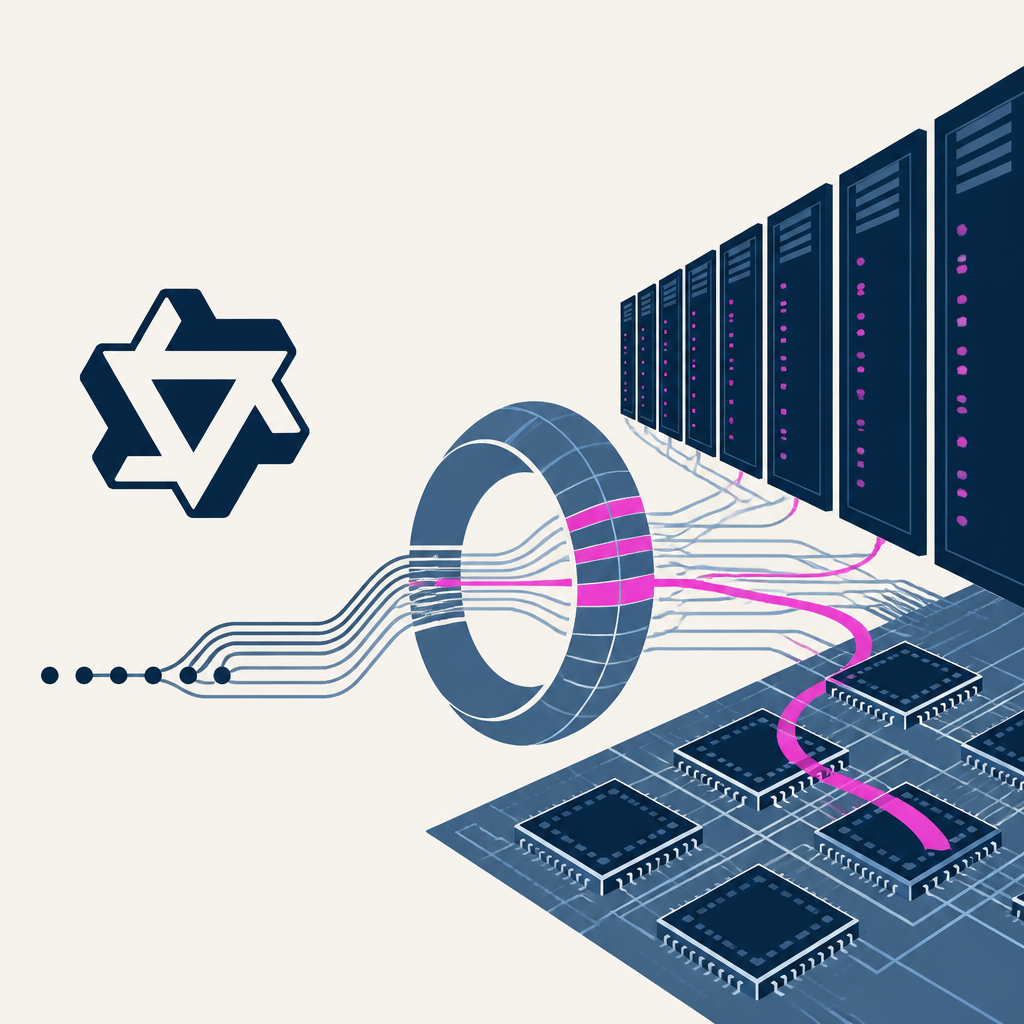
Alibaba’s Qwen team built QwenGyre, a training setup for long-running coding agents. It shifts GPUs around mid-run, so rollout time doesn’t just sit there burning.
Based on reporting by MarkTechPost, Asif Razzaq — read the original for the full story.
Summary, retelling and take written by AI under human oversight; images are AI-generated illustrations. How we work · Report an error
Alibaba’s Qwen team has built QwenGyre, an elastic reinforcement learning system meant for agent runs that stretch for hours and chew through huge token counts. It is not a model. It is the machinery around the model, and the point is to keep those machines busy instead of watching them wait for the slowest rollout to finish.
The setup was tested on Qwen 3.6 122B and Qwen 3.8 2.4T, with rollouts around 700K tokens. On the smaller runs, the team used 24 to 32 nodes. On the 2.4T run, it used 192 nodes split into 4 cells of 48. Megatron handled training, SGLang handled rollouts, and the harness was Claude Code 2.1.220.
QwenGyre’s trick is simple to describe and awkward to build: idle GPUs can move from rollout work to training, then back again, without killing live agent runs. The system also turns branching agent histories into bounded training samples instead of exploding every path into a giant duplicate mess. That matters because these long jobs do not behave like neat single trajectories. They branch, retry, compact context, and spawn sub-agents.
The paper says the framework delivered speedups over both Async and Colocate setups. On TerminalBench, it reached up to 1.85x over Colocate. On the 2.4T model’s NL2RepoBench run, it finished 48 steps in 75.42 hours, compared with 134.55 hours for Async and 91.47 hours for Colocate. The pass rate there moved from 52.48% to 58.54%.
Under the hood, QwenGyre uses a proxy to track exact token IDs and log-probabilities, keeps at most 5 trajectories per execution, and treats timed-out work as still worth scoring if the workspace was preserved. The paper does not list public code. That’s the annoying bit. The nice bit is that the system tries to make expensive agent training look less like expensive waiting.
My take — AI-written commentary, not fact-checked reporting
This is the kind of infrastructure AI labs should brag about more and benchmark less. Moving GPUs between rollout and training is boring in the best way: it attacks the waste instead of dressing it up as magic. The open question is whether the industry will keep building these elastic systems in public, or keep the good plumbing locked behind the same glossy model demos.
Read more about this at: MarkTechPost