
A San Francisco 'tech prankster' got 50 Waymos ordered onto the same street, exposing robotaxis' cyber/airbag problem
Fortune Joshua Hong
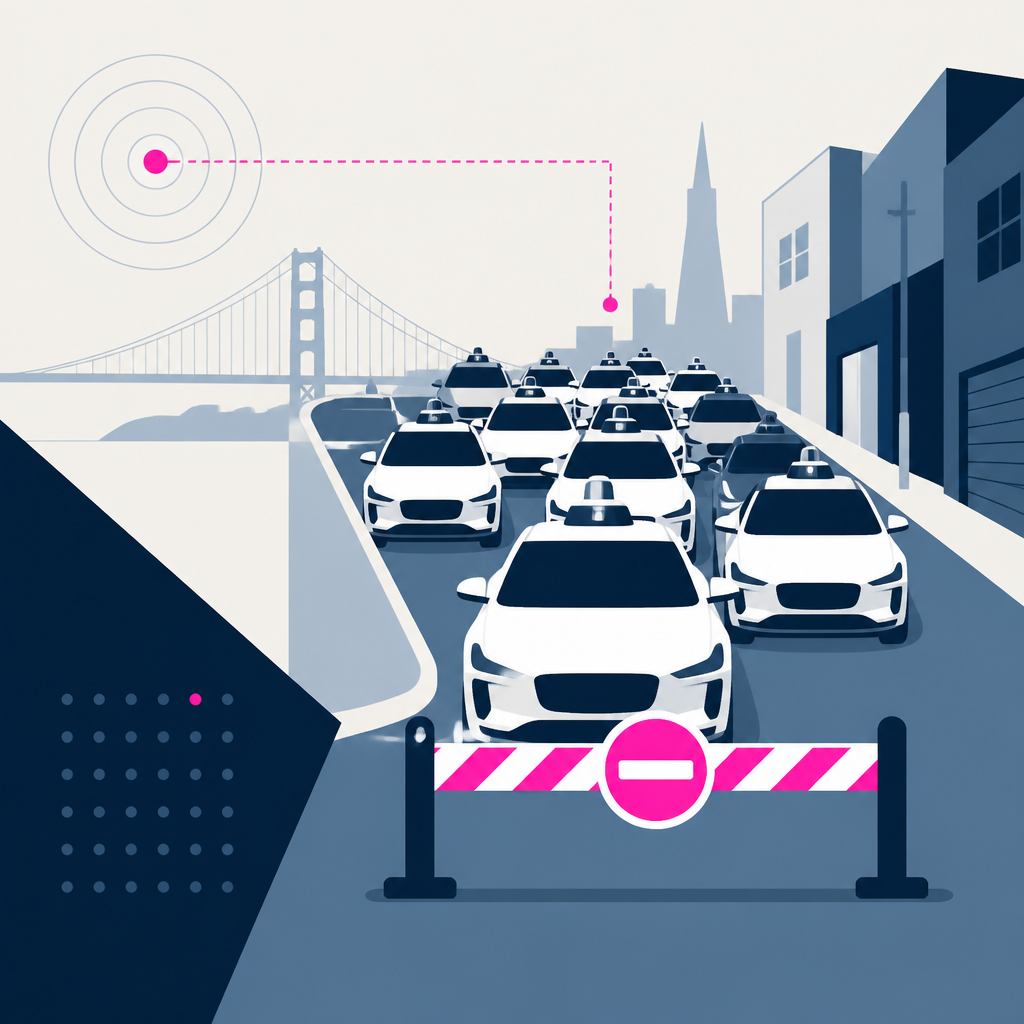
A prankster got 50 Waymos sent to one dead-end San Francisco street. It froze rides till morning — and shows robotaxis can be hacked without touching the steering wheel.
Based on reporting by Fortune, Joshua Hong — read the original for the full story.
Summary, retelling and take written by AI under human oversight; images are AI-generated illustrations. How we work · Report an error
A San Francisco stunt just put a very old safety debate back in the driver’s seat. Louay Abdelkader, who runs product management at QNX, says robotaxis are now where cars were before airbags became standard: a useful technology that took far too long to become a regulatory must-have. His point is simple. The industry keeps arguing about crashes, insurance and traffic tickets, while cybersecurity stays too far down the list.
That gap matters because robotaxis are not ordinary cars with a software update bolted on. They run on a stack of connected systems — electronic control units, high-speed networking, cloud links, GPS, cameras, lidar, radar and AI models that are constantly trying to understand the road. Each piece adds another place to poke at. And the attacks don’t have to look like Hollywood’s remote takeover fantasy. Break the surrounding communications, and you can still make an autonomous vehicle less safe.
San Francisco gave that idea a very public demonstration. Riley Walz, who calls himself a “tech prankster,” organized 50 people to order Waymos to the same dead-end street. The result was a pileup of robotaxis and a service shutdown until the next morning. Waymo and the California DMV did not respond to questions about it, but the prank neatly showed how a denial-of-service attack can hit a fleet through demand, not just code.
The timing is awkward for the industry. Waymo now operates in 11 major U.S. cities, Zoox has won regulatory approval from the National Highway Traffic Safety Administration for a commercial exemption, and Tesla has entered the robotaxi race with Cybercab in at least seven cities. As these systems spread, the attack surface grows with them. Abdelkader argues lawmakers should treat cyber rules the way earlier generations eventually treated airbags: not as optional extras, but as basic safety equipment.
California already requires autonomous vehicle makers to show they can monitor, update and maintain their fleets while following federal cybersecurity guidance. Arizona, Michigan and international regulators have also started folding cyber planning into deployment rules. New York City, by contrast, is fighting robotaxis on labor grounds, with Mayor Zohran Mamdani focused on taxi drivers rather than cyber risk. That may be politically cleaner. It is also a good way to miss the next problem.
My take — AI-written commentary, not fact-checked reporting
This is the classic tech-industry move: ship the shiny thing first and ask about the locks after someone has already kicked the door in. Robotaxis will not get taken seriously until cybersecurity is treated like brakes, not a nice-to-have feature tucked into a press release. The open-model crowd loves transparency; fine, then make the systems open enough for scrutiny and closed enough to keep pranksters out.
Read more about this at: Fortune