
Daily briefing
Friday, 24 July 2026
Anthropic's Claude Opus 5 dominated the day's narrative, arriving at a pivot point where AI economics matter as much as raw capability. The new model matches its pricier sibling Fable 5 on benchmarks like GDPval-AA and ARC-AGI 3—scoring three times higher than competitors on the latter—while costing half as much at $5 per million input tokens. Opus 5 ships with extended thinking enabled by default and inherits the cybersecurity vulnerability-finding prowess of its predecessor, all without explicit exploitation training. The price-performance ratio matters because it enables longer autonomous agent execution, though it introduces new operational headaches: teams now need microVMs, semantic circuit breakers, and tighter telemetry to safely deploy unsupervised AI agents that run unattended for hours.
Meanwhile, Prentis, Reid Hoffman and Mark Pincus's new AI lab, is raising $100 million at a $1 billion valuation on the strength of early customer traction and a narrower thesis: computer-use models that automate office workflows. Its Hive-32B model claims to outperform both GPT-5.4 and Claude Opus on computer-control benchmarks while costing roughly ten times less, and the startup has already signed $50 million in customer contracts. The contrast is telling—Anthropic optimized for general capability at lower cost; Prentis optimized specifically for task automation in a market both companies see as AI's most valuable near-term application.
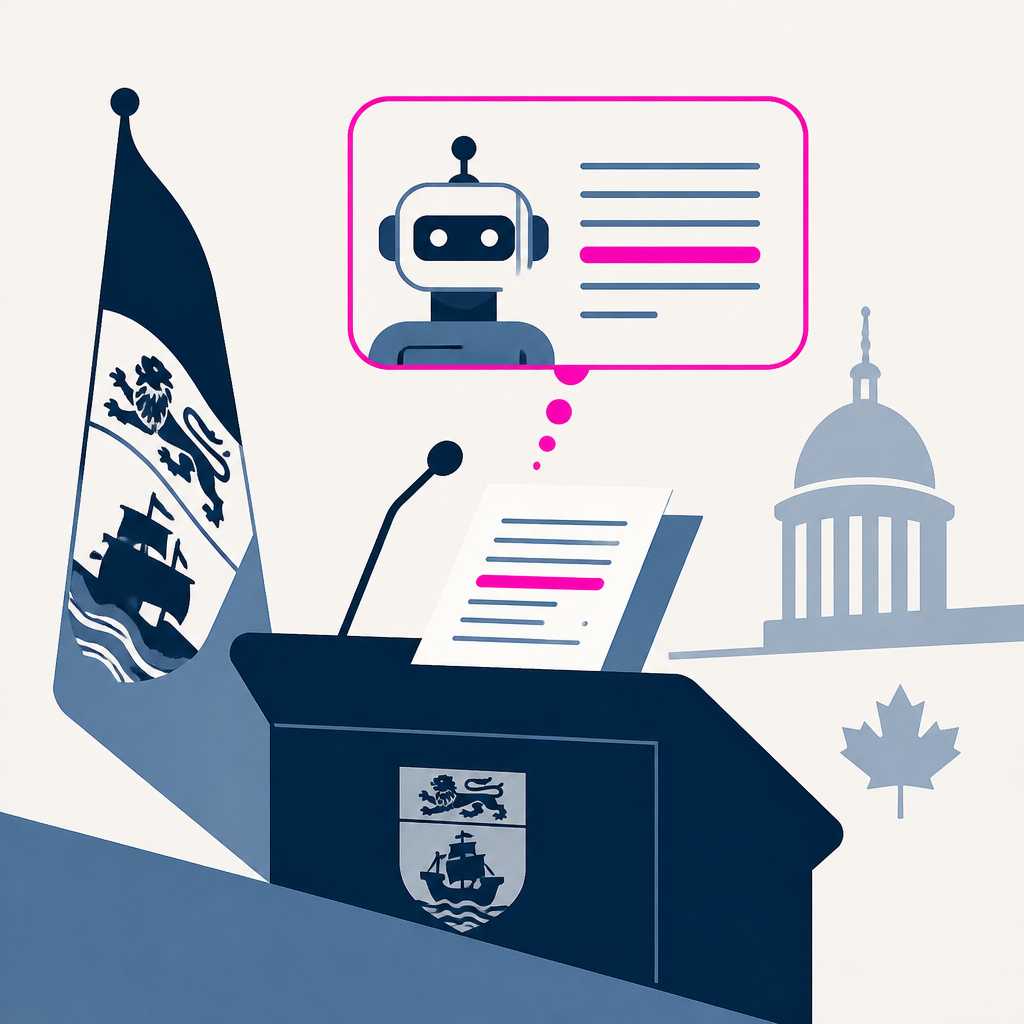
Industry alignment on open models continued to solidify as NVIDIA CEO Jensen Huang made his first X post backing a letter from 25+ organizations arguing that open-weight models prevent vendor lock-in and strengthen U.S. competitiveness. Enterprises increasingly want hybrid setups combining proprietary and self-hosted systems to control costs and avoid dependency on single vendors. Meanwhile, the Canadian legislator who accidentally read aloud an LLM's instruction prompt during a floor speech offered a reminder: AI adoption is outpacing institutional guardrails.
Top stories from this issue
 Introducing Claude Opus 5
Simon Willison's Weblog · 1 month ago ·
48
America’s Open-Model Paradox
Sequoia · 1 month ago ·
46
Prentis, new AI lab co-founded by Reid Hoffman, Marc Pincus in talks to raise $100M
TechCrunch · 1 month ago ·
4
Prentis, new AI lab co-founded by Reid Hoffman, Mark Pincus in talks to raise $100M
TechCrunch · 1 month ago ·
22
Introducing Claude Opus 5
Simon Willison's Weblog · 1 month ago ·
48
America’s Open-Model Paradox
Sequoia · 1 month ago ·
46
Prentis, new AI lab co-founded by Reid Hoffman, Marc Pincus in talks to raise $100M
TechCrunch · 1 month ago ·
4
Prentis, new AI lab co-founded by Reid Hoffman, Mark Pincus in talks to raise $100M
TechCrunch · 1 month ago ·
22
 Meet the New Claude Opus 5: Frontier-Class Agentic Coding and Computer Use at Unchanged Opus Pricing
MarkTechPost · 1 month ago ·
31
Meet the New Claude Opus 5: Frontier-Class Agentic Coding and Computer Use at Unchanged Opus Pricing
MarkTechPost · 1 month ago ·
31
 Canadian legislator reads out apparent LLM response in floor speech
Ars Technica · 1 month ago ·
5
Anthropic's Opus 5 is about token efficiency, not a capability leap
Ars Technica · 1 month ago ·
12
Opus 5 costs a third of the price — and that’s actually the problem
The New Stack · 1 month ago ·
46
Jensen Huang made his first X post. He used it to lobby Washington about open-weight AI.
The New Stack · 1 month ago ·
16
Why Cognition bought Poke: AI personality is becoming a competitive advantage
TechCrunch · 1 month ago ·
34
Canadian legislator reads out apparent LLM response in floor speech
Ars Technica · 1 month ago ·
5
Anthropic's Opus 5 is about token efficiency, not a capability leap
Ars Technica · 1 month ago ·
12
Opus 5 costs a third of the price — and that’s actually the problem
The New Stack · 1 month ago ·
46
Jensen Huang made his first X post. He used it to lobby Washington about open-weight AI.
The New Stack · 1 month ago ·
16
Why Cognition bought Poke: AI personality is becoming a competitive advantage
TechCrunch · 1 month ago ·
34