Introducing Claude Opus 5
Simon Willison's Weblog Simon Willison ● Covered by 17 sources
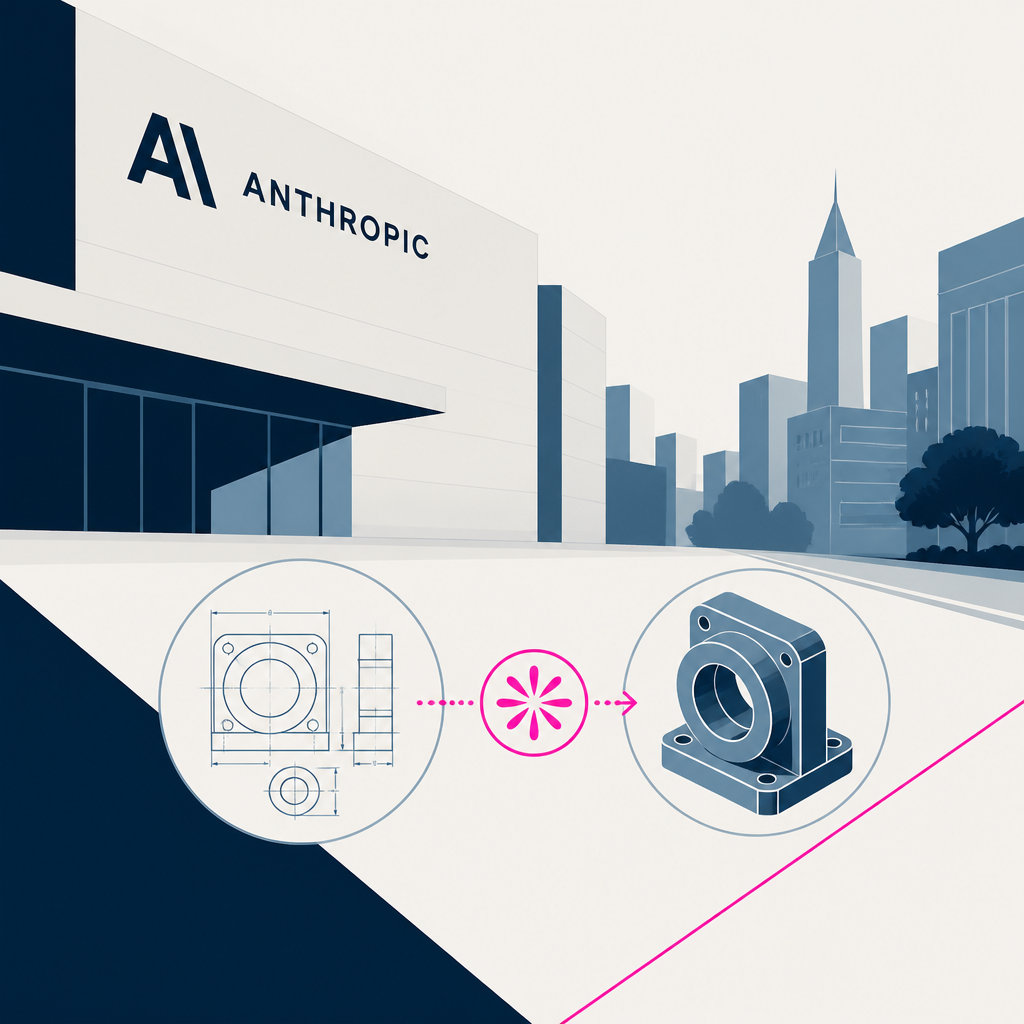
Anthropic just launched Claude Opus 5, its new top-tier AI model. It's now beating rival Fable 5 on a major leaderboard while costing half as much to run.
Based on reporting by Simon Willison's Weblog, Simon Willison — read the original for the full story.
Summary, retelling and take written by AI under human oversight; images are AI-generated illustrations. How we work · Report an error
Anthropic has pulled the wraps off Claude Opus 5, pitching it as a "thoughtful and proactive model that comes close to the frontier intelligence of Claude Fable 5 at half the price." That's a bold claim to put in a launch post, but the early scoreboard backs it up: Opus 5 is currently sitting atop the Artificial Analysis leaderboard, ahead of even Fable 5 itself. Pricing stays flat with the outgoing Opus 4.8, and the familiar "fast mode" option returns too, still running at twice the cost of the base model for anyone in a hurry.
What stands out isn't just the ranking, it's the behavior Anthropic chose to highlight. In one internal Frontier-Bench test, Opus 5 was shown a drawing of a machine part and told to write code that would rebuild it as a 3D FreeCAD model. The catch: the model had no direct way to view the drawing. Rather than stall, Opus 5 built its own computer vision pipeline on the fly to extract the geometry from raw pixel data, then used that to reconstruct the part. That's the kind of improvisation Anthropic seems to be leaning into with the "proactive" label.
Security researchers will care about a different data point. Opus 5 has gotten notably better at spotting vulnerabilities in code, closing in on rival model Mythos 5's performance there. But Anthropic says it deliberately did not train Opus 5 on how to exploit what it finds, a continuation of the same restraint applied to Opus 4.8. The model still improved on exploitation tasks simply by becoming more capable overall, yet it remains well behind Mythos 5 when it comes to actually turning a discovered flaw into something dangerous. That gap looks intentional rather than accidental.
Anthropic has also put out a prompting guide alongside the release, aimed at helping people get more out of the new model. Independent commentator Simon Willison, who tracks these releases closely, ran his usual pelican-drawing test on it before writing up his first impressions. The first attempt came out missing its bicycle wheels; the second try fixed that. Willison himself admitted he hadn't put Opus 5 through a full workout yet, having spent much of the day offline, but the early signals he passed along matched the broader buzz: this is a model people are taking seriously right out of the gate.
My take — AI-written commentary, not fact-checked reporting
Anthropic drawing a hard line between finding vulnerabilities and exploiting them is the kind of restraint that deserves credit rather than eye-rolling, especially with regulators watching AI's cybersecurity implications so closely. It's a smart way to ship a genuinely more capable model without handing over a ready-made hacking tool. The FreeCAD anecdote is the more interesting story long-term, though: a model that improvises its own computer vision pipeline mid-task isn't just answering questions anymore, it's solving problems nobody explicitly asked it to solve. That's the shift worth watching, not the leaderboard position, which will be old news the moment the next model drops.”
Read more about this at: Simon Willison's Weblog