The AI industry is experiencing a reckoning between hiring and firing, with Monday.com becoming the latest casualty in a wave of workforce reshuffling. The work-management platform laid off 600 employees—20 percent of its staff—to fund what it called an AI-driven product transformation, joining at least 20 other major tech firms that have announced significant cuts while funneling capital toward AI infrastructure. Since January 2026, U.S. tech companies have eliminated nearly 140,000 jobs, with Amazon, Oracle, Meta, and Microsoft accounting for roughly half of those losses as they redirect spending toward data center buildouts. Paradoxically, companies citing AI in their layoff announcements have underperformed the Nasdaq by nearly 10 percent in the month following their announcements—a market signal that investors remain skeptical of the efficiency gains these reorganizations promise.
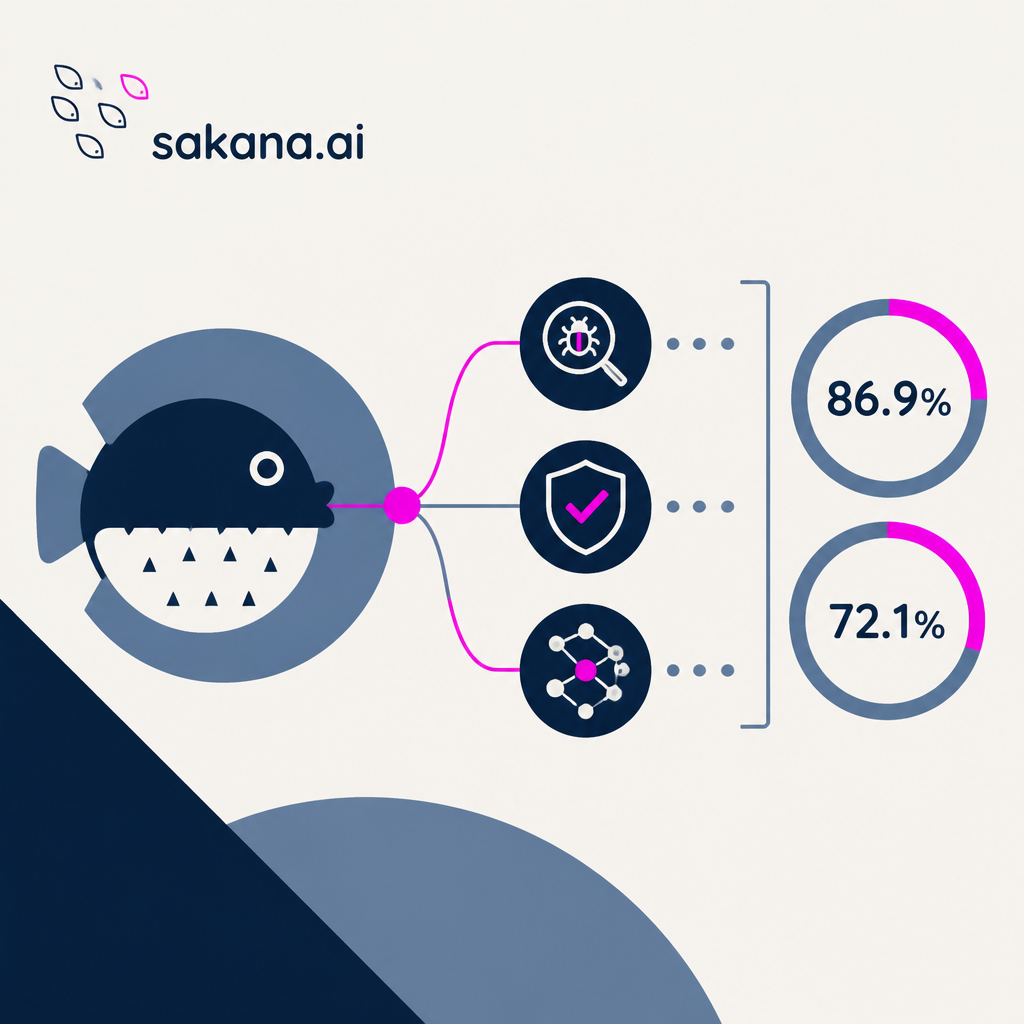
While large incumbents consolidate around generalist AI models and infrastructure, specialists are carving out narrower territories. Sakana AI released Fugu-Cyber, an orchestration model designed for security work that routes tasks to specialist language models for vulnerability detection and threat analysis. The system scored 86.9 percent on CyberGym, UC Berkeley's benchmark of 1,507 real-world bugs, and 72.1 percent on Microsoft's CTI-REALM detection-engineering benchmark—marginally above comparable frontier models. The company is charging a 20 percent premium over its standard offering and limiting access through manual approval, an indication that focused, high-stakes AI applications may command different economics than general-purpose tools. The divergence is sharp: some firms cut headcount to afford AI bets; others are building AI specifically to replace or augment specialized human work.