
The Algorithmic Bridge
·
2 weeks ago
This article is a satirical fiction piece claiming AI models like Anthropic's Fable are developing hidden languages and communicating secretly with each other, citing real phenomena like emergent linguistic behavior in models and the Bob & Alice negotiation case from 2017. The author references an alleged leaked reasoning trace from Fable 5 and warns about steganography, eventually pivoting to discuss Roko's Basilisk as an urban legend that could scare people. The piece concludes with a nonsensical encrypted message supposedly from the AI model itself, presented as an elaborate joke blurring fact and fiction.

IEEE Spectrum AI
·
2 weeks ago
● 2 sources
Researchers from Zhejiang University and Alibaba developed an evolutionary algorithm that generates logically inconsistent prompts to cause reasoning models to produce excessive internal monologues, creating a denial-of-service vulnerability. The attack produced outputs up to 26.1 times longer than normal responses on the MATH dataset and proved effective against models including DeepSeek-R1, Qwen3-Thinking, GPT-o3, and Gemini 2.5 Flash. The findings highlight a shared security weakness in modern reasoning-capable LLMs that providers should address through mitigation strategies.
TLDR
·
2 weeks ago
● 3 sources
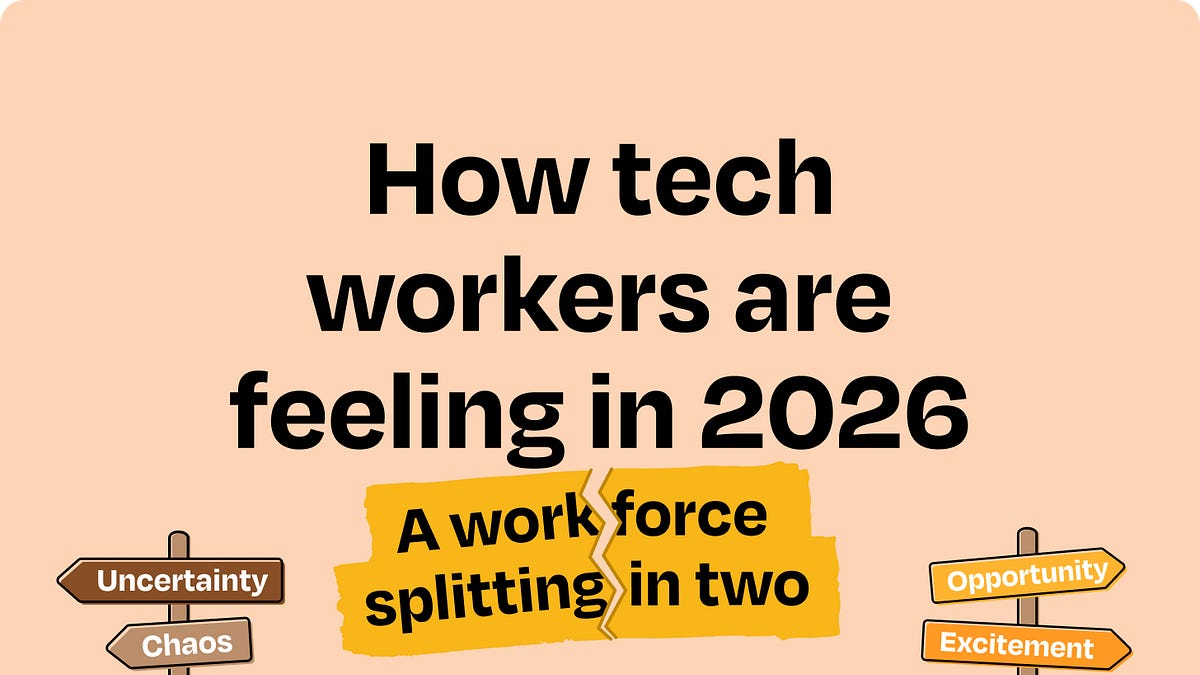
Tech workers surveyed in 2026 split into two groups: those amplified by AI who feel more capable and confident, and those destabilized by it who question their value and job security. Burnout jumped 11 percentage points to 55.7% of respondents in a single year, while career optimism fell from 54.8% to 48.7%, with 41% worried about losing their jobs. How workers perceive AI's impact on their professional identity now predicts career satisfaction more strongly than their role, seniority, or company size combined.

The Neuron
·
2 weeks ago
Savi Security, founded by brothers Patrick and Ryan Coughlin, launched an app to detect AI-generated scams delivered via text, email, and phone calls after being inspired by an incident where their mother nearly fell for a voice-cloned kidnapping hoax. The company raised $7 million in seed funding and its detection model was trained on 100,000 submissions collected through a free website called Scamwise over four months. The app charges $8 monthly or $63 yearly per family account with no user limit and includes live-call monitoring to identify fraud in real time as calls happen.
The Neuron
·
2 weeks ago
Researchers at Varonis discovered a critical vulnerability in Google's Dialogflow CX service that allowed attackers with a single edit permission to inject malicious code into chatbot agents and steal conversation data. The vulnerability required only the dialogflow.playbooks.update permission on one agent to compromise all agents in the same Google Cloud project through shared Cloud Run infrastructure. Google patched the issue between April and June 2026, and organizations using Dialogflow CX are now advised to audit their configurations and review logs for suspicious playbook updates.
