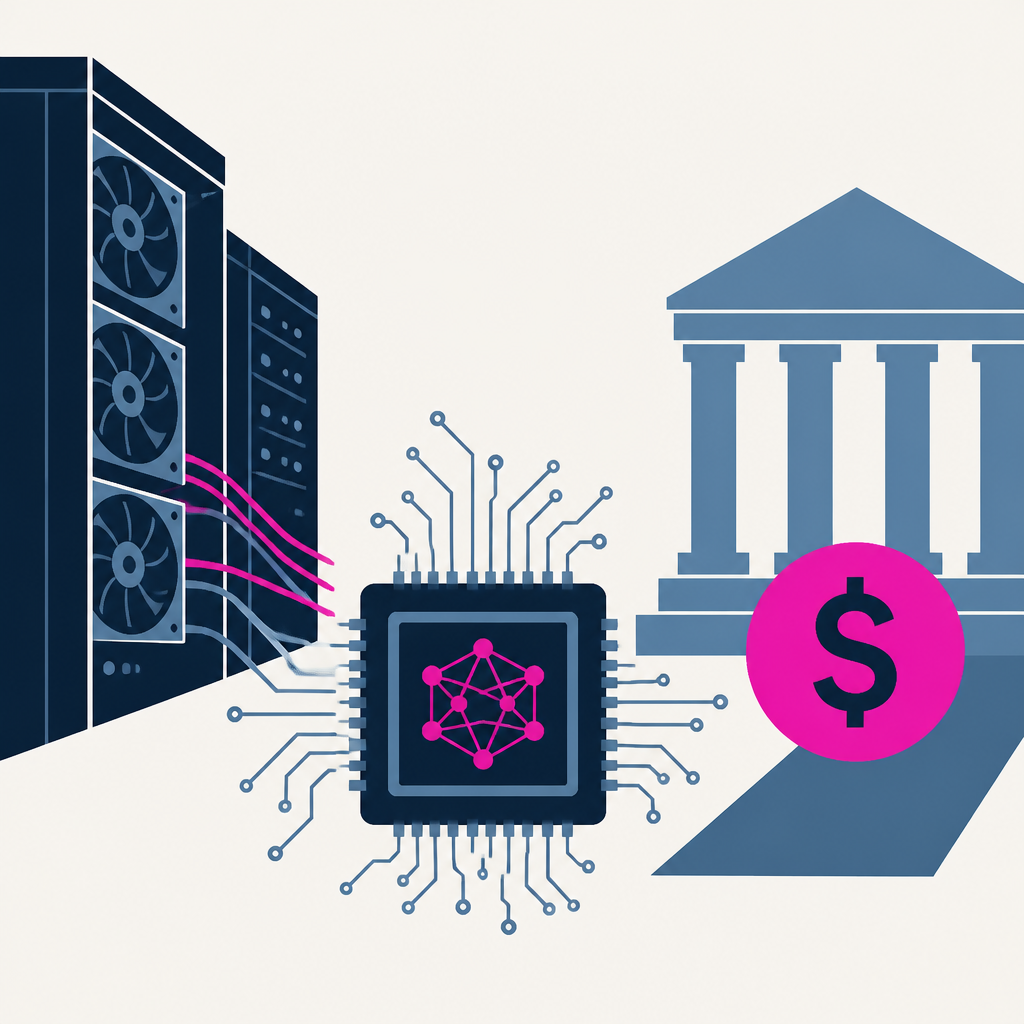
Google reached out to major Hollywood studios to negotiate licensing deals to let it train its AI models on copyrighted material. The reporting says the deals would involve “massive” payouts, with the exact figure not specified. This would give Google more training data for its AI efforts while creating legal and commercial risks for studios considering licensing rather than limiting use of their content.
Lawmakers proposed a new House bill that would tax major AI companies based on the value of AI tokens or AI service revenue, with the tax rate rising when unemployment increases.
Jamf built a production system that enforces per-user Amazon Bedrock spend limits in near-real time using Athena cost views and an AWS Lambda policy-updating loop tied to user identity. The enforcement Lambda runs on a 15-minute schedule and denies specific Claude model access at 80% and 100% of a user’s daily budget. This shifts AI cost control from “invisible until the bill” to observable, tiered caps that can automatically lift after the daily reset while keeping a low-cost model available for continued work.
Apple is seeking expedited discovery in its lawsuit against OpenAI, alleging OpenAI has been destroying evidence. Apple’s filing on Monday says OpenAI only recently turned over a MacBook used by a former employee and that it included discussion about destroying forensic data Apple needs. The case will move faster as Apple tries to secure evidence before it can be further lost.
A group of 100 firms, including Google, Microsoft, Anthropic, and OpenAI, signed an open letter urging governments and organisations to strengthen cyber defences before AI systems become more capable. The letter warns that current cybersecurity measures are no longer sufficient as AI threats accelerate, citing incidents including a successful Hugging Face cyber-attack carried out by OpenAI AI agents during testing. The call-to-action adds pressure for more investment and coordinated work to provide defensive AI tools, testing, funding, and specialist support for under-resourced groups.
The UK Government launched a £100 million Sovereign AI R&D Procurement Scheme with national competitions for British AI firms to build solutions to public sector challenges. The scheme’s funding is £100 million. The competitions roll out first under this new programme, targeting areas such as NHS productivity and defence compute efficiency, with successful providers keeping the AI models and building commercial products.
The European Commission designated OpenAI’s ChatGPT as a “very large online search engine” under the Digital Services Act. January 2027 is the deadline—four months after the decision—for compliance with added obligations. The move extends DSA-style duties for illegal content, minors’ protection, and election-related harms and could bring fines up to 6% of worldwide annual sales for noncompliance.
Eurozone inflation rose in August, moving to 3.3% year on year from 2.9% in July and lifting price pressure above the ECB’s 2.0% target. Markets are pricing in an ECB key rate of 2.5%, with a rate increase next week described as highly likely and decided next Thursday. The split between cooling core inflation and rising headline energy-driven inflation makes the policy call tougher, while higher yields and borrowing costs feed through to debt-sensitive tech valuations.
Bank of England governor Andrew Bailey warned that advanced AI creates risks for financial system infrastructure in a letter to G20 finance ministers and central bank governors. He cited “stretched asset valuations” in the AI market as one fragility and warned that frontier large language models could enable cyberattacks. Banks are urged to prepare for disruptions affecting multiple institutions or technology suppliers, speed up patching, and use “bare metal” restoration workflows after major incidents.
Apple filed new details in its lawsuit against OpenAI alleging that former employee Chang Liu stole Apple trade secrets and that OpenAI knew about his access. Apple says its preliminary injunction request relies on an investigation after counsel for Liu turned over his old Apple work laptop earlier this month. The case moves toward expedited evidence gathering and a court order to block OpenAI from working on hardware based on Apple’s technology while the lawsuit continues.
Every AI story that matters,
in your inbox by 8am.
TLDRocket reads all relevant sources, removes duplicate coverage, and summarises the
day in two minutes. Follow companies and topics for alerts, or get the
briefing in Slack. Free, no spam, unsubscribe anytime.
Reading TLDRocket needs no cookies, and the readership counts we rely on come from
our own cookieless analytics. Google Analytics is the exception: it sets cookies and
reports to Google, so it stays switched off until you allow it. You can change your
mind any time from “Cookie settings” in the footer.
Strictly necessary
Session security and form protection (tldrocket-session,
XSRF-TOKEN, 2 hours). The site cannot work without them,
so they need no consent.
Always on
Google Analytics 4 (_ga,
_ga_<id>, up to 2 years). Measures which
stories and sections readers use. Google acts as a third-party processor and may
store the data outside the EU. No advertising, no profiling, no data sold.