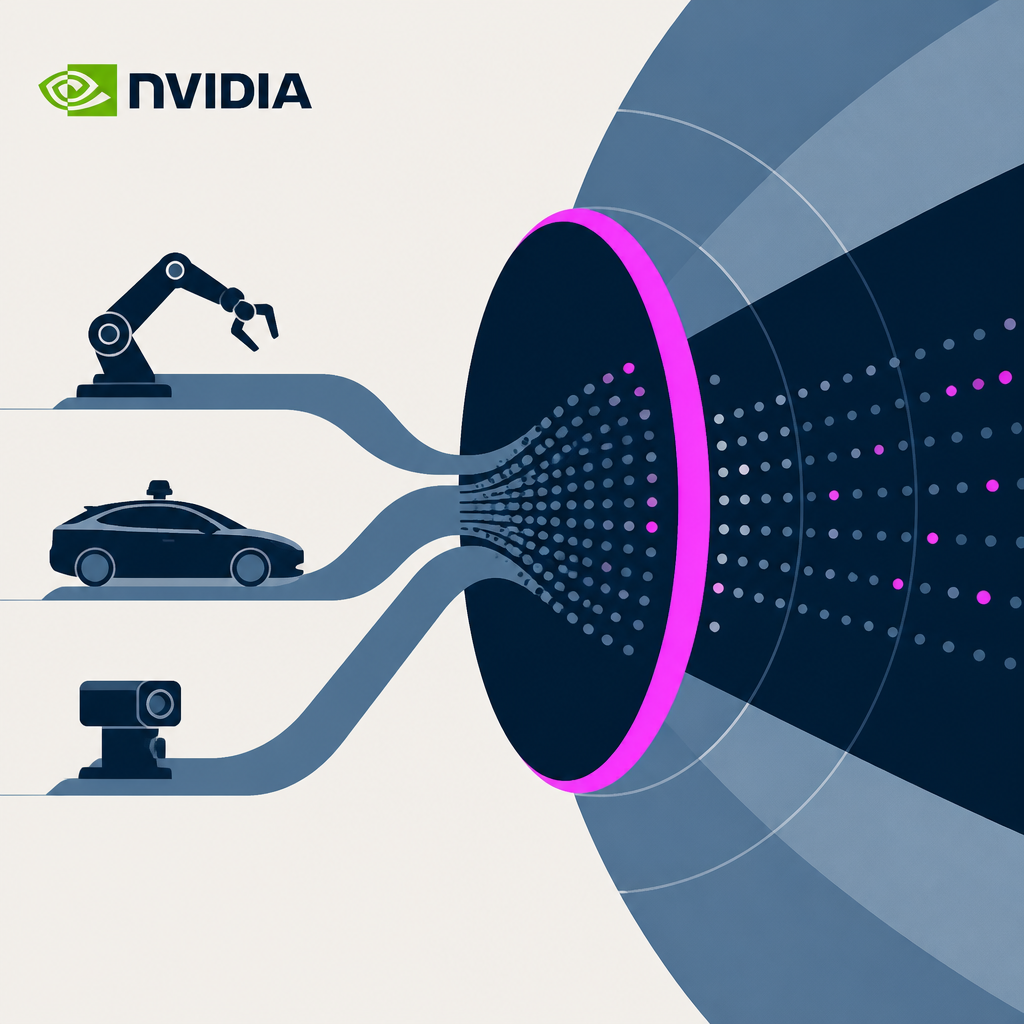
NVIDIA released Cosmos 3, an open-weight foundation model family designed for physical AI applications including robotics, autonomous vehicles, and vision systems. The model comes in three sizes—64B parameters (Super), 16B (Nano), and 4B (Edge)—and ranks first on multiple benchmarks including Artificial Analysis for text-to-image generation and RoboLab for robot policy. Developers can now download, modify and specialize the models on their own hardware to train physical AI systems, reducing expensive real-world data collection and enabling deployment across edge to data center infrastructure.
Silicon Valley firms including Microsoft, OpenAI, and Meta signed a letter supporting open-weights AI, which allows anyone to download and modify AI models freely, presenting a tradeoff between user autonomy and risks of misuse. The closed-source AI frontier maintains approximately a six-month lead over open-weights models, and most AI safety organizations have remained neutral rather than actively opposing open weights despite potential risks from hacking, bioterrorism, or model retraining. The author argues that preemptive bans are politically unviable and advocates waiting for real-world incidents to trigger government action, while acknowledging that open weights offers meaningful pathways to technological freedom that closed alternatives may not provide.
Researchers propose DLR-Lock, a method to prevent unauthorized fine-tuning of open-weight language models by replacing MLPs with deep low-rank residual networks that impose exponential memory growth during backpropagation. The defense incurs linear memory overhead with network depth while maintaining original model performance. This approach protects pretrained weights from adaptation attacks while preserving inference capabilities.
Every AI story that matters,
in your inbox by 8am.
TLDRocket reads all relevant sources, removes duplicate coverage, and summarises the
day in two minutes. Follow companies and topics for alerts, or get the
briefing in Slack. Free, no spam, unsubscribe anytime.
Reading TLDRocket needs no cookies, and the readership counts we rely on come from
our own cookieless analytics. Google Analytics is the exception: it sets cookies and
reports to Google, so it stays switched off until you allow it. You can change your
mind any time from “Cookie settings” in the footer.
Strictly necessary
Session security and form protection (tldrocket-session,
XSRF-TOKEN, 2 hours). The site cannot work without them,
so they need no consent.
Always on
Google Analytics 4 (_ga,
_ga_<id>, up to 2 years). Measures which
stories and sections readers use. Google acts as a third-party processor and may
store the data outside the EU. No advertising, no profiling, no data sold.