Zoox can now charge for rides in its steering-wheel-free robotaxis
The Verge Emma Roth
NHTSA just cleared Zoox to charge for rides in its no-steering-wheel robotaxis, up to 2,500 vehicles a year. Las Vegas fares start next month, with Miami and Austin next.
Based on reporting by The Verge, Emma Roth — read the original for the full story.
Summary, retelling and take written by AI under human oversight; images are AI-generated illustrations. How we work · Report an error
For a while now, Zoox has been giving away rides in its odd little boxy vehicles in San Francisco and Las Vegas, operating under a demonstration exemption that let people try the tech without paying a dime. That free ride is ending. The National Highway Traffic Safety Administration has granted the Amazon-owned company a temporary exemption that lets it deploy up to 2,500 of these driverless pods annually over the next two years, and this time riders will actually open their wallets.
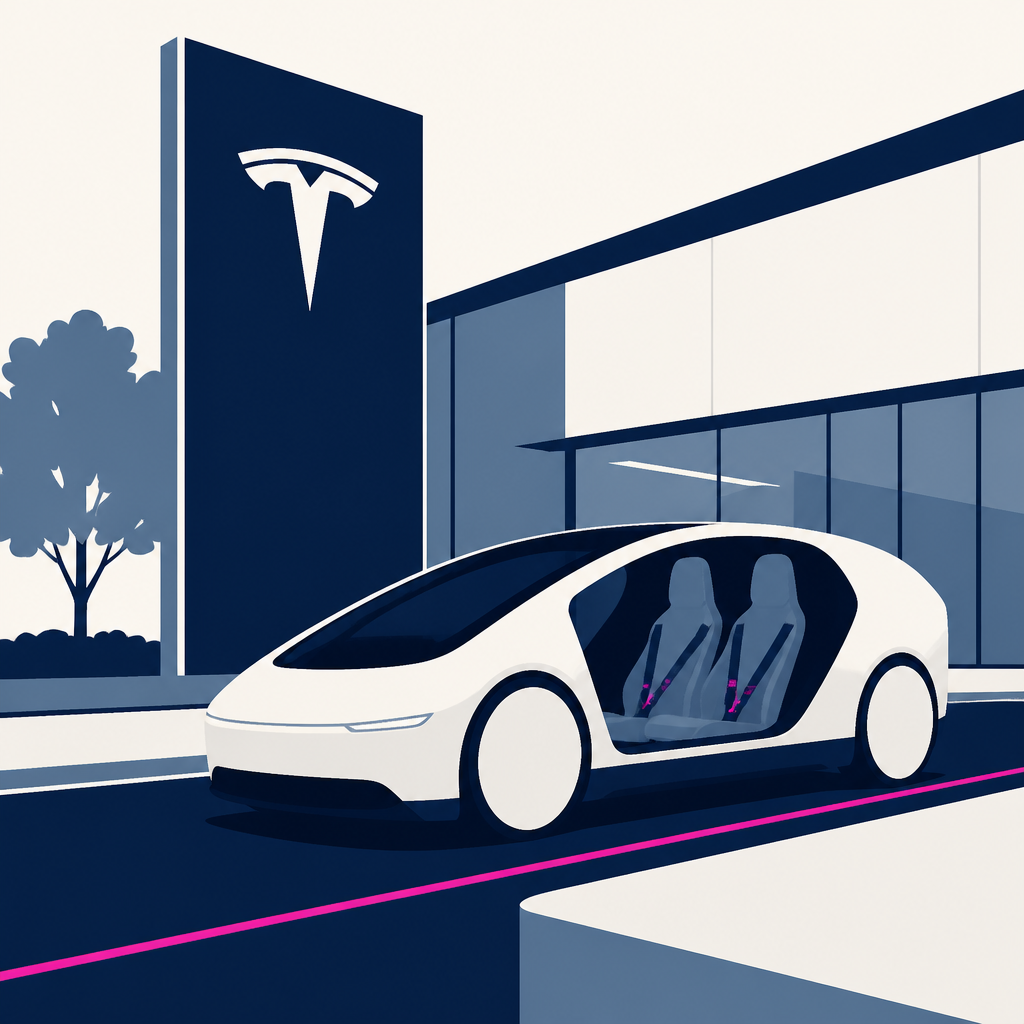
What makes Zoox's vehicles unusual isn't just the lack of a driver behind the wheel — it's that there's no wheel at all. No pedals, no windshield defrosting system, no mirrors. The interior is built around two bench seats facing each other, with sliding doors, because the whole thing was designed for passengers rather than a human operator who might need to take over. Federal vehicle safety standards were written with the assumption that someone would eventually grab a wheel, so Zoox needed the NHTSA to carve out an exception. It got one.
The agency's reasoning is worth sitting with for a second: it concluded that Zoox's vehicles offer safety equivalent to or better than cars that meet the standard rules, even without the standard equipment. That's not a small thing to say about a vehicle with no manual controls whatsoever. Still, the exemption comes with strings attached — an enhanced oversight condition that the NHTSA says can expand as Zoox's self-driving software matures, which feels like an acknowledgment that nobody, including the regulator, is treating this as a finished product.
And there's a recent wrinkle that underscores that caution. Earlier this month, Zoox issued a software recall over worries that its vehicles might fail to detect smoke. That's the kind of detail that makes the phrase enhanced oversight feel less like bureaucratic boilerplate and more like a genuine hedge.
None of this happens in a vacuum. Waymo has been quietly expanding its robotaxi footprint for years, and Tesla has been pushing its own version of driverless rides under Elon Musk's direction. Zoox charging fares starting next month in Las Vegas, with Miami and Austin lined up after that, puts it squarely into that competitive scrum. The NHTSA, for its part, has been moving to speed up approvals for autonomous vehicles more broadly, so Zoox's exemption reads as much a signal about regulatory direction as it does a milestone for one company's robotaxi ambitions.
My take — AI-written commentary, not fact-checked reporting
Letting a company sell rides in a vehicle with zero manual controls, days after that same company issued a smoke-detection recall, is the kind of timing regulators usually try to avoid advertising. The NHTSA's own safety streamlining push looks less like caution and more like a race to keep pace with Waymo and Tesla, and passengers in Vegas next month are the ones who get to find out if that bet was right.
Read more about this at: The Verge