
Secondhand book sales are booming. Is it because of AI?
BBC News ● Covered by 7 sources
Secondhand bookshops are seeing odd sales spikes, and AI may be behind them. Some books may be bought just to be scanned, and then destroyed.
Based on reporting by BBC News — read the original for the full story.
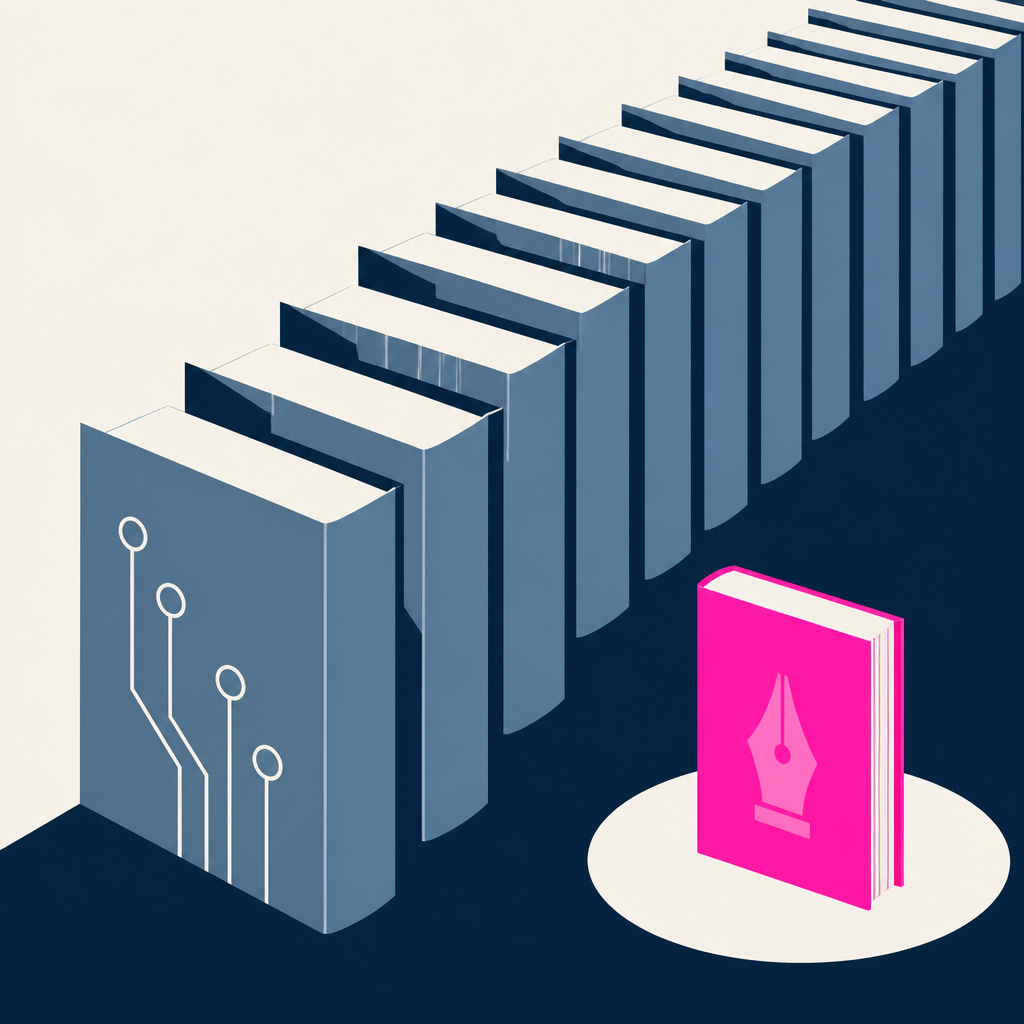
Summary, retelling and take written by AI under human oversight; images are AI-generated illustrations. How we work · Report an error
A US court ruling has put an awkward new theory behind the recent secondhand-book bump: some of the buying may be driven by AI training. In 2025, a judge said Anthropic did not break US copyright law by using books it had bought to train its software. Judge William Alsup called that use “exceedingly transformative”.
Then the case spilled into public view. Unsealed court documents last month showed that books were being destroyed during the process of training Claude, Anthropic’s chatbot. The company says Claude is trained on a mix of public web data, purchased datasets and data it creates itself. It also says it does not buy and destroy rare or antiquarian books.
Still, the idea that books are being pulped has clearly rattled people who sell them. David Tobin, who runs Walden Books in north London, says some titles that had sat unsold for years are suddenly moving. At Barter Books, Manley says the sales can look random, with no clear pattern, from obscure Latin texts to cowboy novels. He has not been told that his stock is being bought for Project Panama, the internal name revealed in the court papers.
Those same papers describe the project in strikingly blunt terms: “destructively scan all the books in the world.” The process means shipping books for industrial-scale digitisation, sometimes with the spine removed so pages can be scanned quickly and the rest recycled. For AI firms, rare and unusual texts may be useful training material for large language models. For booksellers, that creates a strange dilemma: some books are better off back in circulation, but some are genuinely irreplaceable.
The legal picture changes depending on where you are. Emily Hudson, an intellectual property specialist at Oxford University, says the UK starts from the opposite position to the US: copying for training generally needs permission from the rights holder. And that helps explain why a market full of dusty, long-unsold books now has people wondering whether every odd sale is a bargain hunt, or something much stranger.
My take — AI-written commentary, not fact-checked reporting
This is what happens when the AI industry treats old books like raw material and then acts surprised when people start checking the compost heap. The less transparent the buying, the more every strange sale looks suspicious. Openly licensed data is boring, but it beats turning bookselling into a forensic exercise.
Read more about this at: BBC News
Related stories
 ‘They’re likely to get squeezed’: AI slop books are flooding online marketplaces—and it’s coming at the expense of paychecks for human authors
Fortune ·
29
‘They’re likely to get squeezed’: AI slop books are flooding online marketplaces—and it’s coming at the expense of paychecks for human authors
Fortune ·
29