
Proxima Fusion signs two Japanese partnerships to strengthen Germany's fusion supply chain
Tech.eu Cate Lawrence
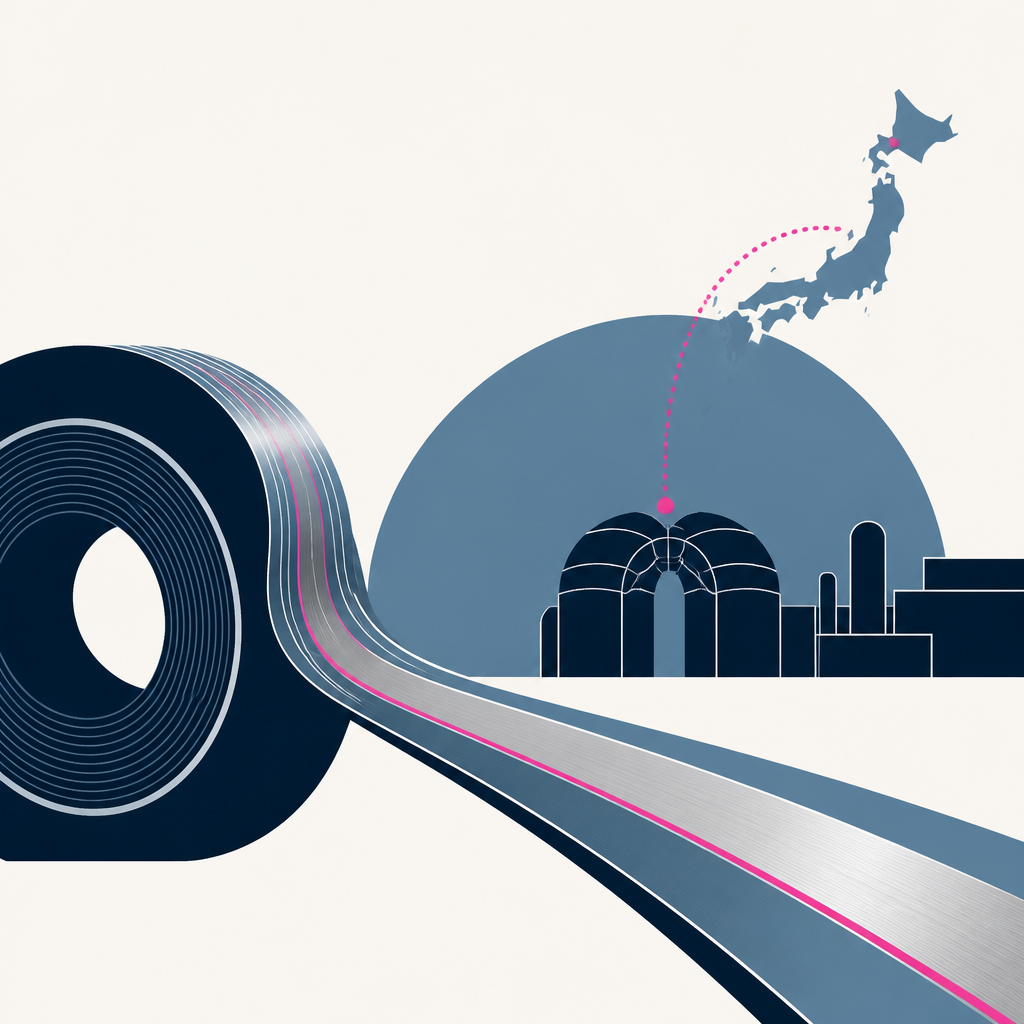
Proxima Fusion signed two deals in Japan to source key parts for fusion power. It’s betting Germany can build a real fusion supply chain before the first plant exists.
Based on reporting by Tech.eu, Cate Lawrence — read the original for the full story.
Summary, retelling and take written by AI under human oversight; images are AI-generated illustrations. How we work · Report an error
Proxima Fusion has signed two memoranda of understanding in Tokyo, one with Fujikura and one with Kyoto Fusioneering, to help build the industrial base behind commercial fusion power. The timing was no accident: the deals were announced during German Chancellor Friedrich Merz’s visit to Japan, and they line up neatly with Germany’s push to make fusion a domestic industry.
The Fujikura agreement is the more hardware-heavy of the two. Proxima will study whether high-temperature superconducting tape can be produced in Lower Saxony, including the possibility of local manufacturing. That tape matters because it is the material used in the compact, high-field magnets that stellarators rely on. Proxima says it will need about 20,000 kilometres for its Alpha demonstrator and roughly 40,000 kilometres for each planned Stellaris power plant. That is a lot of specialised material, and not the sort of thing a startup can just order off the shelf.
And that is really the point of the partnership. Fusion has spent years sounding like a science project; now it is starting to look like a supply-chain problem. Proxima says long-term demand visibility could help manufacturers expand production, cut costs and make the whole thing less fragile. Fujikura brings decades of superconducting materials work to the table, while Proxima brings the promise of future orders, which is often what finally gets factories moving.
The Kyoto Fusioneering deal extends existing cooperation on next-generation gyrotrons for plasma heating and on fuel cycle systems. Gyrotrons are the devices that produce the high-power microwaves needed to heat plasma to fusion temperatures. Fuel cycle systems handle the fuel needed to keep the process going. Kyoto Fusioneering will also support Germany’s Fusion Hubs initiative under the Federal Ministry of Research, Technology and Space.
Proxima’s roadmap runs through Alpha, a net-energy-gain stellarator demonstrator targeted for the early 2030s, and then Stellaris, its first commercial power plant planned for later in the decade. The company, based in Munich and employing around 200 people, came out of work tied to the Wendelstein 7-X programme at the Max Planck Institute for Plasma Physics. It now has more than 50 industrial partners in its Alpha Alliance, which tells you how far fusion has moved from lab curiosity to industrial scavenger hunt.
My take — AI-written commentary, not fact-checked reporting
Fusion’s new bottleneck is not physics, it’s factories. That is good news for anyone who likes boring things like manufacturing, engineering and supply chains, and terrible news for the people who thought fusion would arrive as a clean little miracle. Germany is trying to industrialise first and celebrate later, which is exactly backwards from the usual hype cycle — and exactly why it might work.
Read more about this at: Tech.eu