
Physical A.I.: Arda and Eka Raise a Combined $380 Million
Trending Topics Jakob Steinschaden ● Covered by 2 sources
Arda and Eka just raised $380 million for AI that runs machines and robots. The money is shifting from chatbots to factory floors, and both start-ups are now unicorns.
Based on reporting by Trending Topics, Jakob Steinschaden — read the original for the full story.
Summary, retelling and take written by AI under human oversight; images are AI-generated illustrations. How we work · Report an error
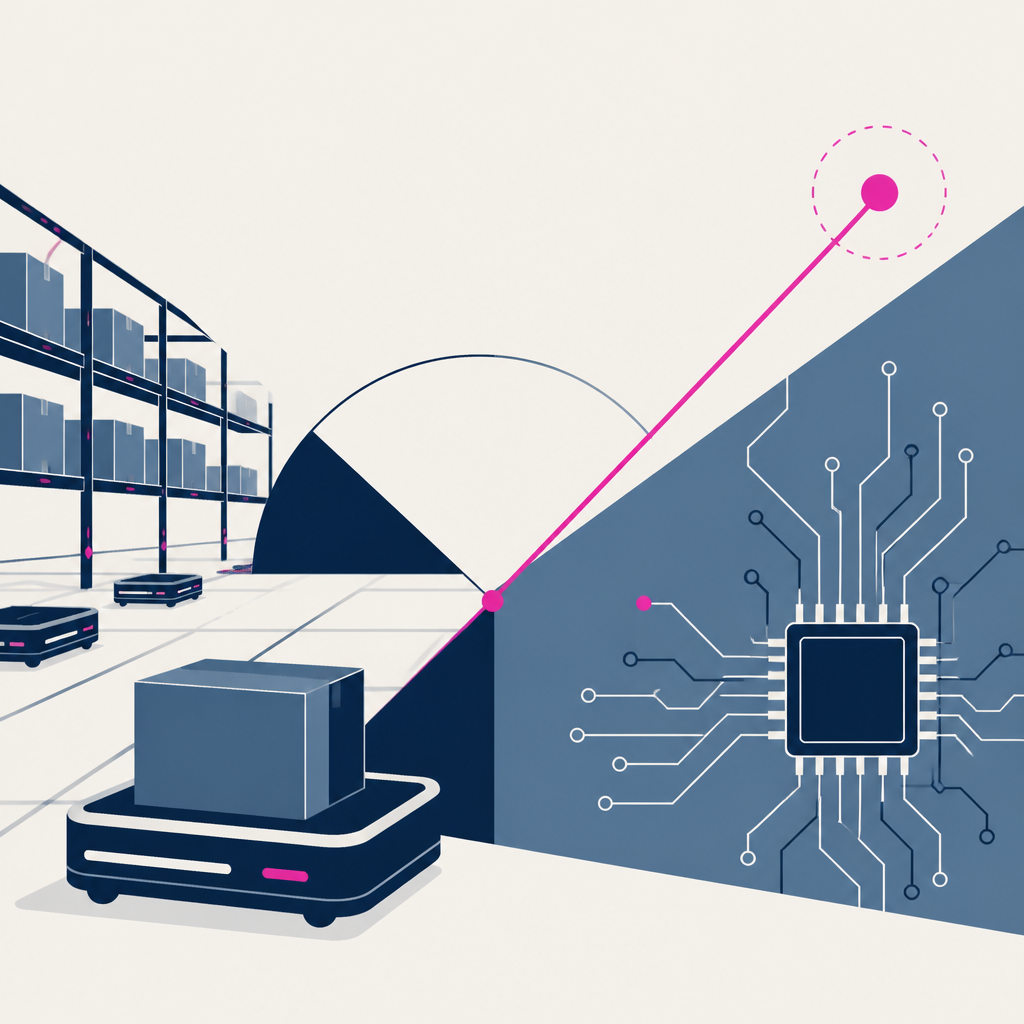
A lot of AI money has clearly decided the chatbot phase is getting old. Two U.S. start-ups building so-called physical AI, software that controls machines and robots in the real world, have just crossed into unicorn territory with fresh rounds totaling $380 million.
Arda, founded by OpenAI’s former research chief Bob McGrew, raised $230 million at a $1.5 billion valuation. Its pitch is practical, not flashy: software and agents for manufacturing engineers, including tools that can cut down the manual grind of programming assembly lines. CNBC says Altimeter Capital, Accel and Khosla Ventures led the round, and Anduril is the first publicly known customer.
Eka Robotics took in $150 million at a $1.45 billion valuation. Its bet is a little stranger, and maybe more interesting. Instead of mixing images and language with movement like many robotics models, Eka combines vision with force, using cameras to locate an object and force sensors in a special hand to actually grab it. The company says that setup can pick up something as delicate as a raspberry without crushing it.
The numbers Eka is floating are eye-catching: about 1,500 objects weighing up to one kilogram per hour, versus about 600 for a human, with a success rate above 95 percent. The company was founded by Pulkit Agrawal, a professor at M.I.T., and Tuomas Haarnoja, a former Google DeepMind researcher. Its model is trained mostly in simulations, where the robot is said to rack up thousands of hours of experience in minutes, and confidential pilots are already running with several industrial customers, according to TechCrunch.
Europe is getting dragged into the same rush. Nvidia has taken a stake in Munich-based Agile Robots, Neura Robotics in Metzingen has shown off its own AI model and is working with the Linz start-up NXAI on a robot memory system, and Munich start-up RobCo became a unicorn in early October. But the skepticism is still there. Kris Hauser, a robotics professor at the University of Illinois, says Eka’s demo has real wow factor, yet questions whether it can stay reliable on real assembly lines for a year and whether the approach works beyond simple pick-and-place tasks. Eka’s gripper is rated for 5 million motion cycles; the industrial standard is 20 million. Arda, meanwhile, has only named one customer so far.
My take — AI-written commentary, not fact-checked reporting
The market is doing what it always does when a new acronym sounds expensive: it pours money on it first and asks questions later. Physical AI may be real, but the industrial bar is brutal, and demos are cheap compared with uptime. The grown-up test is boring stuff like durability, reliability and whether the robot still behaves after a year, not after a keynote.
Read more about this at: Trending Topics
Related stories
 Ultra raises $62 million for fast-growing ‘robots as a service’ business, announces tie-up with AI research firm Physical Intelligence
Fortune ·
44
Robotics AI developer FieldAI reportedly raising $700M in funding
SiliconANGLE · 2 weeks ago ·
6
Open-weight model developer Arcee AI reaches $1B-plus valuation with new funding
SiliconANGLE · 1 month ago ·
50