
NEC tests parking tech that only starts charging once you exit your car
The Register
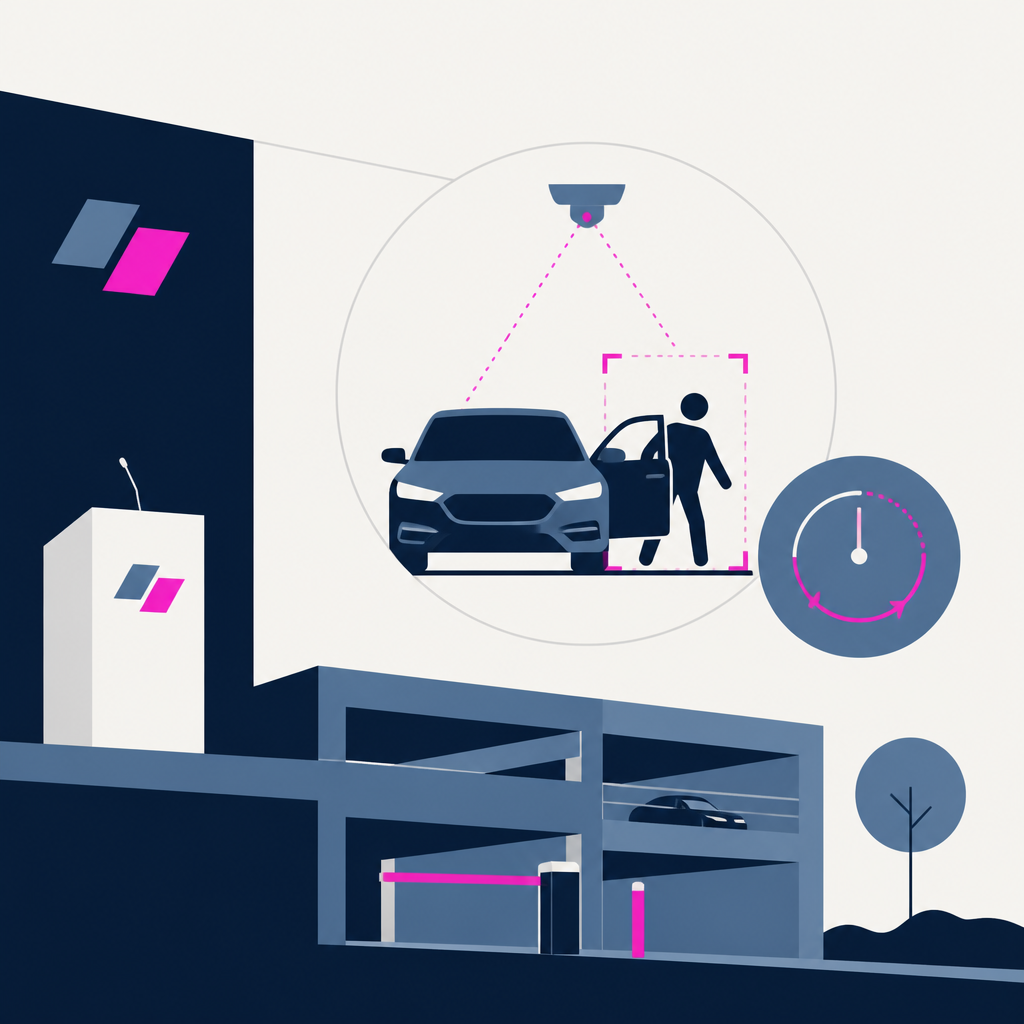
NEC is testing parking that starts charging when you step out, not when you drive in. Nice for drivers, and it also turns car parks into a little AI surveillance machine.
Based on reporting by The Register — read the original for the full story.
Summary, retelling and take written by AI under human oversight; images are AI-generated illustrations. How we work · Report an error
Japan’s NEC has begun testing a parking system that waits until a driver actually gets out of the car before the meter starts. That is a neat twist on a familiar annoyance: most car parks begin billing the moment a vehicle enters, which means people pay for time spent circling for a space and crawling out of the lot. NEC is building the test with another Japanese firm, UrbanChain, and plans to try it next month in September.
The catch is that this only works if cameras and AI can tell when someone has parked and exited the vehicle. NEC says the September trials will look at how many cameras are needed to make the idea practical. The company also talks up “data utilization services” for commercial facilities, including monitoring vehicle occupant exit counts and analyzing visitor trends. That sounds a lot like turning parking lots into a new kind of data business, which is either clever or deeply ominous depending on your tolerance for cameras.
NEC and UrbanChain are also pitching a safety angle. If the system spots a driver who has stayed in the car for a long time, it could flag a possible illness. And if drivers know they won’t be charged while hunting for a space or leaving the lot, the pair thinks they may drive more safely.
Elsewhere in Japanese tech, Fujifilm told investors last week that it is looking at a partial spin-off of its printer business. The idea is to float the unit while keeping up to 20 percent, so the company can focus on its other lines. It would be following Epson, Toshiba and Ricoh in pulling back from printers, a market IDC says is under pressure from structural change and cyclical weakness, with sales falling sharply.
China’s Envision also announced a two-gigawatt-plus datacenter in Ulana, Inner Mongolia. The 120,000-square-meter site is said to hold up to one million GPUs and provide one million PFLOPS of AI compute, powered by renewable energy. That fits Beijing’s “Data East, Compute West” push, which aims to place huge datacenters closer to clean energy rather than dense cities.
Not every headline was about speed and scale. Australian cable operator Bevan Slattery wants police to look into “suspicious/coincidental activity” after faults hit two submarine cables, pointing to a vessel repeatedly crossing their path. Infosys, meanwhile, has signed up to help Crocs modernize its systems over the next decade. And Australia’s Attorney-General has asked the Privacy Commissioner to prioritize a look at low-end smart glasses after Kmart’s AU$89 pair sold out fast and triggered privacy worries.
My take — AI-written commentary, not fact-checked reporting
This is the modern trick: sell the public a convenience feature, then quietly bolt on a data business behind it. NEC’s parking idea is tidy on paper, but once cameras and AI are in the lot, the lot stops being just a lot. Japan and Australia are both circling the same problem here: tech companies call it efficiency, everyone else calls it being watched while buying shoes or parking the car.
Read more about this at: The Register
Related stories
 goNEON Agentic Systems secures €160K to accelerate AI-powered infrastructure planning
Tech.eu · 1 month ago ·
37
goNEON Agentic Systems secures €160K to accelerate AI-powered infrastructure planning
Tech.eu · 1 month ago ·
37