Muse Code
Product Hunt Zac Zuo ● Covered by 6 sources
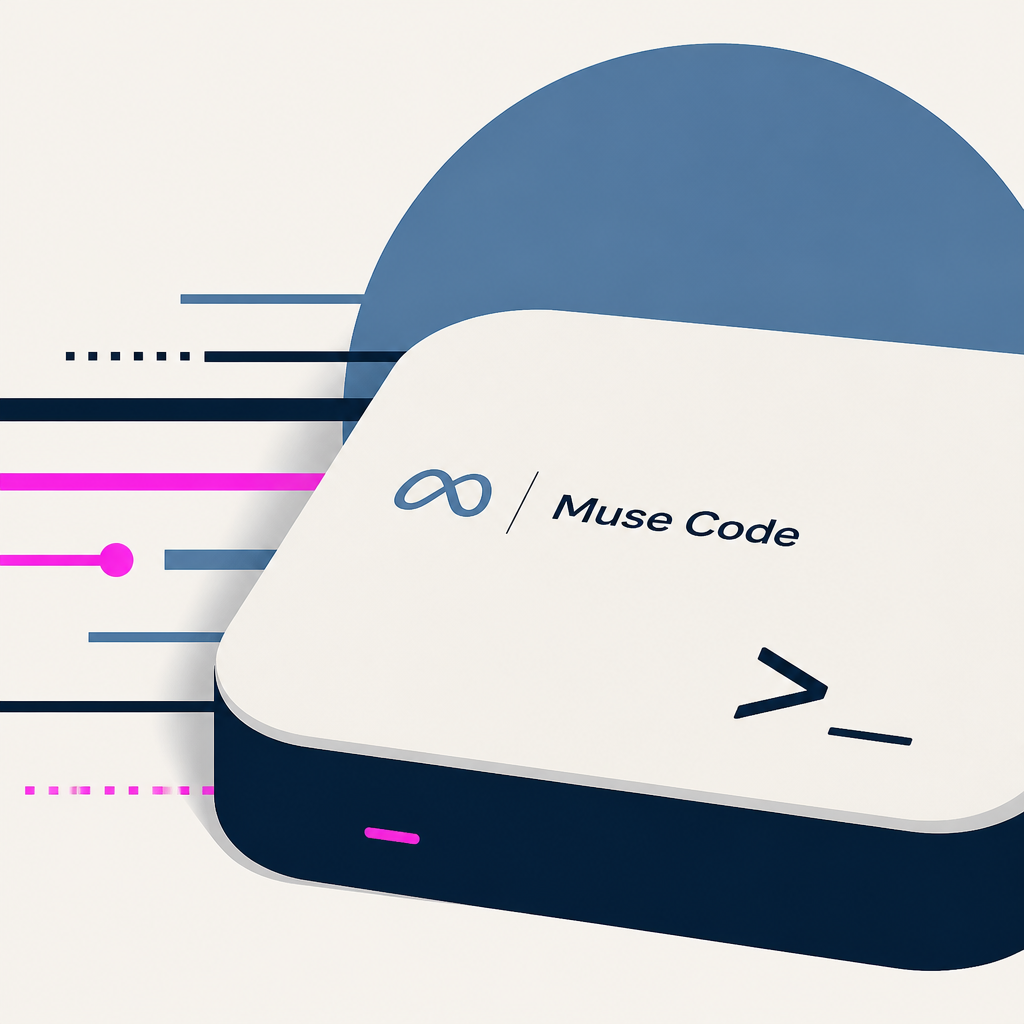
Meta just dropped Muse Code, a terminal-based coding agent built for long, complex tasks. It's a bet that AI can handle marathon coding sessions, not just quick snippets.
Based on reporting by Product Hunt, Zac Zuo — read the original for the full story.
Summary, retelling and take written by AI under human oversight; images are AI-generated illustrations. How we work · Report an error
Meta has a new coding tool out, and it's not another chat window bolted onto an IDE. Muse Code lives in the terminal, and its pitch is squarely about long-horizon work — the multi-step, multi-file coding tasks that tend to break simpler assistants after a few turns.
That framing matters more than it might seem. Most coding agents on the market today are optimized for quick fixes: autocomplete a function, explain an error, write a unit test. Muse Code's positioning suggests Meta is chasing something harder — an agent that can hold context across a longer arc of work, the kind of task that used to require a human sitting down for an afternoon, not thirty seconds of autocomplete.
Putting it in the terminal is a deliberate choice too. Command-line tools tend to attract developers who want speed and control over flashy interfaces, and it signals Meta wants Muse Code to slot into existing workflows rather than replace them with a new app to learn. It's a quieter, more utilitarian approach than the chatbot-wrapper trend that's dominated AI coding tools for the past two years.
Details beyond that are still thin — Meta hasn't published extensive benchmarks or technical specifics alongside the Product Hunt listing. But the fact that a company with Meta's resources is entering the terminal-agent space, rather than just shipping another chat-based coding assistant, says something about where the serious players think the real value is headed: not one-off snippets, but agents that can actually finish a job.
My take — AI-written commentary, not fact-checked reporting
Terminal-first is the smart move here — chat windows are great for demos and bad for actual engineering work that spans hours, not minutes. Everyone chasing 'long-horizon' agents is really admitting that current tools can't hold a thought for more than a few exchanges, and that's the real bottleneck nobody wants to name directly.
Read more about this at: Product Hunt