
Making the case for context-aware AI
MIT Technology Review MIT Technology Review Insights ● Covered by 2 sources
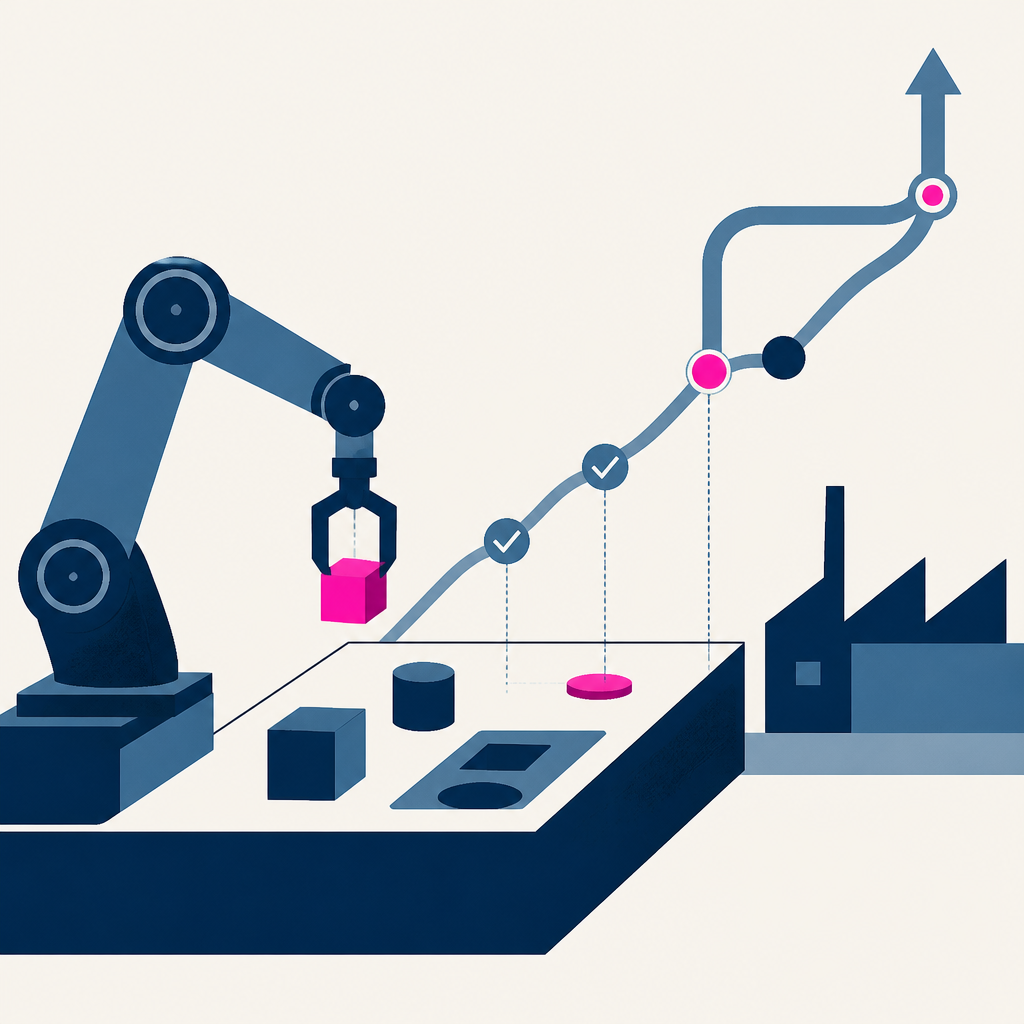
Enterprise AI keeps missing the mark without business context. Celonis’ Devavrat Shah says that context is what turns agents into useful decision tools, not just fast guessers.
Based on reporting by MIT Technology Review, MIT Technology Review Insights — read the original for the full story.
Summary, retelling and take written by AI under human oversight; images are AI-generated illustrations. How we work · Report an error
Enterprise AI can already recommend, automate, and speed up decisions. The catch is that none of that matters much if the system doesn’t understand how a business actually works. That’s the gap Devavrat Shah, chief scientist of enterprise AI at Celonis, keeps coming back to: context is what lets AI move from clever demos into day-to-day use inside real companies.
Shah’s pitch is built around what he calls decision intelligence. In big organizations, decisions are rarely single acts. They are usually the end of a chain of tasks, roles, and handoffs. AI agents can help with those steps, he says, but only if they know which task they’re handling and what business rules sit around it. Otherwise they can waste a lot of compute figuring things out, miss important guardrails, or make mistakes that are merely annoying in one case and very expensive in another.
His answer is to connect AI to the processes and data enterprises already rely on, then add a contextual layer on top. In Celonis’ framing, that layer sits between systems of record below and business users or agents above. It pulls in workflow tools and event logs, gives agents the right abstraction of the process, and keeps outputs in a structured, guarded form that humans can review, approve, or automate further.
Shah says companies should begin with one specific business decision, identify the hardest steps, and test whether AI actually improves them. If it does, the gains in speed and value can justify scaling. If it doesn’t, at least the company has not built a very expensive machine for producing confident nonsense.
The broader payoff, he argues, is that people spend less time on repetitive manual work and more time on strategic decisions. But that only works if companies also invest in educating employees so they understand what the AI is saying and what it implies. Shah sees that playing out in finance, workforce management, marketing, sales, and enterprise planning — anywhere faster choices matter and the right context can keep those choices sane.
My take — AI-written commentary, not fact-checked reporting
This is the part of enterprise AI that matters and, inconveniently, the part that’s hardest to demo on a stage. The industry keeps selling intelligence as if context were optional garnish, when it’s really the meal. Closed systems that hide their reasoning won’t fix that; they’ll just make the confusion proprietary.
Read more about this at: MIT Technology Review
Related stories
 The AI context gap: Enterprise AI organizations have a trust problem, not a retrieval problem — and most are still building the fix
VentureBeat · 3 months ago ·
57
The bottleneck for AI agents isn’t the model anymore. It’s the context layer.
The New Stack · 3 months ago ·
25