
Kimi Code: Autonomous Coding Agent and CLI
Kimi
Moonshot AI launched Kimi Code, a CLI coding agent powered by its K2.7 Code model, bundled into Kimi memberships. One subscription now gets you a Claude Code-style agent that codes, debugs, and browses the web for you.
Based on reporting by Kimi — read the original for the full story.
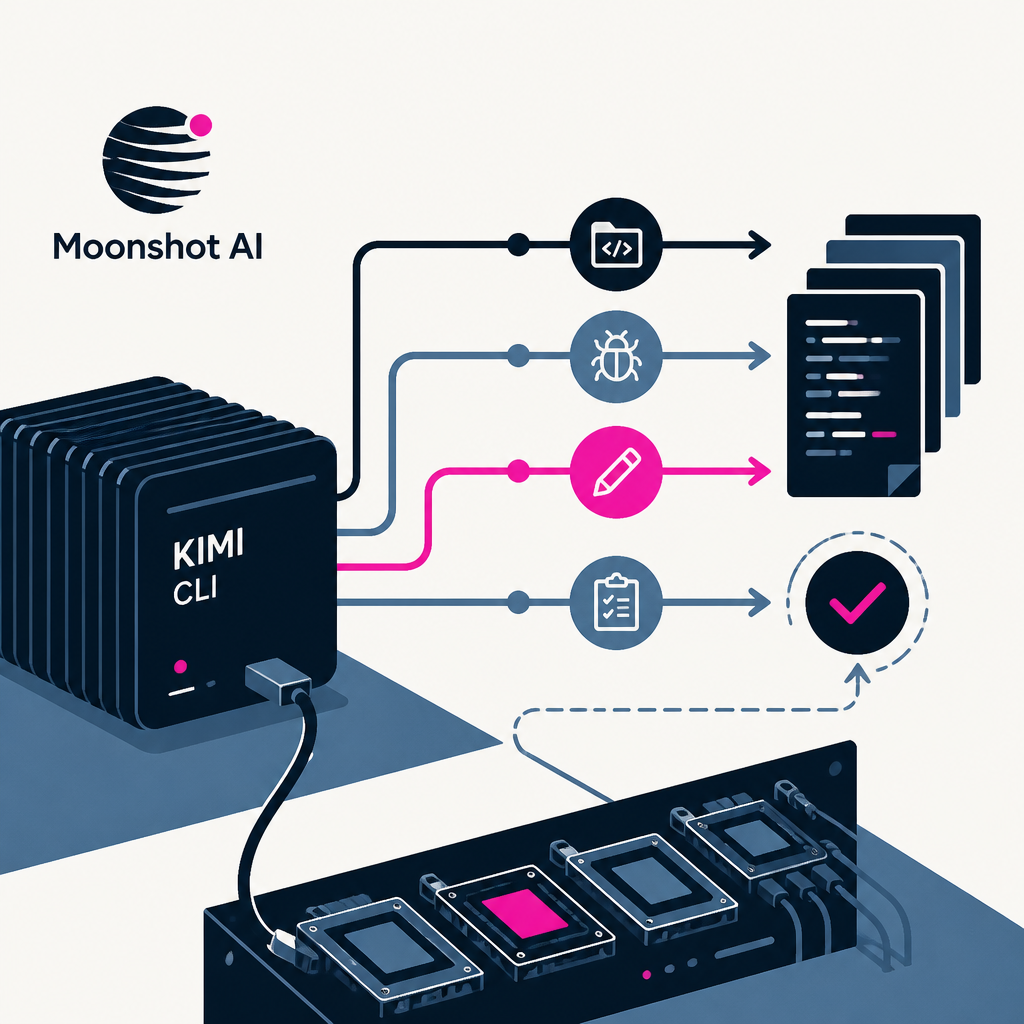
Summary, retelling and take written by AI under human oversight; images are AI-generated illustrations. How we work · Report an error
Moonshot AI just rolled out Kimi Code, a command-line coding agent that installs with a single curl script and plugs straight into your terminal. It's built on K2.7 Code, the latest version of Moonshot's code-tuned model line, and it's being pitched less as a standalone product and more as a perk folded into existing Kimi membership tiers — pay once, code anywhere, no separate coding subscription required.
The pitch here is familiar territory if you've used Claude Code or similar agentic CLIs: type a prompt, and Kimi Code doesn't just chat back, it reads files, writes files, runs shell commands, searches your codebase, fetches documentation from the web, and can even spin up subagents to tackle multiple pieces of a task in parallel. In the demo Moonshot shared, asking the tool to "introduce yourself" produces a tidy rundown of its own capabilities — software development, codebase analysis, technical automation, research — complete with emoji bullet points, which is a small but telling detail about who this is aimed at: developers who want a friendly assistant, not a bare-metal API.
What's notable is the packaging strategy. Moonshot isn't charging separately for Kimi Code; it's baked into the membership plans that already exist, meaning current subscribers get a coding agent essentially for free as an upgrade. That's a direct shot at the wedge that Anthropic, Cursor, and others have used to lock developers into ecosystems — bundle the agent with something people already pay for, lower the friction to try it, and hope habit does the rest.
Moonshot has been moving fast on the open-weight and API front with its Kimi K2 line, and framing this release around speed — "HighSpeed" branding, faster and more reliable answers — suggests the company knows raw benchmark scores won't be enough. Developers switch tools based on latency and reliability in daily use, not leaderboard rankings, and Moonshot seems to be betting its infrastructure can win on that axis even if it's still catching up on brand recognition outside China.
My take — AI-written commentary, not fact-checked reporting
I'll believe the
Read more about this at: Kimi
Related stories
 Building Non-Interactive Agentic Coding Workflows with Moonshot AI’s Kimi CLI, JSONL Streaming, Testing, and Session Memory
MarkTechPost · 2 months ago ·
36
Last Week in AI #334 - Kimi K2.5 & Code, Genie 3, OpenClaw & Moltbook
Last Week in AI · 8 months ago ·
46
Kimi K2: Leading Open-Source Model Now Available on Together AI
Together AI · 1 year ago ·
52
Building Non-Interactive Agentic Coding Workflows with Moonshot AI’s Kimi CLI, JSONL Streaming, Testing, and Session Memory
MarkTechPost · 2 months ago ·
36
Last Week in AI #334 - Kimi K2.5 & Code, Genie 3, OpenClaw & Moltbook
Last Week in AI · 8 months ago ·
46
Kimi K2: Leading Open-Source Model Now Available on Together AI
Together AI · 1 year ago ·
52