How business operations teams use ChatGPT Work
OpenAI ● Covered by 3 sources
OpenAI is pitching ChatGPT Work for business ops teams to turn meeting notes and docs into briefs and updates automatically. It matters because it's another push to make AI a daily ops tool, not just a chatbot for one-off questions.
Based on reporting by OpenAI — read the original for the full story.
Summary, retelling and take written by AI under human oversight; images are AI-generated illustrations. How we work · Report an error
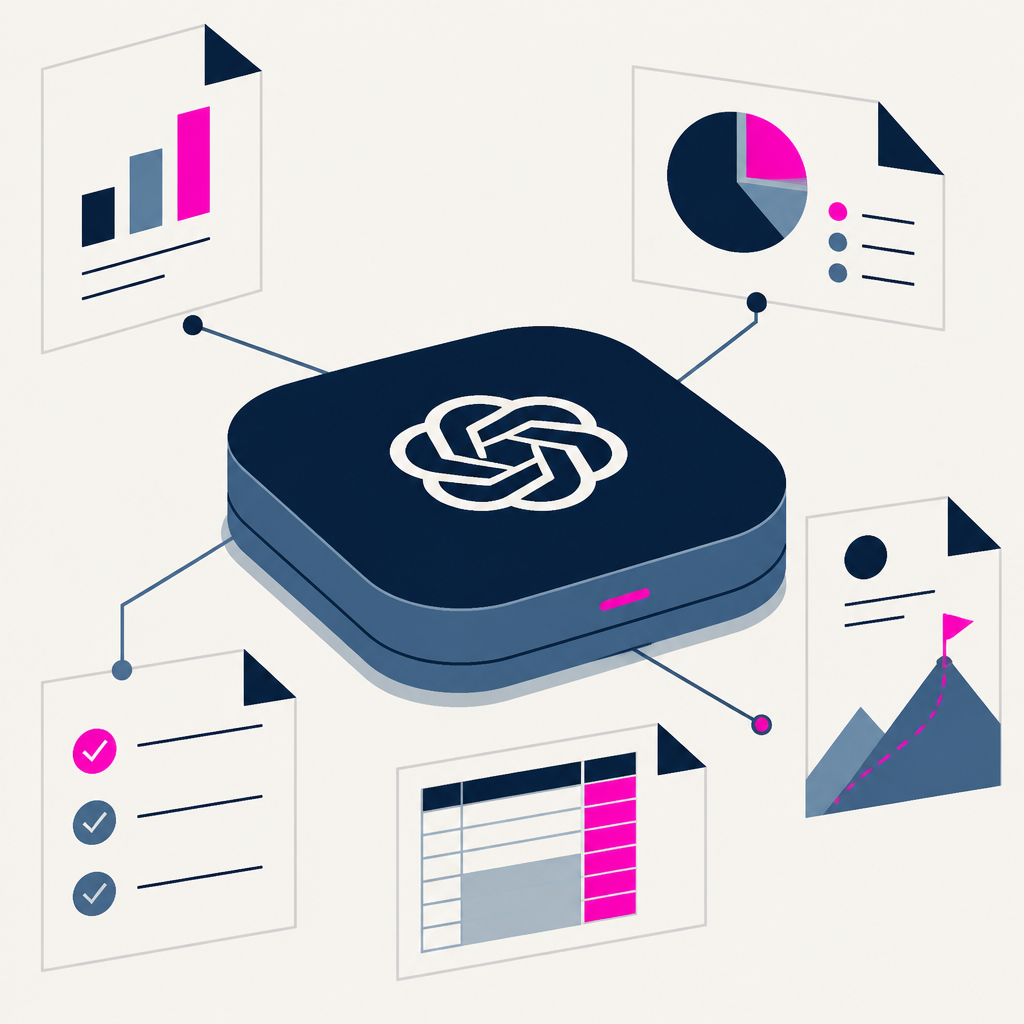
OpenAI wants ChatGPT Work to become the thing operations teams open before they open a blank Google Doc. The pitch, laid out in a fresh blog post, is narrow and practical: feed it real inputs — meeting transcripts, Slack threads, old strategy decks, spreadsheets — and let it produce the unglamorous paperwork that eats up an ops person's week. Initiative briefs. Leadership decision packets. Progress updates. Strategy summaries. The stuff nobody enjoys writing but everybody needs by Friday.
What's notable here isn't a new model or a flashy capability. It's OpenAI narrating a workflow, almost like a product demo dressed up as a blog post. That's a shift in how the company talks about ChatGPT. Instead of showing off reasoning benchmarks or coding scores, they're showing a business-ops manager stitching together a leadership packet from three messy source documents in a few minutes instead of an afternoon.
The underlying idea is that operations work is mostly synthesis, not creation. Someone already ran the meeting, someone already built the spreadsheet, someone already has an opinion buried in a Slack message. The bottleneck is turning all that raw material into something a VP will actually read. OpenAI is betting that this translation step, from scattered inputs to polished output, is exactly where a language model earns its keep inside a company, more than in open-ended brainstorming.
This also fits a broader pattern of AI companies chasing the office-worker market rather than the developer market this year. Coding tools get headlines, but the bigger seat count is in the sprawling world of business operations, program management, and ops coordination — people who live in documents and decks, not IDEs. If ChatGPT Work can reliably compress a week of scattered context into a two-page brief, that's a much easier sell to a CFO than another API integration.
The blog post reads like an internal case study OpenAI decided to publish rather than keep proprietary, and that's probably the point. They're not just selling a model anymore. They're selling a specific, repeatable habit: dump your messy inputs in, get a leadership-ready document out.
My take — AI-written commentary, not fact-checked reporting
I'll believe the productivity story once someone shows me a decision packet that survived contact with an actual VP without three rounds of human editing. Right now this reads like a use-case blog post dressed up as a case study, which is smart marketing but not proof. Still, betting on ops workers over developers as the bigger AI market is the correct call, and I suspect a lot of enterprise AI money follows that same logic in 2025.
Read more about this at: OpenAI